
Juice is supposed to be good for you, right? For example, you’ve probably been told that drinking juice one cup of 100-percent orange juice is an excellent source of vitamin C and a good source of potassium, folate and thiamine. Plus, 100-percent orange juice naturally contains the phytonutrient hesperidin, which research suggests may help maintain a healthy blood pressure and blood vessel function.
But your body may never feel the health benefits of 100-percent fruit juice if you’re buying the wrong juice.
See, some food manufacturers add sugar to balance the tart flavor of some juices. Mixed juice drink blends tend to have added sugar or are made from concentrate. They either don’t provide many nutrients or have more sugar than necessary. And all of this is carefully hidden on the label in slick marketing terms. But here’s what to look for and what the terms really mean:
Some tomato, carrot, or “vegetable cocktail” juices are loaded with salt (sodium). This raises blood pressure and causes water retention.
Labels that say “fruit drink,” “fruit cocktail,” or “juice beverage” often have less than 20% real juice. The rest is water, sugar, and flavoring.
Even though the sugar in fruit juice blends occurs naturally, it’s just as bad for you as sweetened drinks, according to a study that says drinking too much fruit juice can increase the risk of an early death by as much as 42%.
This phrase is probably one of the biggest misleading phrases in the food industry. It has almost no meaning but it is used all the time. When you buy it you think that it means that it hasn’t been changed.
All it really means is that there have been no “synthetic substances,” artificial flavoring or colors added. The food may still have salt or other ingredients added, including high fructose corn syrup. Plus, those “natural” ingredients may be from animals.
Some juice companies sabotage your body by using shelf-stable juice concentrates instead of real juice. Juice concentrates are made from fruits and vegetables that are heated down to syrup and then have water added back in. So “concentrate” is just a fancy name for syrup. The concentration process involves both adding in and subtracting chemicals and natural plant by-products in order to condense the juice. During the concentration process, fruits and vegetables lose flavor and this is one of the reasons why companies have to re-add “flavoring” to make the juice taste fresh.
The concentration allows some juice companies to keep their juice shelf stable, preserved longer and allows them to save money during fruit processing.
You would think that if the label explicitly states “not from concentrate,” it means it’s fresher, more real and better for your, right? Well, not necessarily. When most commercially available orange juices are made, according to the book Squeezed: What You Don’t Know About Orange Juice, many companies store juice in giant tanks and have the oxygen removed from them, which allows the liquid to keep for up to a year without spoiling. This storage makes the orange juice lose flavor. So the industry uses “flavor packs” to re-flavor the juice. Even if your juice says “100% juice” or “premium” on the ingredient label, it can still have these flavor packs, because they are not required to be listed on the ingredient label because technically they are derived from orange essence or oil.
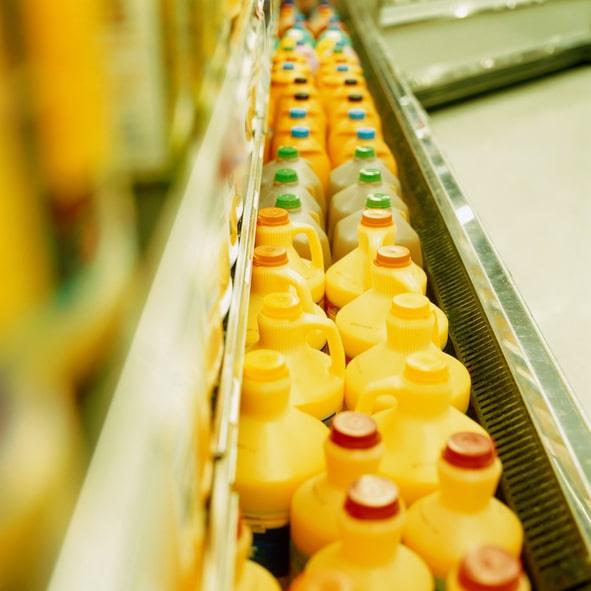
According to FoodBabe, most juice companies use traditional pasteurization or flash pasteurization to destroy harmful bacteria, viruses, molds, and other microorganisms to safeguard our health by heating the juice (this would be the second time your juice is heated if you are drinking juice from concentrate). But during this process, pasteurization also kills raw enzymes, minerals and vitamins – the reason that we are drinking the juice in the first place. Heat kills the bad stuff and good stuff, making the juice pretty much worthless of nutrients.
Most companies create vitamins by chemical manipulation and synthesis, not from actual fruits and vegetables.
Many juice companies use an ingredient called citric acid to extend the shelf life of their product. Most people would think this citric acid comes from citrus like lemons, oranges and limes, but not always. The ingredients most food manufacturers use to create citric acid are genetically engineered corn and sugar beets, by synthetically fermenting the glucose from these crops in a laboratory.
Also, some juice companies go as far as adding sugar (that could be from GMO sugar beets), high fructose corn syrup (from GMO corn) and/or other ingredients that could contain GMOs. Most GMOs have never been tested long term on humans, and are just now being linked to the rise in allergies, infertility and some auto-immune disorders.
Besides 100% organic juice, cold-pressing is the most nutritious way to obtain juice. First, the produce is ground into a fine pulp. Then a press applies thousands of pounds of pressure to the pulp, extracting every ounce of juice that the fruit or vegetable has to give. This process gets all the vital nutrients from the pulp into the juice. Cold-Pressed juices have a longer shelf life than centrifuge or slow juicers.


By subscribing, you consent to receive emails from BlackDoctor.com. You may unsubscribe at any time. Privacy Policy & Terms of Service.