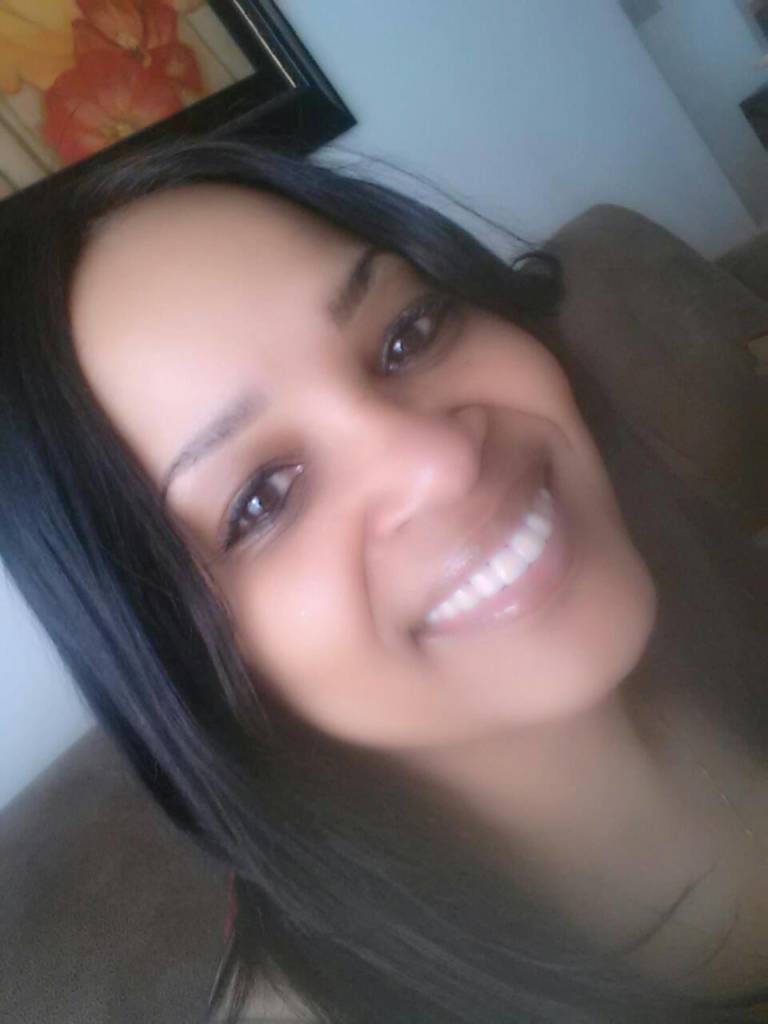
Ashley Reid is no stranger to photoshoots and music video sets. The Oakland born and Atlanta raised fine artist, photographer and teacher is the daughter of legendary music moguls Perri “Pebbles” Reid and Antonio “L.A.” Reid. In the midst of discovering her own artistic passion and talent while growing up in the industry, Reid often struggled behind the flashing lights.
BlackDoctor.org caught up with Reid over the weekend at the A3C Hip-Hop Festival and Conference, where she spoke on a panel about mental health in the entertainment industry and her personal relationship to it. Our conversation shed light on her struggles with depression, suicidal thoughts, the road to recovery and her amazing art exhibition “White Power.”
BlackDoctor.org: When did you first start noticing your mental health challenges ?
Ashley Reid: I noticed when I was young, but I didn’t know that I was coping in a way that was unhealthy. I had these feelings of being alone. I would have these moments where I’m in my closet trying to hang myself, or standing in the mirror with a knife to my chest. I would just put it down and keep going. Now that I’m older I see the reality of that kind of coping thought process that I had. I see now that those were early signs of me not knowing how to cope with my emotions. I’m an empathetic and passionate person which equates to my sadness being big, my anger is big, my joy is big. They call it emotional disregulation, that just means I feel everything a lot. So when I was younger, to me that was just how I coped. Now that I’m older I see that those were the signs of a problem.
BlackDoctor.org: What were the triggers for you?
Ashley Reid: For me it was two things. Its hard to explain. Feeling alone and like feeling like God didn’t even love me. I don’t know if thats a weird way to put it. I felt like this person doesn’t love me, that person doesn’t love me. Overall just feeling alone and feeling lost. When I would get to a place of feeling like I wasn’t even good enough to be loved by God I would go to some other place.

BlackDoctor.org: How was it talking to your family and friends? Did you progressively start opening up about it?
Ashley Reid: They progressively saw Ashley was going through something. I try to be as transparent as possible. At one point I was going through some things at home. There was this one time I wanted to go to the mall and the woman that was watching me said, “No Ashley we can’t go to the mall today.” And I pulled a knife out on her. That’s when my parents were like, “OK, what’s wrong with Ashley?” That’s when I had to confess certain things that were happening to me in the house that they didn’t know about. There was a lot I was holding in and suppressing. I didn’t know how to get it out. So after that is when I started knowing that suppressing was bad, yet I still didn’t know how to let it out. It wasn’t until I was 21 years old when I told my mom I have a problem. She asked me what it was and I had no idea. I didn’t know if it was drinking, emotional, I didn’t know, I just knew I had it. She didn’t know what to do either, but she immediately figured it out. She got on the phone and called other family members, friends and counselors. My mother asked me questions, “Ashley what do you feel like? Give mom incidents.” I decided to check myself into rehabilitation facility. When I went there I learned that some people are forced to go, whether its by law or family members admitting them. But there are fewer people who put themselves in the facility. That was my first time getting help. I don’t think we hit the right thing, but I had to say it, I had to get it out for anybody to even learn how to help me. My mother was an angel during the process. She didn’t know how to help me either, but she did know by me saying something meant that I needed help.
BlackDoctor.org: You mentioned that doctors would say you were too pretty to be depressed, how did that feel?
Ashley Reid: Police officers, doctors, even people in AA meetings. It was ridiculous. How counterproductive ? I remember one time some police escorted me because I was flipping out. This female police officer told me to , “stop with those crocodile tears”. Now mind you, I was depressed. I’m not stupid. So l looked at her like, “Crocodile tears? You just told me my tears were fake.” I understand that in situations like this everyone might not know the right thing to say, but everybody should at least know the absolute wrong thing to say. If somebody says they need help, don’t tell them they’re faking it. If somebody is coming to you saying, “they’re going through it”, don’t say, “you’re too pretty to be going through that” or “your family is so and so, what kind of problems do you have.” Like I always say depression doesn’t discriminate. It’s interesting because when my family started going on their journey with me and getting me back to healthier place they started understanding more. They saw that they had these traits as well. They felt like they could’ve gotten help. I started helping my family heal in other ways, too.
BlackDoctor.org: What does suicidal ideation feel like? What does it feel like to get to the point and say, “I feel like killing myself would be of service to everybody else?”
Ashley Reid: It all boils down to guilt. I don’t know what in me deals with guilt in that way. I have to stop myself to this day when I hear myself saying sorry too much. Or when I’m feeling too guilty about random things, like making a mistake. I don’t know what that is in me, but now I’m aware enough to tell myself that it’s ok.
You feel boxed in when you get to that place where your body feels here and your mind is there and it’s beating me up. You feel guilty about feeling so bad. You feel guilty about people taking care of you. It all boils down to guilt where you feel like a burden. And then you want it to be over. Now I think of how it would break my grandmother’s heart, how it would affect my mother’s whole life, my brothers, my dad. I started thinking about it in that way because I’m healthy. Nobody’s truly healthy, so I’m not going to claim that. Although, I do pray for it.
I just think that we all have mental health issues. Jack (a panelist) says 1 out of every 5 people have mental health issues. I feel like it’s five out of five. We all have our things. When I was in that place where I wasn’t empowered to understand what was really going on it felt like I had to make it stop. I couldn’t get to the place where I could actually visualize the effect it would have on my family and friends.
It’s a very narcissistic thing in my opinion. Even if you don’t like yourself, it becomes so about you. I had to really go to school to learn how to develop healthier coping skills. I literally felt like I went to school for mental health. I wish that everybody could do it. Whether you have problems or not.

BlackDoctor.org: What were some things that helped?
Ashley Reid: Art was something that helped but it also hindered at times as well because it would kind of kept me in my depression at times. At other times it was cathartic and it helped me stay moving and active. A counselor once taught me that you have a circle: physical, emotional, social and mental. You have to figure out what tips it over to get the ball rolling. I learned for me it’s physical. I’ll just start moving, throwing things away and it transfers whatever I’m feeling emotionally and literally putting the energy into something else. When I workout it gets me spiritually and mentally to a healthier place. I had to learn through trial and error. When I’m dormant my brain and body doesn’t like it. I get lazier and lazier. I have to stay moving.
BlackDoctor.org: You have a new exhibition called “White Power” and it tackles a lot of social issues. What’s the science behind this exhibition?
Ashley Reid: Whenever I make anything it’s because I feel charged. I never considered myself an activist. I’ve always been a humanitarian. I never understood why we had so much and other people didn’t. That bothered me. Why do we have so much food to eat, but then I still see a homeless person? So my whole life I’ve always been about trying to make sure people are OK.
One day I was sitting I was at work actually, and I felt a zing. I felt this charge to get my ass out and do something. I made some signs and I went and did a silent protest by Underground Atlanta. I printed the signs at work and protested there for like an hour and a half. Before I knew it there were 200 people behind me. I’m starting to understand the gifts that I have outside of art. I think that I’m pretty good at bringing people together. After that I just kept doing things on my own. I believe that if you take the first step you can inspire somebody. You can’t talk about it. You have to do it. So then I decided I’ve been protesting and going hard for this and it wasn’t really doing anything but keeping the conversation going. I really needed a solution. So I began getting charged and inspired to start making certain pieces of art. The way that I make art is, I have flashes in my head. I don’t sit and construct things. I literally will have a vision and then I sketch it out and then I do it. That’s how I’ve been making art my entire life.
I started to have this vision of certain things. The first one is the African-American piece of me in the paint and handcuffs around my neck. They just kept coming and coming and coming. I actually would start listening to music that lent more towards how I was feeling. White Power came into existence. It was incredible because my first time showcasing it was at the Center for Civil and Human Rights. I hadn’t done a show in 8 years. Now I’m repped by Macaya Gallery in Miami and I’m doing White Power at the end of this month at Art Basel.
BlackDoctor.org: What’s your advice to other Black women looking for help?
Ashley Reid: You have to go beyond asking your friends. They could just tell you, “girl you trippin.” But either way you have to ask for help. If you don’t ask for help nobody knows. You have to ask. But you have to learn how to ask the right people, but that’s tricky. I think that people should just really understand what being led means. Asking my mother that was a right person to ask, but that was not the solution. It’s a process. It took years. A solid three years for people not to freak out and almost not making it to say, “I’m good.” You have to be brave enough to at least talk about it. This is going to sound weird , but I think if you’re brave enough to take your own life you can definitely be brave enough to talk about it with somebody. When you service others, when you get out of your ego and you try to be a blessing to others, I think that provides a healing that’s underrated.
Check out White Power at Art Basel in Miami December 1-4, 2016. Follow Ashley Reid on Facebook, Instagram and her official website.
If you or a loved on is in need of support, call the National Suicide Prevention Lifeline at 800-273-TALK.


By subscribing, you consent to receive emails from BlackDoctor.com. You may unsubscribe at any time. Privacy Policy & Terms of Service.