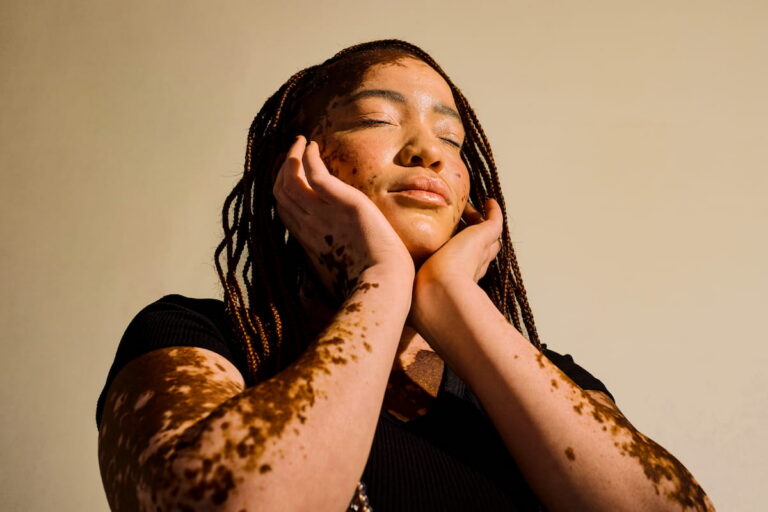
 Photo: Sister Girl Foundation
At the age of 16, Shantana Hazel began to experience symptoms of rheumatoid arthritis (RA). “In the morning, I would wake up with what I called ‘old lady hands.’ They were achy and stiff and hard to move. It took me a moment before I was able to get out of bed, and even then I’d continue to feel fatigued throughout the day,” she shares. The mild symptoms didn’t alarm her at first because she often had issues with sleep. Instead, she chalked it up to needing more rest. After fighting the urge to take what doctors were telling her at face value, Hazel shared her story with CreakyJoints to help Blacks living with rheumatoid arthritis navigate health disparities.
Although she wasn’t initially alarmed by her mild symptoms, Hazel decided to schedule a doctor’s appointment because the symptoms were recurring.
“It set off an alarm in my head and made me pay attention. I went to my doctor and showed him where I was hurting and described my other issues,” she says.
For most, this would have been a straightforward path to getting a diagnosis, but for Hazel it was a “terrible experience.”
After seeing a rheumatologist, it was determined that she had fibromyalgia. She was placed on medications that did not solve her problems. In fact, her symptoms got worse.
“The pain went from one joint to two, then three, and then they also became tender to the touch. I started losing weight. I started having trouble doing certain things. I’d be holding a cup and all of a sudden my hands would cramp up,” Hazel adds.
RELATED: How to Fight RA Fatigue
Hazel’s frustrations began to show as she wasn’t getting the help she needed and her doctor was solely focused on her fibromyalgia. “When your doctor tells you you’re complaining, overreacting, or that what you’re feeling is all in your head, over time you start to believe those things,” she says.
After a while, she began to mistrust herself believing that the doctor knew best. “I didn’t research, I didn’t ask questions. I honestly didn’t know it was okay to question my doctor. After all, they’re the professionals. Who am I to question them?,” she adds.
Eventually, her frustrations led her to find a new rheumatologist. Although her previous doctor left her resistant, she immediately noticed a difference in the level of care she was getting.
“From the very beginning, my new doctor invited me to be a part of my care plan. I felt heard. She put me through a series of tests and went over the results with me. As she was ordering each test, she would tell me what the test was for. She gave me literature and information so I could understand more of what was happening,” Hazel shares.
Hazel says her doctor also became her teacher by showing her what questions to ask and how to be more present at her appointments.
“I started to trust her — and myself. I started taking down some of my walls. I realized I’d been operating with the assumption that doctors should be able to figure things out based solely on lab results and symptoms, when in reality, my experiences are a key piece of the puzzle, too,” she shares.
This is the level of care that helped her get a diagnosis of rheumatoid arthritis.
“There’s no sugarcoating it: having a chronic illness is hard. Rheumatoid arthritis has impacted the ways I’ve been able to interact and be present with my family and friends,” Hazel shares.
However, the difference is that she now has the tools to deal with it and she realizes that grieving is a part of the process. Sometimes she doesn’t have the strength to get out of bed, but when she can, she tries to find ways to have a good day.
“I speak these things to myself. I say “Sister Girl, you are awesome. You’re amazing.” When you speak positively every day to yourself, no matter what your situation looks like, you can find one thing in the midst of your fog to be grateful for,” she adds.
She is also the founder of Sister Girl Foundation, a nonprofit organization that helps empower women with endometriosis, breast cancer, and ovarian cancer to take charge of their health care. Hazel, who also has endometriosis, was able to apply what she learned from having a chronic disease and the Sister Girls to navigating life with rheumatoid arthritis.
RELATED: Simple Ways To Reduce RA Pain
Hazel says it is because of her doctor and her own advocacy work that she is able to have connections to RA research. However, she is aware that so many other people should also have a seat at the table.
“If my community — the Black community — isn’t involved, how can we be cared for properly? That’s not equal health care. The color of my skin shouldn’t determine the quality of treatment I get,” she says.
Rheumatoid arthritis affects approximately 2.1 million Americans or about one percent of the population. Women are two to three times more likely to develop the disorder than men. Blacks with RA experience worse disease activity and disabilities, according to senior investigator Richard Brasington, M.D., associate professor of medicine.
If you are living with rheumatoid arthritis, Hazel offers the following tips in her own words:
Your voice is so important in this process. Be an active part of your care plan, and educate yourself about your disease. Pay attention to your body and emotions and believe what they tell you. And then be honest with your physician about them. Remember: what you don’t reveal, you can’t heal.
Finding your tribe is one of the most important things you can do for yourself, because that provides the support that you need that you can’t get from your family or friends. These are people who understand chronic illness, who are having some of the same experiences as you, and get it.
Good care comes from building trust. Tell your doctors if you’ve had a traumatic experience with a previous physician. Discuss how that’s affected you so they can understand any resistance or pushback you might have and navigate an honest doctor/patient relationship.
When you say “arthritis,” people automatically think of something their grandmother has. Educate your family and friends about the different types of arthritis, and don’t be afraid to tell people what you need. When I started talking about my RA, I found out others in my family also have it. We weren’t talking about it. But the more you know about your medical history, the better care you can get, so it helps everyone.


By subscribing, you consent to receive emails from BlackDoctor.com. You may unsubscribe at any time. Privacy Policy & Terms of Service.