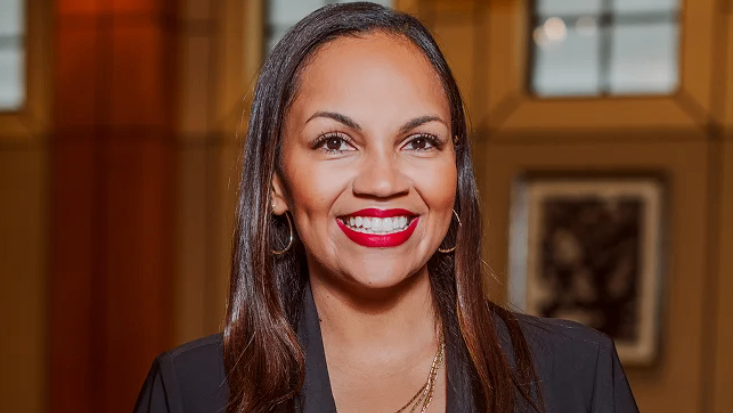
BlackDoctor.org brought together a panel of esteemed Black health care experts to discuss the FDA’s new draft guidance to increase minority participation in clinical trials. The conversation covered the significance of diverse representation in medical research, strategies to improve inclusivity, and the role of healthcare providers in encouraging trial participation. BDO’s executive editor, Jade Curtis, moderated the discussion.
Regarding the FDA’s new guidance Dr. Tania Small, Senior Vice President and Head of Medical Affairs at Bristol Myers Squibb commented: “This is critical. It’s really important. [The guidance] may not be the final step. It may not be all that we want, but it is the beginning of us pushing health care systems to make sure that our research is inclusive and holding us accountable.”
Dr. Small also emphasized the critical importance of diversity in clinical trials: “If you think about clinical trials, what’s the whole purpose? We have innovative technology and medicines that we need to make sure are safe and effective so that they can get approved and used and continue to move health care forward, so we can treat diseases that we couldn’t treat before.”
The panelists discussed various barriers to diverse participation, including lack of trust, limited access, and inadequate education about clinical trials. Ivory Allison, National Senior Director of Community Impact at the American Liver Foundation, highlighted the importance of building trust within communities: “Trust is so important and is key. Once we’ve done the education, the awareness, [patients] say ‘Yes, I’m gonna participate in this clinical trial.’”
Small explained that lack of diversity limits the generalizability of trial results: “[If] we don’t have patients that truly represent the disease…you’re decreasing the generalizability of the trial—meaning that when you’re running these trials, the data may not be applicable to all those that have the disease because you’re only looking at a subset.”
To address these challenges, the experts proposed several strategies:
Dr. Small emphasized the need to bring trials to where patients are: “We know a lot of times what about 80 percent of most patients live in the community, yet 80 percent of these studies are in academic centers, and they just won’t get access to it.”
Allison stressed the importance of cultural competence: “Education and awareness, is is vital, is key. If we’re not educating people about what exactly clinical trials are,” we’re at a loss.
Dr. Small noted that outdated criteria often exclude diverse populations: “If you look at [baseline criteria] a lot of it was based on white males,” leading to a lack of inclusion of people of color and even women in general.
Leslie Henderson-Williams, Director of Global Diversity & Inclusion for Clinical Trials & Patient and Site Centric Solutions at IQVIA, suggested practical solutions: “Would a center be willing to leave their center open an extra half an hour for the end of the day, right, or 45 minutes, or have childcare opportunities” to accommodate more people?
Dr. Ruemu Birhiray, a medical oncologist at Hematology Oncology of Indiana, emphasized the importance of a diverse research staff: “For your key of people who are helping you enroll, how many of your coordinators, how many of your navigators [actually] look like the patients that you’re trying to enroll?”
The panelists also discussed the role of health care providers in encouraging trial participation. Allison advised: “Next time you go to your doctor’s office, bring up clinical trials. You don’t have to wait until they bring it up to you. You are the boss of your own health.”
The discussion concluded with a call for intentionality in pursuing diverse clinical trials. As Dr. Birhiray noted: “Intentionality is the key to success, but you have to have that intention first before you can be successful.”
This conversation highlighted the complex challenges of achieving diverse representation in clinical trials and the multifaceted approaches needed to address them. As the health care industry works to implement the FDA’s new guidance, continued collaboration, education, and community engagement will be crucial in ensuring that clinical trials truly represent the populations they aim to serve.


By subscribing, you consent to receive emails from BlackDoctor.com. You may unsubscribe at any time. Privacy Policy & Terms of Service.