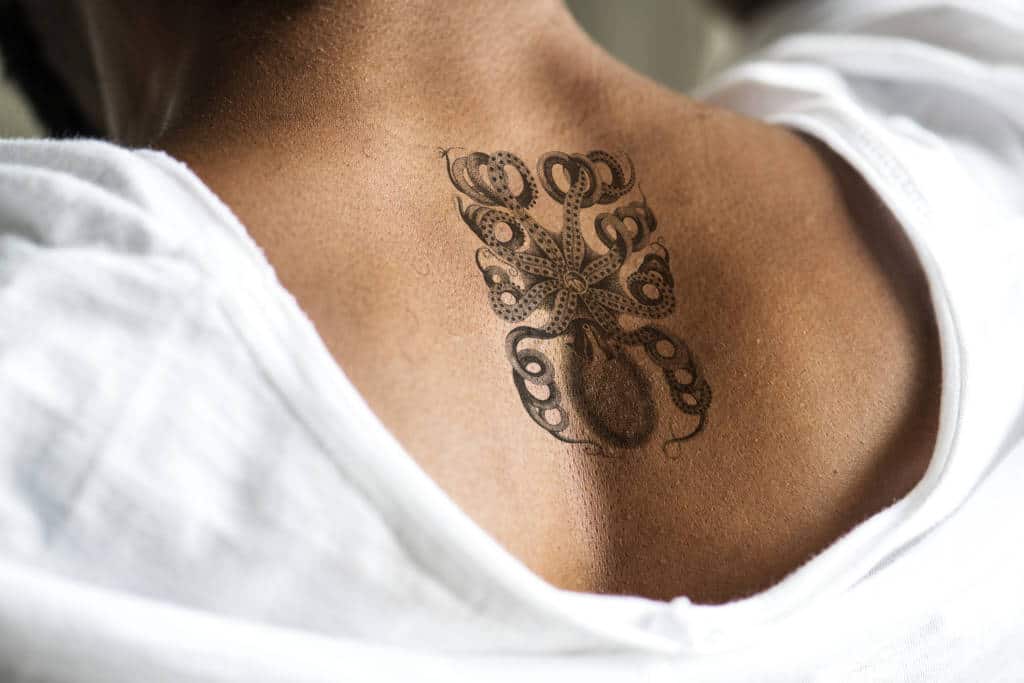
Tattoos look beautiful, don’t they? All that charming body art adorning the likes of Usher, Chris Brown, and Rihanna. Of course, you could have fancied having one sitting on your skin too. But wait…what if you have got psoriasis?
Psoriasis – an autoimmune condition – results in unhealthy coagulation of cells on your skin. These plaques (sort of scaly) can be a nuisance regarding the soreness, irritation, and even burning that accompanies them.
We know you will give the world to recover your beautiful skin – or at least hide those plaques. Therefore, wearing tattoos sounds just smart, correct?
But before you jump right into that tattoo parlor, there are important things to know about the risks of skin complications like psoriasis flares and lesions. I will tell you four things you should essentially consider before getting a tattoo if you have this condition.
The good news is having psoriasis doesn’t totally sentence you from having that eye-catching tattoo. This is especially if best practices are observed during the process.
The thing about tattoos is that ink is permanently inserted into the skin. This comes with the significant risk of psoriasis triggering an immunological response.
Bear in mind that tattoo inks host an assortment of chemicals like manganese, aluminum, mercury sulfide, and iron oxide. Red tattoo inks – just like their yellow variants – have cadmium sulfide. When such ink is exposed to sunlight, you could experience severe photoallergic reactions.
Other chemical constituents like the said iron oxide and aluminum can cause swelling and other allergic reactions like rashes.
Altogether, psoriasis can lengthen the time within your skin heals after the tattoo procedure.
The Koebner phenomenon should be a major consideration if you have psoriasis and are considering getting a tattoo. Basically, this phenomenon involves lesions developing on your skin after a healthy part of your skin is injured.
The Koebner phenomenon can occur in situations as supposedly trivial as scratching your skin. Considering the conventional skin breakage that follows a tattoo process, your psoriasis can trigger the Koebner phenomenon. This could result in flares many weeks down the line.
Take note that this condition is not contagious nor an infection. It is typically confined to the site of the skin damage. The fact that psoriasis plaques have never occurred on that site of your skin where you have the tattoo doesn’t totally eliminate the possibility of lesions developing eventually.
An interesting study found that 1 in every 4 people with the psoriasis condition will battle the koebner effect if they have tattoos or just any other skin injury.
Scientific investigations into the koebner condition are yet to fully uncover the mystery behind it. Such uncertainty implies no definitive rules exist to anticipate who gets it (and who doesn’t) after a tattoo procedure.
Yes, some state laws prohibit tattoos based on specific skin conditions, of which psoriasis happens to be one. In American states like Louisiana and Oregon, it is illegal for a tattoo artist to work on skin areas having lesions. Louisiana is far less accommodating of tattoos with psoriasis, as a specific clause in the law forbids psoriasis patients from getting tattoos.
In states like South Carolina, the laws also prohibit you from getting a tattoo if you have a skin irregularity like pimple, lesion, sunburn, or rash. Therefore before you get a tattoo procedure, it is crucial to check out the state legislation covering that.
We have established you can still get a tattoo – despite having psoriasis – if you and the tattoo artist play it safe. The skin breakage would take about 14 days to heal.
After this is the scabbing over of the tattoo and then the scab ultimately falling off. Within this 14-day window, resist the temptation to scratch it. Oh yes, I know it damn itches. But it is one price you have to pay, as scratching the tattoo will only delay the healing.
Lastly, when washing and drying your tattoo, use maximum care, and never scrub it. Until your tattoo heals, never soak in water – be it a swimming pool or bathtub.
When your tattoo heals, make sure to apply quality moisturizer (preferably unscented) frequently. Strive to reduce your tattoo’s exposure to sunlight. And when your tattoo gets red or even starts to burn, don’t hesitate to give your doctor a call.


By subscribing, you consent to receive emails from BlackDoctor.com. You may unsubscribe at any time. Privacy Policy & Terms of Service.