
Small cell lung cancer (SCLC) is a particularly fast-growing and aggressive form of lung cancer, accounting for about 15 percent of all lung cancer cases. It is overwhelmingly linked to smoking, and the challenge is that it often spreads before a person even realizes something is wrong.
Dr. Lee Hong, a medical oncologist at City of Hope Orange County in Irvine, California, explains the core challenge: “Small cell lung cancer is a fast-growing type of lung cancer that behaves differently from more common forms. Because it can spread quickly, it’s often diagnosed at a later stage, which can make treatment more challenging.”
Because early signs are frequently subtle and mistaken for “just a cough,” “smoker’s lungs,” or “getting older,” the disease is commonly diagnosed at an advanced stage. This is why knowing the warning signs and acting quickly are so critical.
SCLC tends to grow rapidly. By the time clear symptoms develop, the cancer has often advanced.
“In the early stages, a person may feel well or notice only mild changes, such as a nagging cough or increased fatigue that can easily be mistaken for smoking-related effects, a chest infection, or simply aging,” explains Dr. Amina Pervaiz, Pulmonologist at Barbara Ann Karmanos Cancer Institute. “Unfortunately, by the time more obvious symptoms appear, the disease is usually at a more advanced stage, which makes early detection difficult.”
Tobacco smoking is the primary risk factor for SCLC. However, the risk isn’t exclusive to smokers. Dr. Hong notes: “Tobacco smoking is a risk factor for developing SCLC; however, not all patients with SCLC have a smoking history. Other environmental factors may play a role, such as secondhand smoke, air pollution, water contamination, and naturally occurring radon gas.”
RELATED: Myth vs. Fact: What You Really Need to Know About SCLC
Lung cancer doesn’t always cause clear warning signs early on, but certain symptoms are red flags, especially if they are persistent or getting worse.
“Watch for persistent cough, shortness of breath, chest pain, or unexplained weight loss,” Dr. Hong advises.
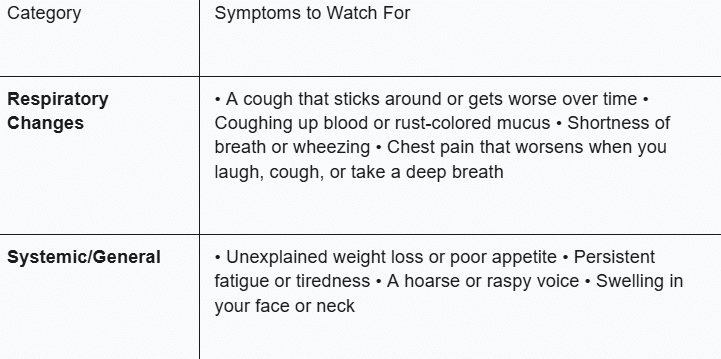
Remember: These symptoms don’t always mean cancer, but if they don’t go away, it’s time to call your doctor.
Lung cancer is split into two main types: non-small cell lung cancer (NSCLC) and small cell lung cancer (SCLC).
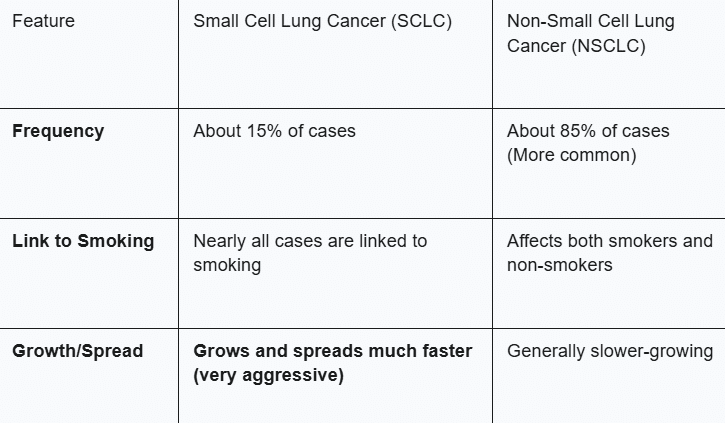
According to Dr. Khalil Choucair, Medical Oncologist and Thoracic Oncology Team Leader, SCLC cells are “poorly differentiated,” meaning they are the most different from normal lung cells.
“As a result,” Dr. Choucair says, “the cancerous cells divide rapidly and spread quickly to other organs outside the lungs. Clinically, SCLC… tends to behave more aggressively.”
A low-dose CT scan (LDCT) is a proven tool that can catch lung cancer early, when it is most treatable.
“Lung cancer screenings with a low-dose CT scan every year – even for those who never smoked but may have other risk factors – can help catch cancer earlier, when treatment is most effective. Talk with your healthcare provider about whether lung cancer screening is appropriate for you,” Dr. Hong says.
Dr. Choucair also points out, “Even people who never smoked can develop lung cancer. If you have risk factors or notice ongoing symptoms, talk to your doctor. Screening guidelines are expanding, because the earlier we find it, the better the chances for [a] cure.”
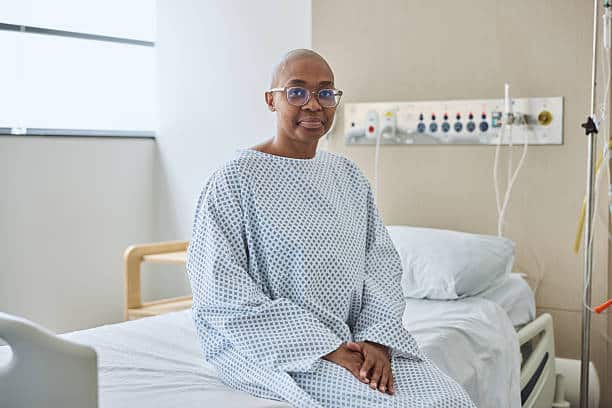
If you notice a cough that won’t go away, blood in your spit, shortness of breath, or unexplained weight loss, make an appointment.
Your doctor may order:
Small-cell lung cancer is aggressive, but learning about the disease early helps patients take action and work closely with their care team. Pay attention to your body, don’t dismiss new or worsening symptoms, and talk to your doctor about screening if you are at risk. Catching it early could save your life.


By subscribing, you consent to receive emails from BlackDoctor.com. You may unsubscribe at any time. Privacy Policy & Terms of Service.