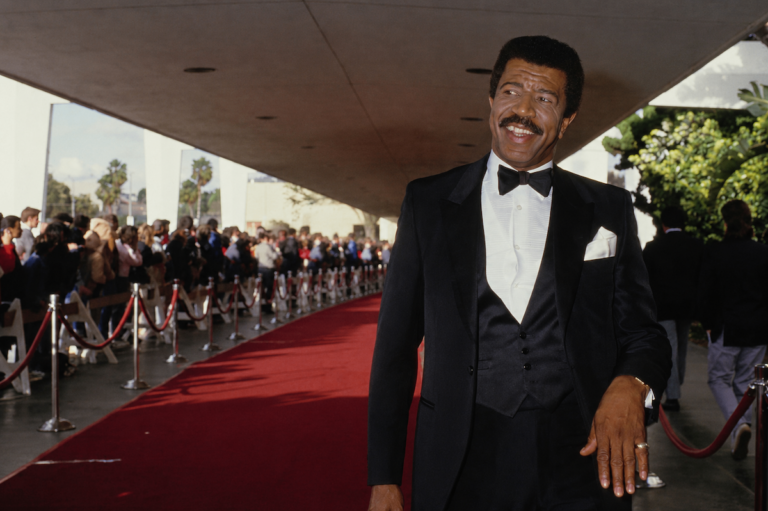
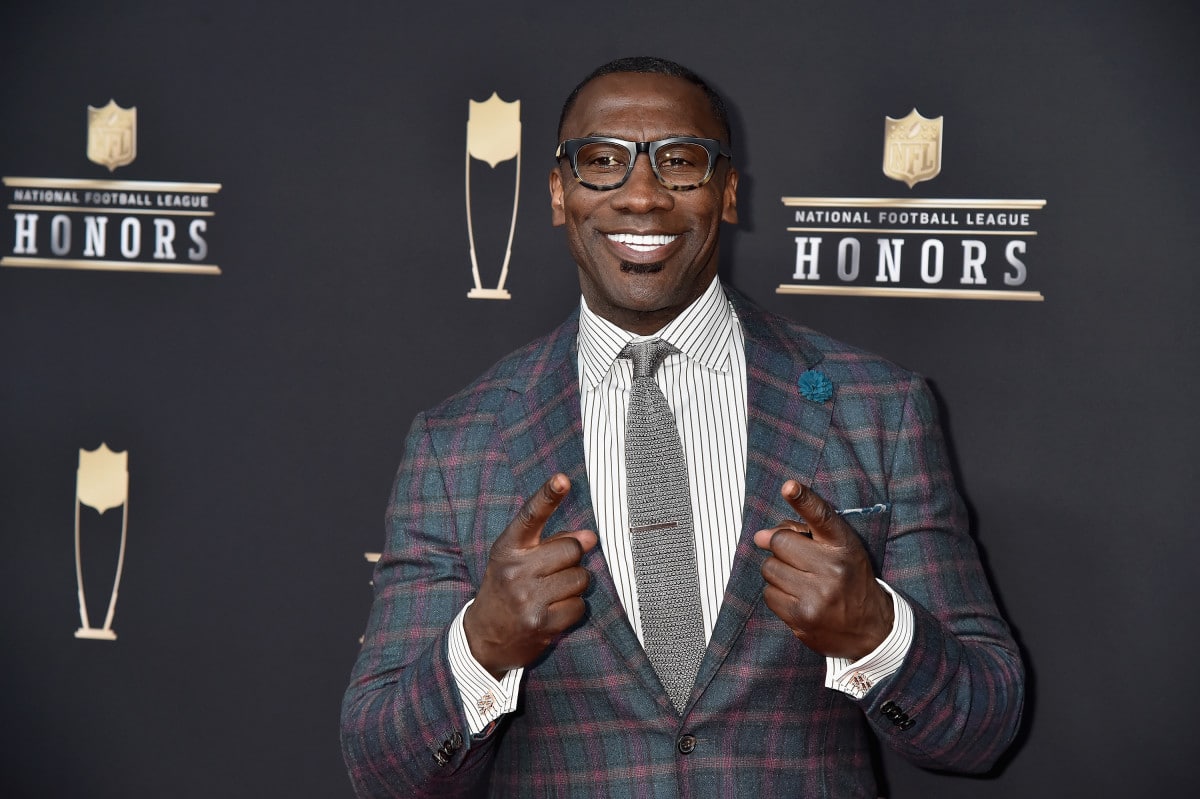
 (Photo by Jeff Kravitz/FilmMagic)
A few months ago, when Janssen reached out to Pro Football Hall of Famer Shannon Sharpe to promote a campaign encouraging Black men to get tested for prostate cancer, they had no idea that he could relate to the campaign more than they could imagine.
“At the time, they asked me to do it, they had no idea I had been diagnosed and treated for prostate cancer,” Sharpe says. “Black men, we’re two times more likely to develop prostate cancer, but there’s a 96% survival rate if screened early and detected early.
“I’m a part of that 96%,” Sharpe, who was diagnosed in 2016 when he went in for a routine screening reveals.
RELATED: Shannon Sharpe, 50+ and in the Best Shape of His Life!
When he got the diagnosis, he was at the height of his career preparing to relocate to Los Angeles to co-host a gig on FS1 alongside Skip Bayless.
“Once you hear that ‘C’ word come out of their mouth, okay, damn. It was difficult..this was my dream job,” he tells PEOPLE.
“I had been wanting this job for so long and I had been given an opportunity that Skip believed in me. I was going to be a co-host of a daily debate show that we talked about football, basketball, track and field, golf, tennis, social issues, I was the first athlete to do what I do full-time.”
“I didn’t want this opportunity to go away because I wanted to show that athletes could do more than talk about their best sports, the Undisputed: Skip and Shannon analyst shares. “I felt that there were a lot of people counting on me to be able to go fulfill this obligation that I had been given.”
Sharpe shared the news with only four people: his brother, sister and girlfriend at the time.
Not wanting to worry his family, it was “at least a year” before he “felt comfortable enough” to tell his mom and three kids.
“The last thing I need you to do is worry about something that you can’t control. You worrying is going to make me worry and that wasn’t going to help our situation,” he explains. “They did after a while. I think they understood that Dad is strong. Dad can do it. Dad does a great job of compartmentalizing.”
Due to his family history, the 54-year-old began getting screened in 2003 when he retired from the league.
“My dad died at 39. Another brother, he died in his mid-forties. And the other died in his late 40s, early 50s. So all that’s going through my mind. So absolutely, I’m getting checked out all the time,” he adds.
In 2016, @ShannonSharpe privately battled prostate cancer.
Today on FOX NFL Sunday, he shared his story: (@undisputed) pic.twitter.com/OblsXbTU6x — FOX Sports: NFL (@NFLonFOX) September 18, 2022
Despite having a family history, the diagnosis was still somewhat of a shock for Sharpe, who has stayed in great health since his retirement.
“I felt fine. I was exercising, eating right, drinking plenty of water, no really bad habits or anything. I thought it was going to be routine,” Sharpe adds.
Like most professional athletes, Sharpe has experienced his fair share of injuries. “I’ve fractured my eye socket, broken my collar bone, dislocated my elbow. I tore a rib cartilage, separated both of my shoulders,” he shares.
But this diagnosis was different because there was nothing physical that he could feel to indicate that something was wrong.
“I felt normal. There was no transformation in my body, I didn’t lose weight. There was no pain, no nothing, and if you had just looked at me, I looked like the picture of health,” Sharpe adds.
For Sharpe, Janssen’s promotional opportunity was perfect. He always knew he wanted to share his story but struggled to find the right time to do so.
Now he has the opportunity to start the conversation about the importance of prostate screenings, especially for Black men, through Janssen Oncology’s Talk That Talk campaign.
“At the time, when you get diagnosed with something, the last thing on your mind [is] that Black men are two times more likely to be diagnosed with prostate cancer. At that time, I didn’t know if it was two times, five times, six times. What I want to do now is break down the stigma – do not be afraid to go to the doctor,” Sharpe says. “We need to give Black people more access to healthcare, and then once we get better access to healthcare, don’t be afraid to go use it. Do not be afraid to just ask questions of your doctor. Do not be afraid to get screened because it could save your life. Now they mentioned there’s a 96% survival rate if you get screened and it gets detected early. I’m a part of that 96%. See, I can speak this. I’m not a paid actor. I lived this. I’ve been there. I can tell you that this could save your life. Saved my life. I’m living proof.”
RELATED: 8 Ways You Can Prevent Prostate Cancer
Thinking about getting screened? Have an open conversation with your doctor before making a decision, considering the following:
Men who are 55 to 69 years old should make individual decisions about being screened for prostate cancer with a prostate-specific antigen (PSA) test, according to
the U.S. Preventive Services Task Force (USPSTF) made the following recommendations about prostate cancer screening.
Men who are 70 years old and older should not be screened for prostate cancer routinely.



By subscribing, you consent to receive emails from BlackDoctor.com. You may unsubscribe at any time. Privacy Policy & Terms of Service.
Enter your name and email to receive the download link.
Welcome to BlackDoctor AI Search. Explore 35,000+ articles and videos — your health questions, answered faster.