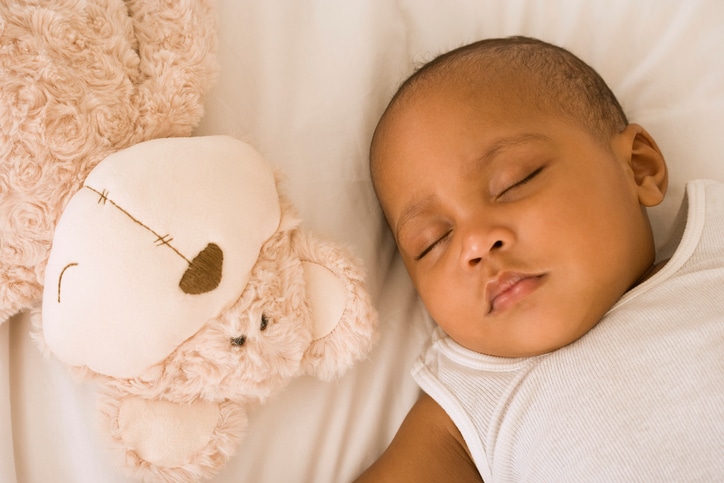
Sudden infant death syndrome (SIDS) is the leading cause of death for babies 1 month to 1 year of age. Recent statistics from the Centers for Disease Control and Prevention (CDC) show that Black babies are dying from SIDS at a rate higher than most ethnic groups. With the infant mortality rate still at an all-time high in the Black community one has to ask,”What’s being done to save our babies?”
READ: Why Do Black Babies Have Twice The Infant Mortality Rate?
Public education campaign, “Safe to Sleep” (formerly known as the “Back to Sleep” campaign) provides parents with information on how to properly put your child to sleep to reduce the risk of SIDS . According to the National Institute of Child Health and Human Development the direct causes of this mystery disease are unknown, but there are preventative measures that can be taken to reduce the risk of SIDS. One of the preventative measures you can take are developing a safe sleeping environment for your baby. The American Academy of Pediatrics (AAP) has developed a list of very important things to keep in mind when putting your child to sleep.
BlackDoctor.org also sought help from Dr. Tracei D. Ball, Founder of OnCall Mobile Medical and Wellness PLLC, an innovative medical practice that provides housecalls in the metropolitan region of Charlotte, NC.
Babies Should Sleep On Their Backs
Infants should be placed for sleep on their backs (supine position) until 1 year of age.This position doesn’t increase the child’s risk of choking and aspiration. While sleeping in the supine position do not prop or elevate your child’s head. It puts the child’s respiration into compromise when doing such. Side sleeping isn’t recommended and unsafe according to a recent policy statement by the American Academy of Pediatrics
“Having a child sleep on their side is not an alternative to sleeping on their back. Studies show a decrease in infant SIDS deaths when parents/caretakers put babies on their backs to sleep,” says Dr. Ball.
She added that , “25 percent of parents do not follow the recommendation to put their babies to sleep on their backs, of those parents, about half are African American.”
Firm Sleeping Surface
No more sleeping on mama’s soft, cushiony bed for a good night’s rest. The AAP recommends a firm sleeping surface, such as a firm crib mattress covered by a fitted sheet, to reduce your infant’s risk of SIDS and suffocation. The mattress your child sleeps on should be designed specifically for the product it was designed for. It should be firm and maintain its shape when the fitted sheet is applied. You don’t want any gaps between the mattress and the side of the crib. Do not place your infant on pillows, cushions, quilts, comforters or sheepskin while they’re sleeping. These are not appropriate substitutes or necessary additions to a firm mattress.
Dr. Ball advises that you “avoid placing an infant down to sleep on a sofa, chair, cushion or co-sleeping to prevent accidental suffocation.”
Share a Room But Don’t Share a Bed
This sleeping arrangement decreases SIDS by 50% according to studies. AAP says your infant’s crib, portable crib, play yard or bassinet should be in your room right next to your bed. The proximity removes the chance of suffocation, strangulation, and entrapment that can occur when your child sleeps with you. You can also tend to your child’s needs more with them being so close to you. Things such as feeding, monitoring and comforting are a lot easier when they’re close. AAP also stresses that it’s not recommended that you use bed-sharing devices designed to promote safe sleeping for the baby and parent. Also, if you know you’re going to fall asleep, do not feed your child on a couch or armchair as this poses a serious risk for SIDS and suffocation.
No Loose Objects or Loose Bedding
The tendency is to place every plush animal or pillow inside of your child’s sleeping area, but Dr. Ball says this is a no-no.
“The crib or bassinet should not contain any fluffy blankets, pillows, or toys. This will help prevent accidental suffocation.”
No loose bedding (blankets, sheets) should be kept in your child’s sleeping area. It’s also strongly recommended that you don’t use bumper pads or similar products because of the high potential for suffocation, entrapment and suffocation.
Avoid Overheating
Studies have shown that overheating contributes to an increased risk of SIDS. Although no exact temperature is specified in these studies, its recommend that infants be dressed appropriately for the environment. The tendency is to overdress your infant in fear that they might be too cold. However, the studies say that no more than one layer more than an adult would wear to be comfortable in that setting is appropriate. When looking for signs of overheating in your child, sweating and feeling the infant’s chest is recommended. Overbuilding and covering of the face and head should be avoided.


By subscribing, you consent to receive emails from BlackDoctor.com. You may unsubscribe at any time. Privacy Policy & Terms of Service.