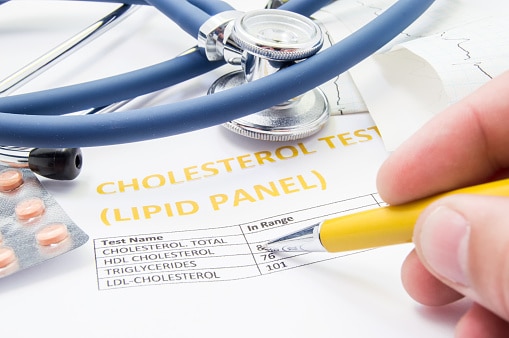
There is an alarming prevalence of High Cholesterol Levels in Americans. According to the CDC, an estimated 93 million American adults –at least 20 years old – have cholesterol levels higher than 200 mg/Dl (the maximum range for healthy cholesterol levels).
For emphasis, 29 million adult Americans have their total cholesterol levels higher than 240 mg/dL.3. Oh, I can see knitting your brows already.
High cholesterol levels can result in complications like heart attack, high blood pressure, Cardiovascular disease (CVD), and even stroke. But wait, what really is cholesterol?
Fundamentally, we all have cholesterol in our body. Your cells are made of fat-like substances called cholesterol.
Cholesterol plays critical functions in your everyday life processes like hormone and Vitamin D production, fat digestion, even as far as structuring the cells. The liver produces cholesterol.
Now, there are two types of cholesterol. These are Low-density lipoproteins (LDL) and High-density lipoproteins (HDL).
These two types of cholesterol have diverse effects on the body. Indeed, HDL is beneficial to the heart, absorbing cholesterol from the blood, transporting it to the liver to be dispelled out of the body.
On the other side, we have LDL, who is the bad guy. LDL triggers an unhealthy buildup of cholesterol, narrowing the arteries. This condition, called atherosclerosis, is the infamous culprit behind strokes, peripheral artery disease, and heart attacks.
For adults, there are healthy ranges for LDL, HDL, and Total Cholesterol. Normal total cholesterol levels range between 125-200 mg/dL.
For adult male, you have normal LDL levels if your LDL falls below 100mg/dL and for this same category of males, their HDL levels would be normal if it is at least 40mg/dL. For women, the normal HDL levels are at least 50mg/dL.
| Type of Cholesterol | Healthy Level |
|---|---|
| Total Cholesterol | 125 to 200mg/dL |
| Low-density lipoproteins (LDL) | Less than 100mg/dL |
| High-density lipoproteins (HDL) | Men: 40mg/dL or higher |
| Women: 50mg/dL or higher |
Indeed, your diet significantly alters your cholesterol levels. Precisely, an unhealthy consumption of fat will not doubt amplify your susceptibility to cardiovascular diseases. Care to know how? I will tell you.
Your cholesterol levels are not unrelated to the types of fat you consume. Basically, there are four types of fats in the foods we eat.
These are Polyunsaturated fats, Saturated fats, Trans-fats, and Monounsaturated fats. Sounds interesting? Wait till I tell you more about each fat type.
These are the healthiest types of fat you can eat as they can’t be produced in the body. PUFAs can be further categorized into Omega-3 PUFAs and Omega 6 PUFAs.
Omega-6 PUFAs help raise HDL (Good Cholesterol) levels while slashing LDL (Bad Cholesterol) levels. Omega-3 PUFAs reduce Triglyceride Levels.
Saturated fats are sourced from animal products like Cheese, Butter, and Meat. At room temperature, saturated fats are solid.
Depending on the source, the effect of Saturated fats on your Cholesterol levels varies. Specifically, while Saturated fats, as found in Dairy Products and Red Meat, have shown promise in increasing HDL and LDL, Saturated fats, as found in Cocoa Butter and Beef, don’t have significant effects on LDL HDL cholesterol.
The bulk of monounsaturated fats is obtained from dairy fat and red meat sources. Interestingly, there are approximately equal amounts of monounsaturated and saturated fats in red meat.
Monounsaturated fats can also be derived from foods like avocados, nut butter, and olive oil. There is a buoyant chance of reducing your LDL cholesterol by replacing your food’s saturated fats content with monounsaturated fats. Research has shown that monounsaturated fats significantly reduce your chances of heart disease.
One advice: Run away from trans-fat. Trans-fats are dangerous to your heart health. Specifically, trans fat suppresses your HDL while pumping up your bad LDL. Such a villain!
Among the four said types of fats, trans fats are the unhealthiest. These fats are produced by means when saturated fats are partially hydrogenated. On nutrition labels, trans fats are commonly referred to as partially hydrogenated oils.
Such a process occurs when food is industrially processed. Therefore, trans fats don’t naturally occur in high quantities in your everyday organic foods.
Trans fats are more prevalent in baked foods that were industrially produced. You can also expect a notable trans-fat content in fried foods. Considering their unhealthiness, the FDA pushed for them to be taken off processed food supply earlier in the year in January.
There you are! We have emphatically explored what you need to know about cholesterol and how the foods you eat affect it. We cannot overemphasize the effect of eating healthily. You are only as healthy as you eat, aren’t you?


By subscribing, you consent to receive emails from BlackDoctor.com. You may unsubscribe at any time. Privacy Policy & Terms of Service.