Diabetes – especially Type 2 – is a chronic condition that hits the Black community hardest. With Black Americans facing a prevalence rate of about 13.4 percent compared to 9.2 percent for non-Hispanic whites, the problem is as clear as day.
Something needs to be done, and while there are constant measures to combat this disease, lifestyle factors alone are not a cure-all. In fact, genetics play a large role too. Thanks to a groundbreaking 2019 study, the novel gene, ZRANB3 (Zinc Finger RANBP2-Type Containing 3), is now being studied in earnest.
This discovery, specific to people of African descent, is offering new insights like never before. We’re talking about certain risks, different diagnoses, and even ways to personalize revolutionary treatments.
Let’s explore the science behind ZRANB3, its implications for Black communities, and devise some practical steps to manage your risk, starting today.
ZRANB3 is a long-sounding gene, but breaking down its importance doesn’t have to be hard. It’s what’s known as a protein-coding gene. In other words, it’s involved in processes that are critical for DNA replication and repair. Researchers from the National Human Genome Research Institute (NHGRI) have now found that the gene is significantly associated with Type 2 diabetes.
Unlike many T2D-related genes identified in European or Asian populations, ZRANB3 variants are African-specific, which is why understanding them is so crucial.
But here’s the kicker. T2D is driven by a complex interplay of genetics, environment, and lifestyle. So, if you’re worried that you’re somehow ‘doomed’ because of your genetics, don’t be. You can always take daily steps to beat your genes and minimize your risks as much as possible.
In the end, this can lead to more effective, tailored interventions for Black individuals.
RELATED: 5 Things Every Black Man Should Do To Cut His Diabetes Risk
For the most part, researchers use animal models to study the gene’s effects on pancreatic beta cells, which produce insulin to regulate blood sugar. For instance, in zebrafish, knocking out or reducing ZRANB3 expression led to an increase in cell death (apoptosis) in the pancreas. Meanwhile, in mouse beta cells, suppressing the functions of ZRANB3 leads to similar conditions found in Type 2 diabetes.
Overall, scientists believe that mutations to ZRANB3 can increase type 2 diabetes risk by limiting the body’s ability to manage blood sugar effectively.
For Black individuals, this is highly relevant. Why? For the simple fact that most people of African ancestry have type 2 diabetes less because of insulin resistance, and more because of this beta cell dysfunction. This is different from other races, where insulin issues are typically the main predictor of diabetes risk.
Again, the ZRANB3 discovery has profound implications for Black communities. The most important part may be that it opens minds to new possibilities. Researchers, more than ever, are realizing how important inclusive genetic research can be. Historically, African populations have been underrepresented in genomic studies, so this is a critical factor.
Diversity in research may just have gotten the second wind it needs.
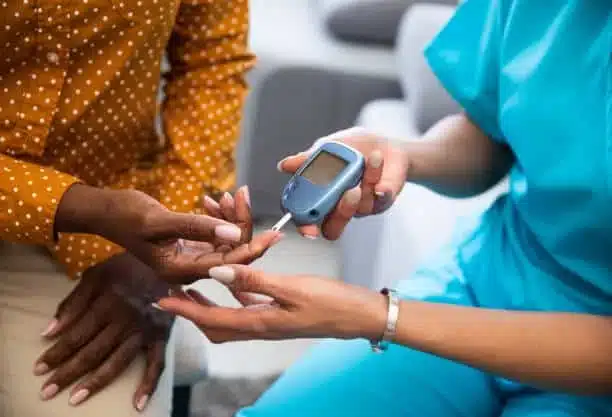
And then you have the fact that ZRANB3 could pave the way for personalized medicine. Researchers suggest that individuals with ZRANB3 variants may benefit from early insulin therapy, as this can help keep beta cells functioning properly. With genetic screening for these variants, a Black patient could begin early monitoring right away.
Although screening for beta cell exhaustion is not standard, it’s gaining traction and expanding research everywhere.
RELATED: 5 Diabetes Care Essentials Every Black Diabetic Needs to Know
While ZRANB3 highlights genetic risks, never underestimate the power of lifestyle changes. As any competent doctor will tell you, genetics remains a complex area of study. We also have what is called epigenetics, which represents the interplay between your genes and your environment. In short, your body can essentially ‘turn off and on’ certain gene expressions based on your environmental interactions.
By engaging in certain activities, for instance, over time, an individual may greatly increase or decrease his or her risk of disease.
So, embrace the healthiest environment possible!
The first thing to do is to adopt a low-sugar, whole-food diet. Maintaining stable blood sugar is critical. Focus on African-inspired whole foods like yams, beans, and leafy greens, which are low in added sugars and rich in fiber. Reduce processed sugar as much as possible.
And also don’t forget to get out and about. Not just for work or errands, but for your own physical and mental peace. Walk for 30 minutes on a favorite trail, tend to your garden, and dance to some Afrobeat music. Listen to an audiobook as you do some light yoga. It’s all about being consistent, not necessarily grueling. So don’t go at it too hard, but definitely go at it regularly.
When you’re not exercising and just relaxing, turn to your social network. Emotional stress is known to increase glucose levels, so create your “village.” Churchgoers, fellow volunteers, coworkers outside of work, or just close friends and family. Try to establish a weekly tradition of get-togethers, something you can all look forward to and use for better emotional and mental health.
And finally, be your own advocate. Black Health Matters is one program that can help you get involved. You’ll be able to connect with organizations, learn more about new research, and push for more resources through community health centers.
Remember, you are your best advocate. Doctors and specialists can’t know your concerns if you don’t present them. They’re highly trained experts, but they’re not mind-readers. So push for what matters most.
While the ZRANB3 discovery is a milestone, it’s just the beginning. The research continues on, and many experts are confident that T2D complications – like kidney disease and amputations – can be significantly reduced with time. As long as equitable research is maintained, African-specific treatments will become more prevalent and more powerful.
It’s time to embrace the future of healthcare. To prevent and manage diabetes with precision, ZRANB3 is a leading player. Keep your eye on the ball, engage in simple but effective lifestyle changes, and connect with culturally competent doctors.
The power is in your hands like never before.


By subscribing, you consent to receive emails from BlackDoctor.com. You may unsubscribe at any time. Privacy Policy & Terms of Service.