Fear, grief, uncertainty, and isolation during the pandemic have triggered a national state of emergency in the mental health of America’s youth, leading child health care groups warn.
Statistics show an increase in children with mental health emergencies for the following groups:
Poor mental health is a growing concern for all young people, because problems often persist into adulthood, leading to underachievement and a poorer quality of life, according to the study authors.
Young people already faced significant mental health challenges, and the pandemic has made them worse, according to the American Academy of Pediatrics, the American Academy of Child and Adolescent Psychiatry, and the Children’s Hospital Association.
“Children’s mental health is suffering. Young people have endured so much throughout this pandemic and while much of the attention is often placed on its physical health consequences, we cannot overlook the escalating mental health crisis facing our patients,” Lee Savio Beers, M.D., president of the American Academy of Pediatrics, said in a news release from the three groups. “Today’s declaration is an urgent call to policymakers at all levels of government — we must treat this mental health crisis like the emergency it is.”
While the groups said in their declaration that policymakers need to increase funding to ensure all families can access mental health services, improve telemedicine access, support effective school-based mental health care, and strengthen efforts to reduce youth suicide risk, among other measures; another study found a diet high in fruits and vegetables can improve childrens’ mental well-being.
“Vegetables and fruits contain important nutrients such as vitamins, minerals, flavonoids and carotenoids that can reduce inflammation and oxidative stress, and therefore improve mental wellbeing,” Simone Radavelli-Bagatini from ECU’s Institute for Nutrition Research, says.”Inflammation and oxidative stress in the body are recognized factors that can lead to increased stress, anxiety and lower mood.”
How to Help a Child in Depression: 8 Pieces of Advice
Eating more fruits and vegetables can improve your child’s health in the following ways:
According to the study, the following fruits and vegetables were associated with positive mental health outcomes:
Raw vegetables and salads are also associated with positive moods and lower stress levels.
The following fall into that category:
Processed foods that improve mood:
Although the findings don’t show which is best for mental health between raw, cooked or canned foods; researchers say raw foods may be best for optimal well-being.
“Raw fruits and vegetables may provide greater levels of micronutrients than processed fruits and vegetables, which could explain their stronger association with improved mental well-being,” the researchers say. For compounds like vitamin C and carotenoids that have been linked to mental health, “cooking and canning would most likely lead to a degradation in nutrients, thereby limiting their beneficial impact on mental health.”
You can try incorporating more fruits and vegetables into your child’s diet in the following ways:
Compared with eating a packed lunch, eating school food was tied with lower mental health scores, although this wasn’t statistically significant, according to researchers.
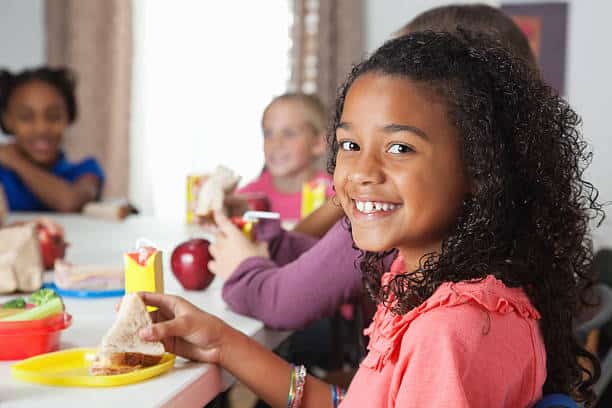
Instead of allowing your child to eat school lunches, try to pack your child’s lunch that way you can control how many fruits and vegetables they get on a daily. If you are short on time in the morning try packing the lunches at night or meal prepping for the whole week.
It may take getting up a little earlier, but giving your child a nutritional breakfast is well worth it. Eating a full breakfast, and not just a snack, breakfast bar or energy drink, was also tied to better mental well-being. Having just an energy drink for breakfast was linked to low mental health scores.
Additionally, younger kids who had a snack or non-energy drink to start the day also had lower mental health scores as did those who skipped breakfast.
As you know not packing your child’s lunch can cause them to consume unhealthy foods, but it can also cause them to skip lunch altogether because their school’s lunch menu may not offer anything they like.
Not only do children need food to be able to function throughout the school day, they also need it for their mental well-being.
Skipping lunch was associated with lower mental health scores than brown-bagging. You can easily eliminate this by packing your child’s lunch with some of their favorite foods and incorporating some healthy fruits and vegetables in them.
Although nutrition isn’t the sole factor of bettering your child’s mental health, it is highly relevant to childhood mental well-being. For an added bonus, think of it as a way to get your child involved in what goes into their body by allowing them to plan meals or even harvest their own foods.


By subscribing, you consent to receive emails from BlackDoctor.com. You may unsubscribe at any time. Privacy Policy & Terms of Service.