Black children are often left out of pediatric eye disease trials, and it’s keeping them out of opportunities for treatment.
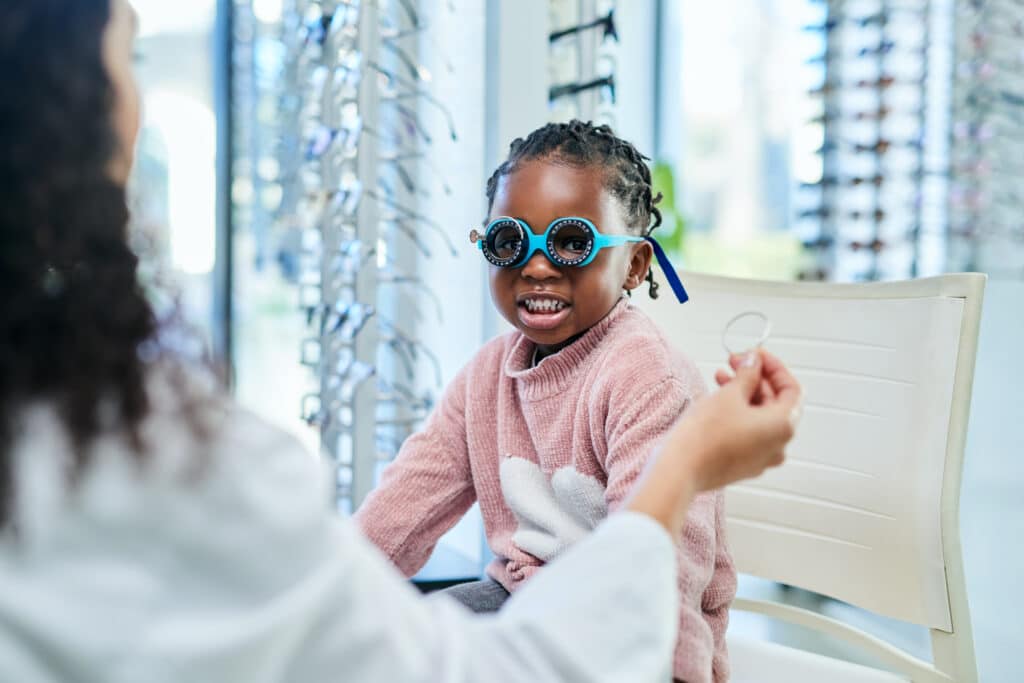
Pediatric eye disease encompasses a range of conditions affecting children’s vision, including congenital cataracts, retinopathy of prematurity, amblyopia (lazy eye), and strabismus (crossed eyes).
These conditions can significantly impact a child’s development, affecting not only their vision but also their learning, social interactions, and overall quality of life. Almost 20 percent of children under the age of 18 have a diagnosed eye condition. Early detection and intervention are critical, as many of these diseases can lead to long-term visual impairment if left untreated.
In a research study that focused on the prevalence of lazy eye (amblyopia) and cross-eyes (strabismus) in white and Black American children, researchers found that manifest strabismus occurred in 3.3 percent of white children compared to 21 percent of Black American children.
The study shows the prevalence of amblyopia was found to be less than 2 percent in both groups. These findings highlight significant disparities in the prevalence of strabismus, which may be influenced by genetic, environmental, and socioeconomic factors.
These differences underscore the need for targeted interventions and increased awareness in communities with higher rates of strabismus to ensure that all children receive timely evaluations and appropriate care.
Addressing these disparities requires not only public health initiatives but also culturally sensitive outreach and education to promote eye health and access to care for all children.
While over time the rates have improved, previously, Black children are most commonly underrepresented in eye pediatric clinical trials.
Researchers predicted that Black American children would be underrepresented in clinical trials, because of a legacy of exploitation of Black people in unethical medical study.
For example, the infamous Tuskegee experiment, in which Black men with syphilis were left to suffer without treatment so scientists could study the effects of the disease.
This mistrust in the medical community has impacted many Black Americans in receiving medical treatments. Not to mention, there is also a lack of targeted outreach and education about clinical trials in Black communities, leading to lower awareness of available opportunities.
The good news is that this can be changed and medical professionals can begin to see more Black Americans engaging in clinical trials. But how can this be achieved? To address these disparities and ensure that Black children are adequately represented in pediatric eye disease research, Medical providers should build trust within the communities that Black Americans reside in through outreach programs to bridge the gap and combat misinformation.
When medical providers engage in community work, this allows the members of the community and healthcare providers to build a strong rapport, medical providers raise awareness and encourage participation in clinical trials.
Another way to increase participation is by medical providers creating educational materials that resonate with Black families and demystify clinical trials. This approach formally educates and provides a safe space while emphasizing the importance of participation and their concerns. Both actions will increase the participation of Black Americans in clinical trials and provide better support to those in need.
These actions are important and efforts should focus on ensuring equitable access to eye care and research participation for all demographics. Pediatric eye disease presents significant challenges, particularly for Black children who face both biological and social disparities.
With a collaborative approach, this will enrich scientific understanding but also empower Black American families to actively participate in their children’s health journeys. Ultimately, by fostering inclusivity and trust, we can ensure that all Black American children will have the opportunity for optimal vision and health outcomes.


By subscribing, you consent to receive emails from BlackDoctor.com. You may unsubscribe at any time. Privacy Policy & Terms of Service.