One day, a group of co-workers discussed when they first realized they needed glasses. Most had trouble seeing the blackboard in school. Some had problems reading. We all had another thing in common. Our parents didn’t believe us at first when we said we couldn’t see well. They said, “Quit playing,” or thought we were trying to get attention. One person said that by the time she finally persuaded her mother to get her eyes checked, they found she was so nearsighted that without glasses, she was legally blind. Don’t be that parent.
When children have poor eyesight, it can impact every aspect of their lives. For school-age children, it affects reading and classroom performance.
Some experts theorize that undetected vision problems manifest the same symptoms as Attention Deficit Hyperactivity Disorder. In younger children, vision can affect the hand-eye coordination used to draw a picture or to hit a baseball.
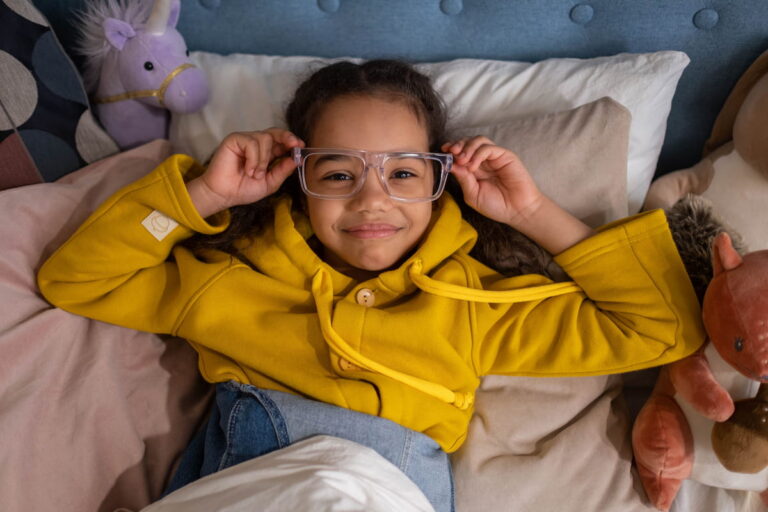
There are several reasons children wear glasses.
A very young child can’t tell you something is wrong with their eyesight. An older child may not realize that not everyone has trouble seeing the print in a book. But there are signs parents can watch for that could mean a child needs glasses.
Experts recommend having an eye exam before a child’s first birthday. Conditions like lazy eye and crossed eyes (Strabismus) can be corrected. Early diagnosis and treatment can prevent the eyes from weakening over time.
These exams are especially important for children with a parent or sibling who has eye issues. Parents should also schedule an eye exam if they suspect a child has vision concerns.
If no problems are identified in the initial exam, the child does not need another eye exam until it is time to start school. At that time, a child should receive a comprehensive eye exam, according to the American Optometric Association.
RELATED: What’s Your Vision of the Future? 7 Tips For Healthier Eyes
Parents often think an eye exam is unnecessary because many schools have vision screenings for students. But a vision screening only checks if a student can read an eye chart.
A child who can read an eye chart might still have issues with eye focus and coordination.
In fact, according to the American Optometric Association, up to 75 percent of school vision screenings miss vision problems.
It’s not always obvious when a child has vision problems. But having a child’s vision checked in the first year of life and again before starting school will help ensure that any problems are identified and corrected.
If a child says they can’t see or shows signs of vision problems mentioned above, have their vision checked. The benefit is helping your child perform at their best both in and out of the classroom.


By subscribing, you consent to receive emails from BlackDoctor.com. You may unsubscribe at any time. Privacy Policy & Terms of Service.