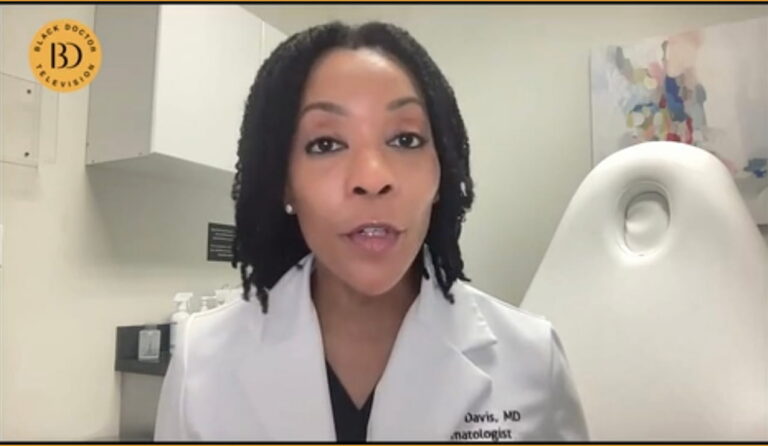
Lauren McCullough, Ph.D., MSPH, has worked as a cancer epidemiologist for over two decades, focusing on cancer equity and why certain groups and marginalized populations are disproportionately affected by aggressive cancers.
“Black women are slightly less likely than their white counterparts to develop breast cancer, but are actually more likely to develop breast cancer at later stages and are more likely to get aggressive tumors that are harder to treat,” Dr. McCullough shares.
Differences in cancer stage and subtype can directly affect a patient’s survival.
“There’s a lot around how breast cancer develops that we still don’t understand. Obviously, we’ve made a lot of progress in understanding some of the genetic contributors, which account for about 15 percent of cancers,” Dr. McCullough notes. “We also know a lot about behavioral and lifestyle factors, things like being at an optimal weight, limiting alcohol intake and being physically active. But there’s so much that is still unknown, and particularly unknown in driving those aggressive cancers that Black women are more likely to get.”
Much of Dr. McCullough’s research examines how place may contribute to aggressive cancers. That includes not only a neighborhood’s socioeconomic conditions, but also environmental exposures and the products women use in their homes and on their bodies.
Dr. McCullough also focuses on the disparity in breast cancer deaths: Black women are more likely than white women to die from the disease.
“While we have lots of good treatments for breast cancer, and survival rates are certainly higher than for other cancers, that disparity is one that can and should be addressed and also warrants additional research,” she notes.
Beyond conducting research, Dr. McCullough is committed to helping women understand their risk factors.
The American Cancer Society recently surveyed approximately 33,000 women about their awareness of modifiable breast cancer risks.
The survey found that awareness of risk factors is generally high, but significant gaps remain between awareness and action. More than 30 percent of breast cancers are estimated to be preventable through healthy behaviors that reduce risk, including regular exercise, maintaining a healthy weight, avoiding alcohol and tobacco, and breastfeeding.
“Some of the most significant findings, and something that really is encouraging, is that most women are aware of genetic and family history and how that drives cancer incidence and cancer risk. I think that’s important because understanding your baseline risk based on your family history is a way to empower women to be advocates and talk to their providers about genetic testing and screening,” Dr. McCullough says.
The survey found that physical activity and alcohol are the modifiable risk factors with the widest gaps between awareness and taking positive action. Because these behaviors can be changed, they offer people an opportunity to reduce their cancer risk.
The American Cancer Society recommends 150 to 300 minutes of moderate-intensity activity each week (or 75 to 150 minutes of vigorous-intensity activity). Limiting alcohol intake is also important. Although a majority of women are aware that both these factors affect cancer risk, only 27 percent of respondents meet the recommended guidelines for weekly physical activity, and 69 percent report drinking alcohol to some extent.
Breastfeeding is another potentially modifiable factor associated with a reduced risk of breast cancer, Dr. McCullough says.
“The breast continues to develop from puberty through the reproductive years,” she explains. “Pregnancy and lactation lead to changes in breast tissue, including the maturation of breast cells, that may contribute to a lower risk of breast cancer.”
With an estimated 30 percent of breast cancers potentially preventable, access to this information matters.
Other risk factors, including family history and genetics, cannot be changed.
“When you visit the doctor, one of the first things you are asked is whether you have a family history of heart disease, cancer or other chronic conditions. These questions aren’t about judgment. They provide important information for understanding an individual’s risk. I always encourage women, really everyone, to know their family history and discuss it with older family members to better understand their individual risk,” Dr. McCullough adds.
Sharing that history gives providers essential information that may change a person’s individual screening recommendations, including whether screening should begin before age 40.
“By having that information that you bring in, combined with other information about your body and health, you can get personalized recommendations about preventive behaviors like breast cancer screening or mammography. So it’s really important to be armed with that information,” Dr. McCullough shares.
That information is especially important as breast cancer diagnoses rise among women younger than 50. Breast cancer incidence is rising one percent per year overall and at a faster rate (1.4 percent) for women under age 50. According to the ACS, the most likely cause is due to younger women being more likely to have certain factors that increase risk, such as having excess body weight, having fewer children, or having a first child after age 30.
“Because we are seeing this rise in early-onset cancers, particularly breast cancer, we really advocate that women become familiar with the size, shape and feel of their breasts as early as puberty because you are the first line of defense for knowing when something is wrong. It gives you the agency to be able to speak up to your provider and say, ‘I feel something that hasn’t been there before,’ or ‘This has changed,’” Dr. McCullough explains.
What is driving the rise in breast cancer among younger women remains a major unanswered question, Dr. McCullough says.
“There are a lot of good hypotheses, including the fact that our environments have changed fairly rapidly. And again, when I think about environment, I’m thinking about the broader environment. What’s in the air? What’s in the soil? What’s in the water? What is in the products that we’re using? The plastics, the potential toxicants,” she says. “I think people have become more attuned to environmental science, and the data are accumulating to help us understand how those changes in the environment actually drive carcinogenesis, or the process of cancer development.”
Earlier exposure to adverse environmental factors may cause cancers to emerge sooner, or environmental exposures may interact with genetics to accelerate cancer development. Researchers are still investigating these possibilities as they seek to understand the rise in early-onset cancers.
RELATED: Add Your Voice to a New Breast Cancer Study for Black Women
That work includes the VOICES of Black Women Study, which Dr. McCullough co-leads. The nationwide study aims to enroll at least 100,000 Black women.
“The study is really inspired by the data, which is always good motivation as a scientist. You see these disparities in aggressive cancers. You see the disparities in survivorship for breast cancer, but also for many other cancers,” she shares. “We see survival disparities in ovarian cancer, endometrial tumors, colorectal cancer and, with very few exceptions, it’s Black women who are suffering disproportionately.”
The study focuses on Black women because the data show persistent disparities in cancer incidence, outcomes, and survival.
“Really, we’re trying to better inform what the correct preventive strategies are for this population because what works for one group may not work for all groups. We’re also trying to better understand why Black women are less likely to survive, so that we can inform clinical practice and how treatments are conceived and deployed in the patient population,” Dr. McCullough adds.
Designed and led by Black women, the study also examines participants’ lived experiences.
“We’re going to gather things like demographic characteristics: your age, where you live, whether you have insurance,” she notes. Then we’re also going to try to better understand your total health history. So we ask about medical conditions, medications you’re taking, healthcare engagement, and then we move into behaviors and lifestyle. Are you physically active? How are you sleeping? We also ask questions about your neighborhood environment because we know that where we live can often drive how we live. Health and place are so interconnected.”
A key component of the VOICES study, which Dr. McCullough says was both the most exciting and the hardest to develop, explores the lived experiences of Black women.
It considers how those experiences may shape behavior, health care engagement, screening practices and long-term survival.
“In that section we thoughtfully consider factors like wealth. Typically we think about wealth as, ‘How much money an individual makes?’ But for this population, it’s not just about individual income. It is also the generational factors that shape the conditions and environments in which people live,” she says. “We ask about family histories of income and education, as well as early childhood experiences, because our perceptions of health and engagement with the healthcare system are often formed in adolescence.”
The VOICES study also asks about community and social support, experiences of racism and discrimination, and caregiving responsibilities. Research suggests that Black women often shoulder caregiving responsibilities that extend beyond their immediate families, which can take a physical, mental and emotional toll.
The study was designed to be broadly accessible and easy to complete.
Women are eligible if they identify as Black, are between the ages of 20 and 60, live in any of the 50 states or Washington, D.C., and have not previously been diagnosed with cancer.
“That would include most Black women. The reason for this is that we’re intentional about including younger women because of those early-onset cancers, but also older women, because we know that cancer risk increases with age,” Dr. McCullough notes. “What we’re asking women to do is engage with us online. We’ve optimized the study so that it’s mobile-friendly. If you have a smartphone, you can participate without having to leave your desk, sofa or bed.”
Women can visit voices.cancer.org to confirm eligibility and review the consent form, which explains what participation involves.
Participants then complete a short registration with basic information, including name, age and birth date, so the study team can remain in contact over time.
Next, participants complete a 45- to 60-minute life and health history survey. To protect privacy, survey responses are stored separately from identifying information.
The survey covers medications, health care experiences, lifestyle factors and other relevant information.
Once the survey is complete, the participant is enrolled.
The total time of enrollment is between 60 to 80 minutes. Afterward, the study contacts participants twice per year for updates. These touchpoints are approximately 30 minutes.
“I tell women that it’s about a one-hour investment each year, and with the breadth and quantity of data we’re collecting, we can make substantial changes in women’s health, not only for cancer but also for other conditions that disproportionately affect Black women,” Dr. McCullough shares. “I know Black women are time-limited and we have multiple competing demands. I have three kids of my own, so I get it. But when I think about whether I can carve out an hour a year for Black women’s health, that’s an easy yes.”
Information and enrollment website: voices.cancer.org
Email: [email protected]
Phone: (800) 494-4113



By subscribing, you consent to receive emails from BlackDoctor.com. You may unsubscribe at any time. Privacy Policy & Terms of Service.
Enter your name and email to receive the download link.