We have it! A vaccine that’s easy to store, has an expansive shelf life, has minimal side effects, and stops the pandemic cold. No more spreading. No more illness. No more loved ones lost. IF ONLY…! But there is great hope that one of the three currently available vaccines will do just that.
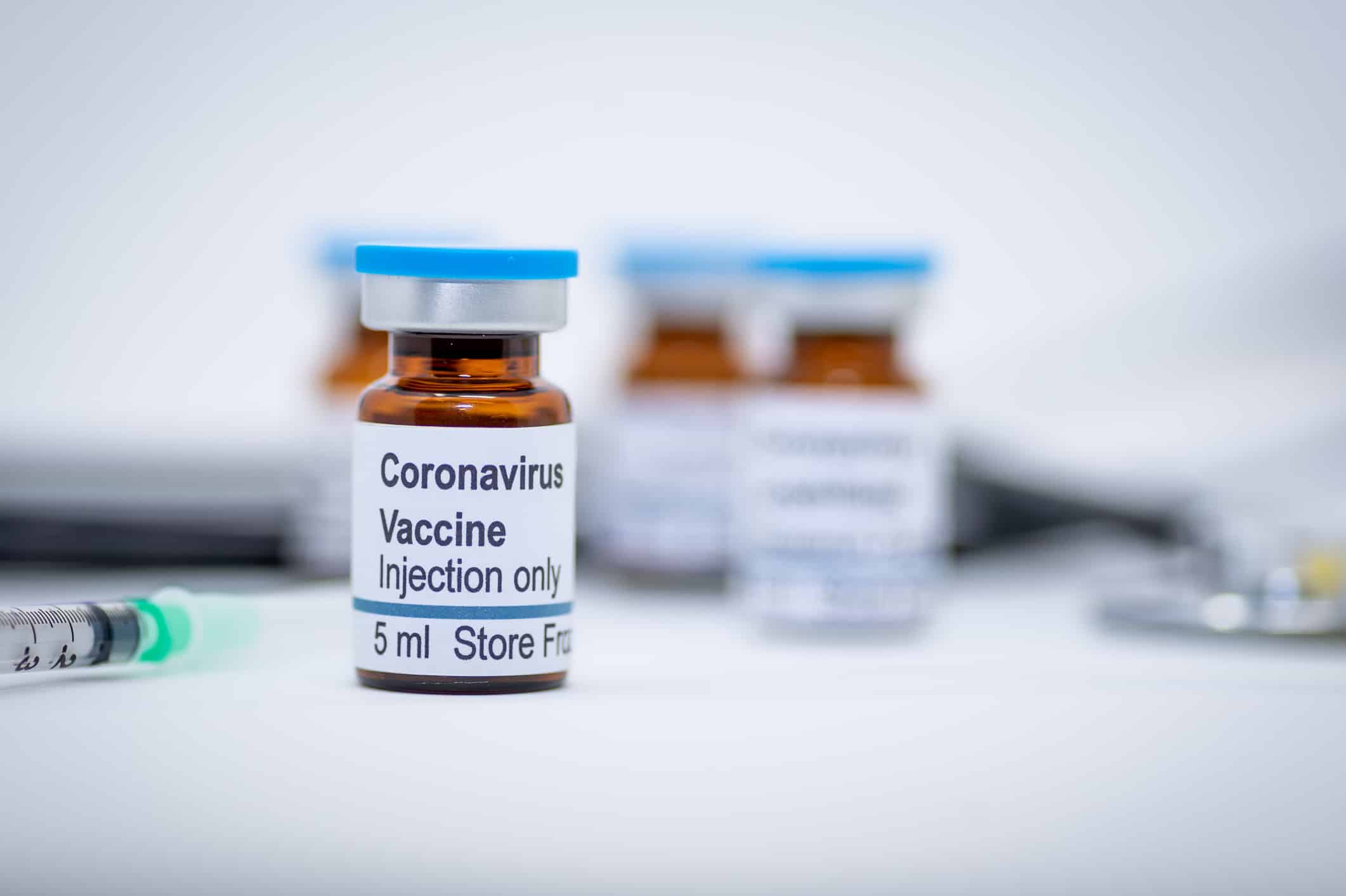
On Feb. 27, the Food and Drug Administration announced it had issued an emergency use authorization for Johnson & Johnson’s one-dose Covid vaccine. Developed by J&J’s vaccines division, Janssen Pharmaceuticals, it was shown to be 66% protective against moderate to severe Covid infection in a multi-country study. Importantly, it was 85% effective in protecting against severe disease.
A new variant appears to resist the immunity induced both by infection and by Covid vaccines, which were designed to target earlier strains of the SARS-CoV-2 virus. Overall efficacy has varied geographically, particularly in South Africa,
Rollout of the vaccine has already started, though the company is not expected to be able to supply ample numbers of doses until April.
The Pfizer and Moderna vaccines are made using messenger RNA, or mRNA, a technology that delivers a bit of genetic code to cells — in effect, a recipe to make the surface protein (known as spike) on the SARS-2 virus. The proteins made with the mRNA instructions activate the immune system, teaching it to see the spike protein as foreign and develop antibodies and other immunity weapons with which to fight it.
The J&J vaccine uses a different approach to instruct human cells to make the SARS-2 spike protein, which then results in an immune response. The approach is a viral vectored vaccine. A harmless adenovirus — from a large family of viruses, some of which cause common colds — has been engineered to carry the genetic code for the SARS-2 spike protein. Once the adenovirus enters cells, they use that code to make spike proteins. J&J employed this same approach to make an Ebola vaccine that has been authorized for use by the European Medicines Agency.
The Pfizer vaccine has been authorized for use for people aged 16 and older. Moderna’s has been cleared for use in people 18 and older, though the company is now testing its vaccine in 12- to 17-year-olds. J&J’s vaccine has been tested in people 18 and older, and that’s who it was authorized for. When testing in children and younger teens is done, this vaccine may be available for use to those under 18 years old either.
The Pfizer and Moderna vaccines have been about equivalent in efficacy, in the early stages after vaccination.
The Pfizer vaccine showed efficacy of 95% at preventing symptomatic Covid infection after two doses. The vaccine appeared to be more or less equally protective across age groups and racial and ethnic groups.
The Moderna vaccine was 94.1% effective at preventing symptomatic Covid-19 after the second dose. The vaccine’s efficacy appeared to be slightly lower in people 65 and older, but during a presentation to the Food and Drug Administration’s advisory committee in December, the company explained that the numbers could have been influenced by the fact there were few cases in that age group in the trial. The vaccine appeared to be equally effective across different ethnic and racial groups.
Comparing the efficacy of those vaccines to the efficacy of Johnson & Johnson’s is challenging because of differences in the designs of the Phase 3 clinical tests. The trials were testing for different outcomes. Pfizer’s and Moderna’s trials both tested for any symptomatic Covid infection. Pfizer started counting cases from seven days after receipt of the second dose of vaccine, while Moderna waited until day 14 to start counting cases.
J&J, was assessing whether one dose of its vaccine protected against moderate to severe Covid illness — defined as a combination of a positive test and at least one symptom such as shortness of breath, beginning from 14 or 28 days after the single shot. (The company collected data for both.)
Because of the difference in the trials, making direct comparisons is difficult. Additionally, Pfizer and Moderna’s vaccines were tested before the troubling new variants appeared in Britain, South Africa, and Brazil. Not enough information exists to state how these vaccines are faring against mutated viruses.
The J&J vaccine was still in its testing stages when the variants emerged. Much of the data generated in the South African arm of the J&J trial involved people who were infected with the variant first seen in South Africa, called B.1.351.
The J&J one-dose vaccine was shown to be 66% protective against moderate to severe Covid infections overall from 28 days after injection, though there was variability based on geographic locations. The vaccine was 72% protective in the United States, 66% protective in South America, and 57% protective in South Africa.
But the vaccine was shown to be 85% protective against severe disease, with no differences across the eight countries or three regions in the study, nor across age groups among trial participants. Also there were no hospitalizations or deaths in the vaccine arm of the trial after the 28-day period in which immunity developed.
It’s not yet known if any of these vaccines prevent asymptomatic infection with the SARS-CoV-2 virus. Nor is it known if vaccinated people can transmit the virus if they do become infected but don’t show symptoms.
Both the Moderna and the Pfizer vaccines require two shots: a priming dose, followed by a booster shot. The interval between Moderna doses is 28 days; for the Pfizer vaccine, it’s 21 days.
Each dose of Pfizer’s contains 30 micrograms of vaccine. Moderna has a larger dose of vaccine of 100 micrograms. It means the company is using a little more than three times as much vaccine per person as Pfizer is. Oddly, their results are similar. The government’s vaccine development program, formerly called Operation Warp Speed, has asked Moderna to test if it could lower the dosage of its vaccine without eroding the vaccine’s protection.
The J&J vaccine is a single-dose vaccine. The company is also testing a two-dose regimen, with the two shots given eight weeks apart. Results from that 30,000-person trial are expected sometime in May. The single dose contains more antigen than the individual doses in the two-dose regimen.
J&J is also testing what happens to antibody responses when a person who received the single dose regimen receives a small booster shot quite a bit later, Johan Van Hoof, managing director of Janssen Vaccines revealed recently. Van Hoof didn’t say how long the interval is between the single shot and the small booster, nor did he say when J&J expects results from that study.
Scientifically speaking, shots that result in a range of transient side effects in a lot of recipients are known as reactogenic.
All of these vaccines — in fact, most if not all the Covid-19 vaccines that have reported data so far — fall into the reactogenic category. The Advisory Committee on Immunization Practices, an expert panel that helps the Centers for Disease Control and Prevention set vaccination policies, advised hospitals early in the rollout that they might want to stagger vaccinations among employees in case some feel too unwell to work the day after being vaccinated.
The most common side effects are injection site pain, fatigue, headache, muscle pain, and joint pain with some side effects including fever. With the Pfizer and Moderna vaccines, side effects are more common after the second dose. Younger adults, who have more robust immune systems, reported more side effects than older adults.
Side effects are a sign of an immune system is working and not an indication that the vaccine is unsafe. To date there are no serious, long-term side effects associated with receipt of these vaccines, which will be closely monitored as their use expands.
There have been reports of severe allergic reactions to the mRNA vaccines. Both the Pfizer and Moderna vaccines appear, on rare occasions, to trigger anaphylaxis, an acute allergic reaction to an antigen (e.g. a bee sting) to which the body has become hypersensitive, and a potentially life-threatening reaction. People who develop anaphylaxis must be treated with epinephrine — the drug in EpiPens — and may need to be hospitalized to ensure their airways remain open. The CDC says people should be monitored for 15 minutes after getting a Covid-19 shot, and 30 minutes if they have a history of severe allergies.
J&J recently revealed that a single case of anaphylaxis has been reported in someone who received its vaccine.
It will take time to determine how frequently this side effect occurs. The most recent data from the CDC suggest that anaphylaxis occurs at a rate of about 2.5 cases per one million doses given of the Moderna vaccine, and 4.7 cases per million doses of the Pfizer. Many of the people who have developed anaphylaxis have a history of severe allergies and some have had previous episodes of anaphylaxis.
None of the vaccines has been tested in pregnant or breastfeeding women, although Pfizer recently began a Phase 2/3 trial to test the safety and efficacy of its vaccine during pregnancy. Van Hoof said J&J will begin a similar trial in late March or early April.
Moderna has completed animal studies the FDA demanded of manufacturers; these studies look for evidence that the vaccine might harm the pregnancy or the developing fetus. The company said it saw no such signals.
The CDC recommends until those studies are conducted, the choice of whether to get vaccinated is the decision of the woman who is pregnant or lactating. This guideline is very lax compared to other countries which have said people who are pregnant should not be vaccinated with these vaccines.
The mRNA vaccines require an elaborate cold chain, the term used to describe the conditions under which vaccines must be stored during distribution and when they are in the doctors’ offices, pharmacies, or public health clinics where they’ll be administered.
The J&J shot does not, which means this vaccine can be given easily anywhere — in doctors’ offices, pharmacies, mass vaccination sites, public health clinics — once supplies are adequately distributed. A big advantage which can possibly help bring closure to this pandemic, is that it can be stored for at least three months at the temperature of a regular refrigerator.
Of the mRNA vaccines, Pfizer’s was originally the more difficult to use. It had to be shipped and stored in ultra-cold freezers — ones that could keep the vials at -94 degrees Fahrenheit. But recently, the FDA announced that the vaccine can be shipped and stored — for a two-week period only — at temperatures of normal pharmacy freezers, between -13 and 5 degrees Fahrenheit. That should ease the vaccine production to arm injection immensely.
Moderna’s must be shipped at -4 degrees Fahrenheit, which is within the temperature of a regular refrigerator freezer.
After thawing, a vial of the Pfizer vaccine must be used within five days; Moderna’s is stable at fridge temperature for 30 days and at room temperature for 12 hours. J&J’s vaccine can be stored at room temperature — not to exceed 77 degrees Fahrenheit — for 12 hours when the vial hasn’t yet been punctured. After the first dose is withdrawn, the vial can be stored in a fridge for six hours or at room temperature for two hours.
Determining the protection provided by any of these vaccines will take time. It will involve more research including periodic blood draws from volunteers to measure antibody levels, although decline in antibody levels doesn’t necessarily equal loss of protection.
Part of this work will involve watching for reports that people who were immunized are starting to contract Covid in larger numbers, a development that would probably lead to recommendations to give people booster shots at some point after the initial vaccine.
Meanwhile we expect the Johnson and Johnson vaccine to get us to a healthier, less COVID 2021.


By subscribing, you consent to receive emails from BlackDoctor.com. You may unsubscribe at any time. Privacy Policy & Terms of Service.