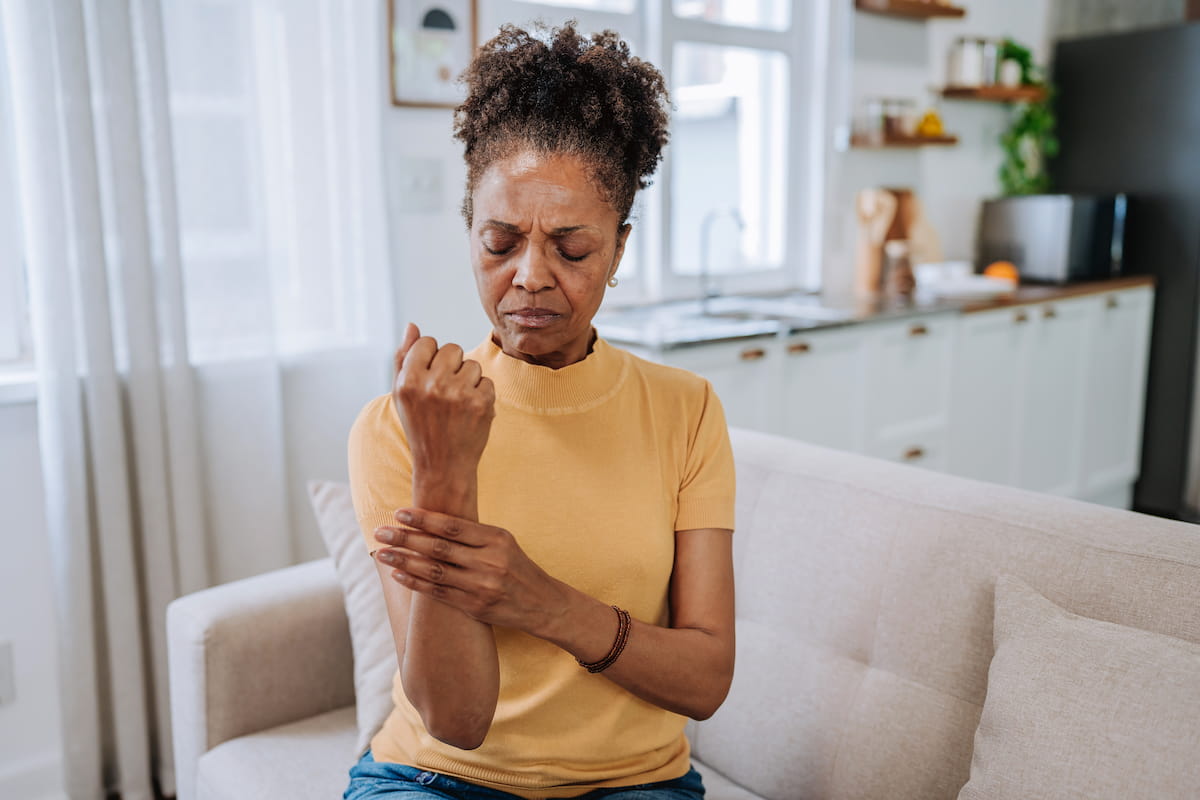
For millions of people, especially in the Black community, where high blood pressure and kidney problems are common, gout is not just a brief flare-up. It often becomes a long-lasting and difficult cycle known as uncontrolled gout.
If you eat well and drink plenty of water but still have gout pain, it is not your fault. Uncontrolled gout is complicated. It is affected by your genes, your body’s chemistry, and a medical system that sometimes exhibits gender bias and relies on outdated treatment methods.
To understand how gout shows up differently in women, it helps to look at its symptoms and timing by gender. The article explains gout symptom onset, how affected joints can differ between men and women, and the challenges in diagnosis and differences in care.
According to the Gout Education Society, failure to recognize the distinct presentations of gout across sex often contributes to uncontrolled disease.
Men usually get gout earlier, between the ages of 30 and 50. Women often have their first flares after menopause. Hormones play a big role. The Gout Education Society explains that natural estrogen helps women’s kidneys remove uric acid, which protects them. After menopause, estrogen drops, uric acid goes up, and the risk increases. A 2023 study found women were usually 10 years older than men when hospitalized for gout.
Where gout pain shows up also depends on gender. Men often get the classic pain in the big toe (podagra), but women are more likely to have flares in other joints:
Women often get gout slowly in several joints, especially where they already have osteoarthritis. This can cause doctors to miss the diagnosis. If diagnosis and treatment are delayed, the disease can get worse and harder to manage.
Many people mistakenly believe gout is only caused by lifestyle. While your diet does matter, it is just a small part of your overall risk.
StatPearls reports that about 90 percent of people with hyperuricemia (elevated uric acid) have kidneys that do not efficiently excrete uric acid. This means your body cannot filter it out, no matter how much you change your diet.
There is a limit to how much uric acid your body can handle. The Gout Education Society says that if your blood level stays above 6.0 mg/dL, uric acid forms crystals. Over time, these crystals can build up into lumps called tophi. These lumps can damage your joints and make it harder to move.
In the past, medical texts described gout as a man’s disease. This has created a significant gap in care for women. Women are more likely to require intensive pain management during flares than men. This is because women typically face the condition after menopause, often alongside higher rates of other health issues like high blood pressure and kidney disease. These comorbidities make treatment more complex, yet women are frequently diagnosed only after the disease has reached an advanced stage.
According to the Arthritis Foundation, many assume Hormone Replacement Therapy (HRT) or birth control offers the same protection as natural estrogen. However, a 2021 study of over one million women found the opposite: HRT and hormonal birth control actually increased the risk of gout.
Gout often comes with other health problems that affect the heart and kidneys. These problems are different for men and women:
Gout is hard to manage mainly because treatment often focuses only on pain relief.
The American College of Rheumatology recommends treating sudden flares with NSAIDs, colchicine, or glucocorticoids. For long-term control, it is best to talk with your doctor about a plan to lower your uric acid levels and keep them low over time.
According to the Arthritis Foundation, while gout medications are generally safe and effective across genders, women are prescribed these treatments less frequently than men. This disparity often stems from the fact that certain therapies may be less effective or carry a higher risk of complications in female patients due to complex health factors and comorbid conditions. Additionally, because gout is frequently mischaracterized as a man’s disease, women often face significant delays in diagnosis, which can cause the condition to reach an advanced stage that is harder to manage with standard medication.
The following action plan can help you advocate for your health during your next medical consultation:
In conclusion, gout is a complex, long-term condition shaped by genetics, hormones, and other factors. These can cause differences in how it shows up and is treated, especially for women. Knowing how other health problems and hormone changes affect gout, and which joints are involved, helps with better diagnosis and care. While uncontrolled gout is tough, following a treatment plan that lowers uric acid, includes lifestyle changes, and takes these differences into account can help prevent painful flares and protect your joints over time.


By subscribing, you consent to receive emails from BlackDoctor.com. You may unsubscribe at any time. Privacy Policy & Terms of Service.