Menu

10 Warning Signs of Oral Cancer (You May Have Missed)

Table of Contents
oral cancer signs

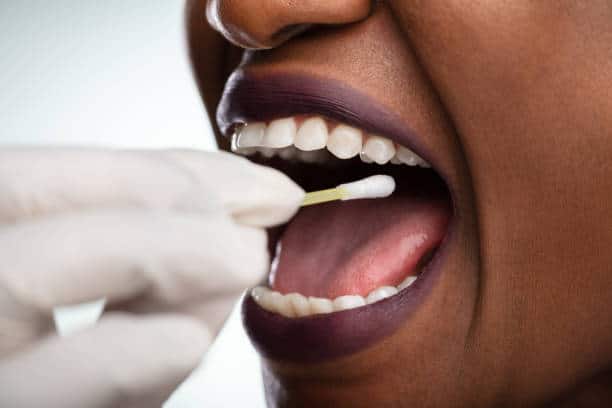
Men develop oral cancer twice as often as women, and it occurs more often in Black Americans than in whites. Do you know the warning signs of oral cancer?

Some oral cancer symptoms are common and easily identifiable. Other symptoms are surprising, and you might miss them.

First, what is oral cancer?

According to the American Dental Association, the term “oral cancer” encompasses throat, mouth, tongue and jaw cancer.

Featured on BlackDoctor

 The American Cancer Society estimates there will be approximately 54,540 new cases of oral or oropharyngeal cancer, with approximately 11,580 deaths, in the United States in 2023.

These cancers commonly occur in the tongue, tonsils and oropharynx (the throat area behind the mouth), gums and other areas of the mouth.

Here, experts break down the symptoms of oral cancer you should be aware of, plus how to prevent oral cancer.

RELATED: Men’s Health: How Smoking and Oral Sex Could Be Putting You at Risk for Head and Neck Cancer

Common warning signs of oral cancer

1. A sore on your lips/mouth

Your healthcare provider should evaluate a sore or irritation that lasts longer than two weeks. 

The Cleveland Clinic states that the sore may appear reddish on your lips. If you have darker skin, it may appear brown or gray. Inside your mouth, the sore may occur as a red or white sore that doesn’t heal.

2. Patches in your mouth/throat

The Cleveland Clinic says that patches inside your mouth you cannot scrape away can indicate precancerous conditions.

Leukoplakia is the word used to describe flat white or gray patches in your mouth or throat.

Erythroplakia describes a slightly raised or red flat patch. Erythroleukoplakia describes patches that are both red and white.

3. Difficulty swallowing/sore throat

Difficulty swallowing (dysphagia) or a sore throat (pharyngitis) that doesn’t go away can indicate cancer. 

According to Johns Hopkins, you may feel as though your food is stuck in your chest or have increased pain when swallowing.

4. Hoarseness

Laryngeal cancer (the area of the throat that contains the vocal cords) can cause hoarseness or changes in your voice. See your medical provider for hoarseness that lasts longer than two weeks.

5. Neck mass

Typically, oropharyngeal cancers are asymptomatic. A lump in the neck is one of the first signs of throat cancer and should be evaluated by a medical provider.

Less common signs of cancer:

6. Ear pain

Ear pain isn’t always a sign of something serious. But if it lingers for more than three days, you should see your healthcare provider. If you have an infection, it can spread to nearby structures like your jaw or skull. Left untreated, ear infections can lead to serious complications

7. Bad Breath

If you have chronic halitosis (bad breath), it could mean you have gum disease. This isn’t always the case, though. Halitosis can also be a symptom of cancer.

If you have bad breath that doesn’t go away, schedule an appointment with your dentist. If halitosis is due to poor oral hygiene, a dental cleaning or periodontal (gum) procedure should help. If you have healthy teeth and gums, then halitosis may be linked to an issue in another part of your body.

8. Coughing up blood

Areas in your mouth that bleed for no obvious reason is a sign that something is off. Be aware of the length of time and frequency to which your mouth bleeds so that you can relay that to your doctor. If it persists, please see your doctor.

9. Weight loss

10. Loose teeth

How to prevent oral cancer

Dr. Barbara Burtness, chief translational research officer at Yale Cancer Center in New Haven, Conn., and chief of head and neck cancers/sarcoma at Yale, advised in a recent Yale article that, “You can help prevent head and neck cancer by stopping smoking, not using tobacco products and limiting alcohol use. 

Reducing your risk of infection from HPV [human papillomavirus] is also an important way to prevent the disease.”


  • Don’t smoke tobacco: According to the American Cancer Society, tobacco use is one of the leading risk factors for head and neck cancers. The more you smoke, the greater your risk. Pipe smoking puts you at risk for lip cancer where the pipe stem touches your lips.
  • Don’t use oral tobacco: Oral tobacco, also called chewing tobacco, is linked with cancer of the cheeks, gums and lips.
  • Reduce or eliminate your use of alcohol: The Oral Cancer Foundation states that people who use both alcohol and tobacco are at an increased risk of developing the disease. Alcohol abuse (defined as more than 21 drinks per week) is the second-largest risk factor for developing oral cancer.
  • Reduce your risk from HPV: Human papillomavirus is linked to oropharyngeal cancer (cancers of the tonsils and base of the tongue). HPV is spread primarily through sexual intercourse and oral sex. There is a vaccine available for individuals younger than 26 that the American Cancer Society says can prevent infection with the types of HPV linked to HPV-related cancers. Using a condom to avoid transmitting the virus during sex will also decrease your risk.
  • Protect your lips from sun exposure: The Mayo Clinic recommends wearing a wide-brimmed hat to provide shade and using lip protection that contains sunscreen.
  • See your dentist regularly: Dentists are trained to examine your mouth for abnormal areas that may indicate mouth cancer or precancerous changes.

SHARE
Related Stories
Answer the question below

Gout Survey

People with gout often have sudden, painful flares of joint swelling and redness. How many gout flares have you experienced in the last 12 months?
Have you ever received intravenous medicine for your gout?

Get our Weekly Newsletter

Stay informed on the latest breakthroughs in family health and wellness. Sign up today!

By subscribing, you consent to receive emails from BlackDoctor.com. You may unsubscribe at any time. Privacy Policy & Terms of Service.

More from BlackDoctor

Where Culture Meets Care

BlackDoctor is the world’s largest and most comprehensive online health resource specifically for the Black community. BlackDoctor understands that the uniqueness of Black culture - our heritage and our traditions - plays a role in our health. BlackDoctor gives you access to innovative new approaches to the health information you need in everyday language so you can break through the disparities, gain control and live your life to its fullest.
×

Download PDF

Enter your name and email to receive the download link.

BlackDoctor AI Search
✦ AI Search Disclaimer
This AI-powered search tool helps you find relevant health articles from the BlackDoctor.org archive. Please keep the following in mind:
✦ For Informational Purposes Only
The information provided through this AI search is for general educational and informational purposes only. It is not intended as a substitute for professional medical advice, diagnosis, or treatment.
✦ Always Consult a Healthcare Provider
Never disregard professional medical advice or delay seeking it because of something you have read through this search tool. If you have a medical emergency, call your doctor or 911 immediately.
✦ AI Limitations
This search tool uses artificial intelligence to help match your queries with articles in our archive. While we strive for accuracy, AI-generated results may occasionally be incomplete, outdated, or not fully relevant to your specific situation.
✦ No Doctor-Patient Relationship
Using this search tool does not create a doctor-patient relationship between you and BlackDoctor.org or any healthcare provider.
Explore over 35,000 articles and videos across black health, wellness, lifestyle and culture
Full AI Search Experience >