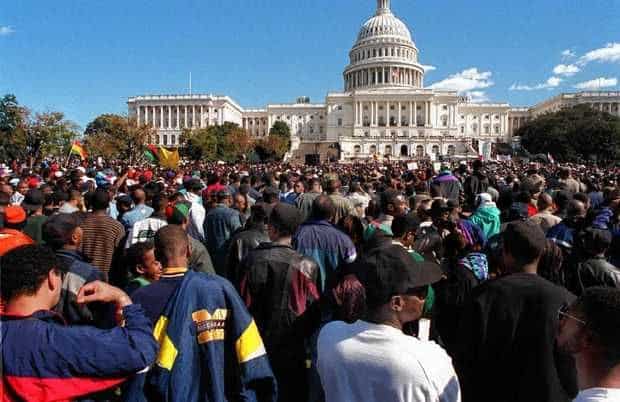
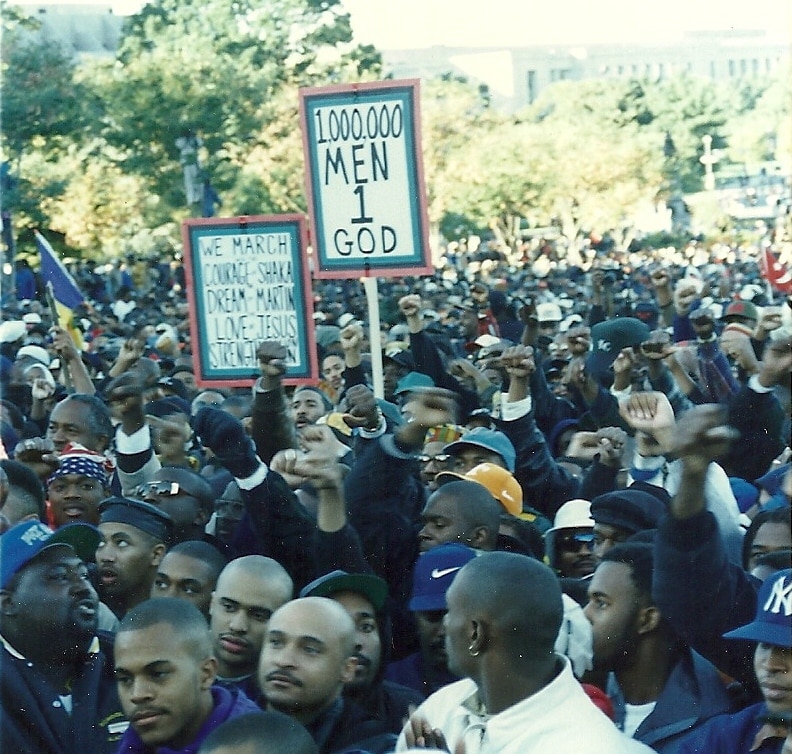
Black fathers, sons, uncles and men from around the country are gathering once again on the National Mall in Washington, DC to celebrate the 20th anniversary of the Million Man March and call for policing reforms and positive changes in black communities.
Nation of Islam leader Louis Farrakhan, who organized the original march, will lead the 20th anniversary gathering Saturday October 10th at the Capitol called the “Justice or Else” march.
“I plan to deliver an uncompromising message and call for the government of the United States to respond to our legitimate grievances,” Farrakhan said in a statement.
Since then, a lot has changed and not always for the better.
Attention will be of course focused on the deaths of unarmed black men since the shootings of 17-year-old Trayvon Martin in 2012 in Florida and 18-year-old Michael Brown in 2014 in Ferguson, Missouri. And the countless deaths of unarmed black males at the hands of law enforcement officers that have inspired protests under the “Black Lives Matter” label around the country and world.
MUST READ: How To Find Healing After Race-Related Trauma
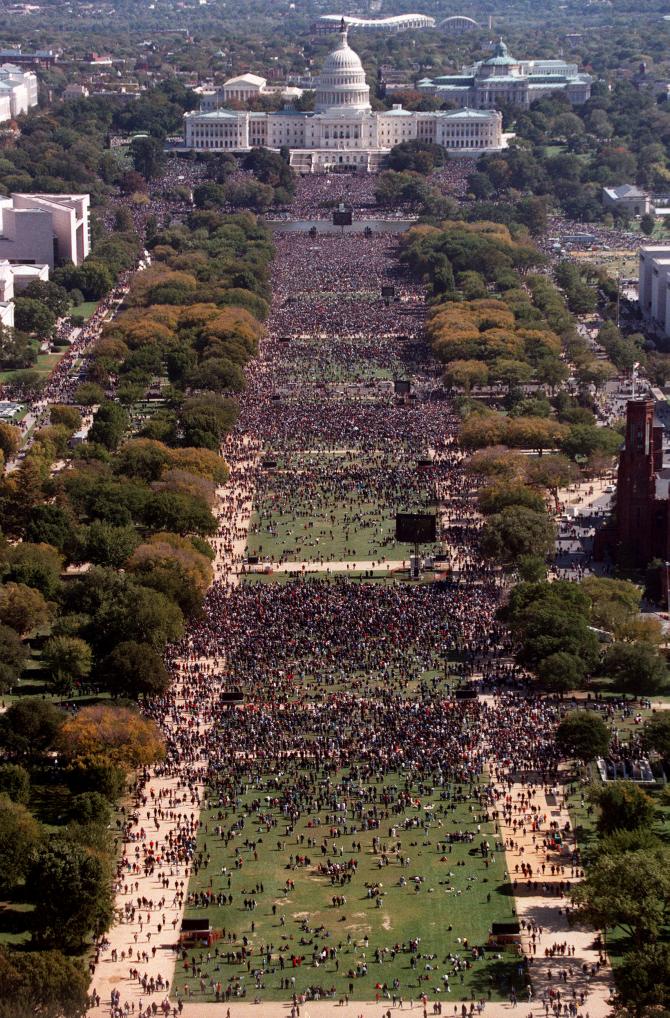
The original march on Oct. 16, 1995, brought an estimated 850,000 African American men to Washington to pledge to improve their lives, their families and their communities. Women, whites and other minorities were not invited to the original march, but organizers say all are welcome Saturday and that they expect to get hundreds of thousands of participants.
During the original march, Minister Farrakan issued a pledge and call to action for Black men everywhere. See it below:
https://youtu.be/ol3BIfAKqPI
The National Park Service estimated the attendance at the original march to be around 400,000, but subsequent counts by private organizations put the number at over 800,000. The National Park Service has refused to give crowd estimates on Mall activities since.
Here are a few things that have changed since the original march:
1. Voting. At least 150,000 participants at the Million Man March registered to vote. Plus, we don’t know how many others returned home and registered after the event. But according to the U.S. Census Bureau…
…there was a steady rise in black voting rates after 1996. In fact, the black turnout rate increased by about 13 percent between 1996 and 2012, the agency reports.
2. Education. In 1995, 73.4 percent of African-American men had high school degrees. In 2004, 84.3 percent did, according to the Census Bureau.
3. Arrests. Law enforcement agencies made 3.5 million arrests of blacks in 1994, which was 30.9 percent of all arrests, the FBI said. (By comparison, they made 7.6 million arrests of whites that year, which was 66 percent of all arrests.) By 2013, the latest available data, African-American arrests had decreased to 2.5 million, 28 percent of all arrests. But we do not have information on the number of deaths of unarmed Black men and women by police. We do know that more are being broadcasts thanks to technology and social media.
So what now? What happens now in the next 10, 20, or 40 years? There’s no doubt that many were inspired after the first march. There’s no way of knowing how many or to what degree the rally inspired to start a business, reconcile with their families or an increase in political participation.
While we don’t know the future, what we do know its that if things are going to change, we have to be the ones to change it.


By subscribing, you consent to receive emails from BlackDoctor.com. You may unsubscribe at any time. Privacy Policy & Terms of Service.