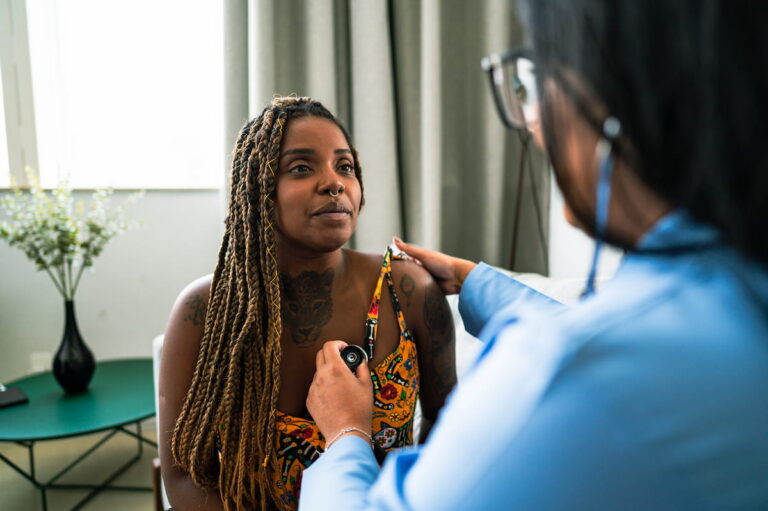
Colorectal cancer, also known as colon cancer, disproportionately affects the Black community, who are about 20 percent more likely to get it and about 40 percent more likely to die from it than most other groups. What’s more, the American Cancer Society reports that while rates of colorectal cancer have been falling in older age groups in recent years, they’ve actually been rising among younger people. Fortunately, there are four symptoms that could provide early warning of colon cancer in younger adults.
Being aware of these red flags could lead to earlier detection and diagnosis for those under age 50, according to researchers at Washington University School of Medicine in St. Louis.
The death rate from colon cancer has been dropping for several decades in older adults who get regular colonoscopies and have improved treatment, according to the American Cancer Society. However, more younger people are diagnosed at advanced stages and are dying. In fact, the number of young adults with colon cancer has nearly doubled in recent years.
“We want younger adults to be aware of and act on these potentially very telling signs and symptoms — particularly because people under 50 are considered to be at low risk,” says senior investigator Yin Cao. She’s an associate professor of surgery in the public health sciences division at the university.
Younger adults often do not receive routine colon cancer screening. In 2021, the U.S. Preventive Services Task Force lowered the recommended age for colon cancer screening from 50 to 45.
RELATED: Colon Cancer Increasing in Younger People: “Not an Old Person’s Disease”
The telltale symptoms are abdominal pain, rectal bleeding, diarrhea and iron deficiency anemia.
Two symptoms — rectal bleeding and iron deficiency anemia — point to the need for an endoscopy and follow-up. Iron deficiency anemia means there are too few healthy red blood cells to carry oxygen.
“It’s also crucial to spread awareness among primary care doctors, gastroenterologists and emergency medicine doctors,” Cao says, noting that many early-onset colon cancers are detected in emergency rooms.
“There often are significant diagnostic delays with this cancer,” she explained in a university news release.
For the new study, Cao and her colleagues looked at cases of more than 5,000 patients with
early-onset colon cancer.
The study found an increased risk for people who had one or more of the telltale symptoms between three months and two years before their diagnosis.
A single symptom almost doubled their risk. Having two symptoms tripled their cancer risk. Three symptoms or more raised their risk by more than 6.5 times, the researchers reported.
“It usually takes about three months to get a diagnosis from the time a person first goes to the doctor with one or more of the red-flag signs and symptoms we’ve identified,” according to first study author Dr. Cassandra Fritz, an assistant professor of medicine in the division of gastroenterology.
“But in this analysis, we found that some young adults had symptoms for up to two years prior to their diagnoses. That may be part of the reason many of these younger patients had more advanced disease at the time of diagnosis than what we normally see in older people who get screened regularly,” Fritz adds.
In her research group, which is focused on identifying risk factors, Cao has found that obesity, prolonged sitting, metabolic syndrome, diabetes and sugar-sweetened beverages may be contributing to the rise of colon cancer in younger people.
“Since the majority of early-onset colorectal cancer cases have been and will continue to be diagnosed after symptom presentation, it is crucial to recognize these red-flag signs and symptoms promptly and conduct a diagnostic work-up as soon as possible,” Cao notes. “By doing so, we can diagnose the disease earlier, which in turn can reduce the need for more aggressive treatment and improve patients’ quality of life and survival rates.”
In addition to the most common symptoms of colorectal cancer listed above, the full list of symptoms includes:
Although many of these symptoms can be caused by other conditions, it is important to get checked out by a doctor as soon as possible, especially if they last for more than a few days or get worse.
RELATED: Don’t ASSume: Why Colon Cancer Is Killing More Black People
With the proper lifestyle changes, you can lower your risk of developing colon cancer:
For more information about colorectal cancer, visit the American Cancer Society Colorectal Cancer pages.


By subscribing, you consent to receive emails from BlackDoctor.com. You may unsubscribe at any time. Privacy Policy & Terms of Service.