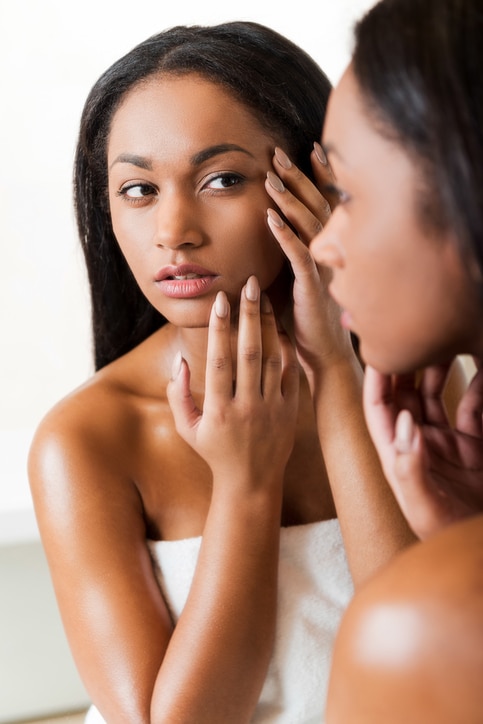
When we get acne on our beautiful skin, we have to be careful about how we treat it. This can be difficult as so many skin care tips are not geared toward ethnic skin.
“Most skin care is only marketed to white people anyway, not even Asians, Hispanics and darker-skinned Europeans,” says Joelle Lyons-Lee, esthetician to Michelle Obama in an interview on the Huffington Post blog.
READ: How To Battle Stress Induced Acne
Acne breakouts can be even more confusing to treat. When it comes to choosing products in the health and beauty aisles to soothe acne symptoms, the decision of what to purchase is not an easy one.
“There are many acne products that may be too harsh to apply to skin of color, African-American skin, or ethnic skin,” Tucker Dermatologic Surgeon Nikki D. Hill says on realself.com. “Some chemicals may be too drying or irritating which can lead to redness, peeling, inflammation and result in post-inflammatory hyperpigmentation or darkening of the skin. There is a fine balance to carefully skin typing each individual and knowing which products may be tolerable and which products will be too harsh for your skin.”
READ: Acne Scars: Make Them Go Away For Good
Being knowledgeable about the differences between skin types can help you avoid significant issues down the line. Here are five ways to care for Black skin with acne.
1. Leave blemishes alone.
It’s common knowledge that aggravating your acne can prolong healing, but for Black skin, it can be even worse. Because of hyperpigmentation which causes patches of skin to be darker, picking at blemishes can cause scars that may take months or years to fade.
2. Use medication cautiously.
Some of the most harmful products for black skin can be found in common medications for treating acne. They’re found in many cleansers, skincare products, and acne treatments because they kill the bacteria under the skin, but for African-Americans, these common chemicals can be harmful. Benzoyl peroxide, for example, can be especially irritating for darker skin. Salicylic acid can sometimes dry skin out too much, causing it to create more oil.
Both of these come in different forms and different concentrations and there’s no…
… one-medication-treats-all formula. Seek professional help and check with a dermatologist — one that’s experienced in different ethnicities and skin types — before using chemicals on your face.
READ: Q&A: What Can I Do To Fade Acne Scars?
3. Get some protected sunshine.
Twenty to 30 minutes per day of healthy sun exposure can help heal acne, but that exposure should be protected to avoid increasing your risk of skin cancer. It’s a myth that African-Americans don’t need sunscreen because our skin is darker. Yes, the melanin in darker skin helps protect against the sun, but Black skin also needs sunscreen for extra protection.
4. Keep your pores open.
When buying products, think about your pores. Before you pick up that new moisturizer or foundation, read the labels to see if it’s non-comedogenic, which just means it won’t clog your pores. Check this list of comedogenic ingredients for help.
READ: How To Treat Acne & Eczema Together
5. Check your hair products.
If you’re taking great care of your skin, but you’re still breaking out, examine the other beauty products in your bathroom. Some hair products, like pomade and hair oils, may be great for our hair, but not for our skin. So, if your breakouts are around the hairline, they may be to blame. Similarly, if breakouts are popping up on your cheeks or on certain sides of your face, it could be because the hair products left on your pillow. Washing your pillow cases more often and covering your hair at night may help.


By subscribing, you consent to receive emails from BlackDoctor.com. You may unsubscribe at any time. Privacy Policy & Terms of Service.