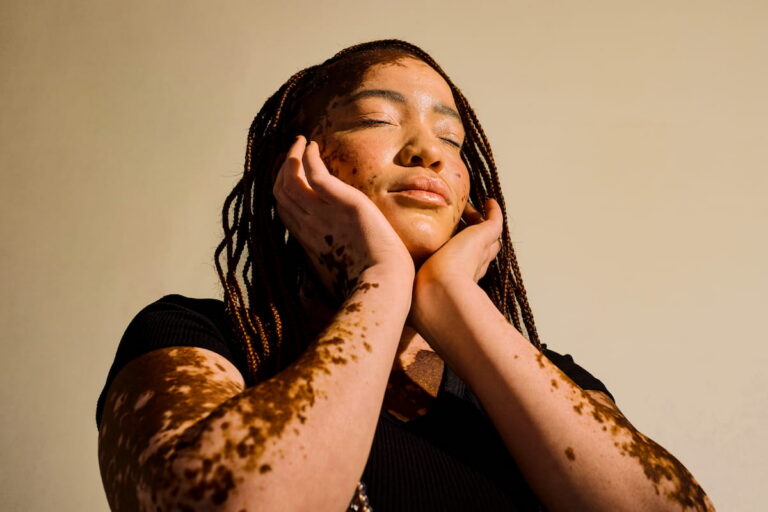
A fairly common skin condition that impacts many in the Black community, psoriasis is known for its unsightly red, scaly patches. Worse yet, many sufferers complain of persistent itching, pain, and difficulty performing normal activities.
But what if your condition is slightly different? What if you’re not sure what is going on, but you wanna get to the bottom of it as soon as possible?
Tired of misdiagnoses? Sick and tired of taking medications and not knowing what the heck is going on? Why the symptoms won’t subside?
Then you’re at the right place. Let’s go over five conditions that can appear to be psoriasis when they aren’t.
Also called atopic dermatitis, eczema often looks a lot like psoriasis. Both can lead to inflammation and red itchy skin. Eczema can even cause your skin to get scaly and dry, which looks like psoriasis.
But here’s the difference. Eczema usually shows on your inner elbows, behind your knees, or around your wrists. Psoriasis, however, hits the lower back and scalp more frequently. Not to mention, psoriasis can start whenever, whereas eczema is usually first noticed in childhood.
And finally, the patches of eczema are not as clearly defined as psoriasis plaques. While psoriasis plaques don’t tend to crust or ooze, eczema patches do – so keep an eye out for that as well. Thankfully, if you see a dermatologist, a personal history and visual exam can typically get you the right diagnosis!
RELATED: 10 Misconceptions About Psoriasis & Black Skin
Nobody likes the sound of this, and as a fungal infection, ringworm can truly get pretty nasty. But here’s the good news. While its red, scaly patches are often confused with psoriasis, it has some pretty stark differences.
Ringworm usually shows as circular or ring-shaped patches. Psoriasis does not typically show up in a ring shape. Additionally, if you have a fungal infection and these symptoms appear, it’s more likely to be ringworm. Psoriasis is not an infection, but rather an autoimmune condition. And remember, because ringworm is an infection, it can be spread, but psoriasis cannot.
If you’re not sure, your dermatologist can perform a potassium hydroxide test to determine if there is a fungus at play.
Like psoriasis, contact dermatitis may cause inflammation as well as red, itching skin. It can also lead to those scaly patches commonly associated with psoriasis. However, there’s one important thing to remember. Contact dermatitis comes from contact with allergens. In other words, it’s an allergic reaction, triggered by everything from soaps and cosmetics to everyday household chemicals.
Psoriasis is not an allergic reaction. Because of this, you will notice contact dermatitis showing up in the exact areas where you contacted allergens, unlike psoriasis which can show anywhere. This is why psoriasis is chronic, with recurring flare-ups, whereas contact dermatitis goes away once you remove the irritant.
To get a proper diagnosis, you may visit a dermatologist or allergist. An allergist can do specific skin tests to determine allergies, as well as a comprehensive review of your health history.
RELATED: 9 Surprising Places Psoriasis Can Appear on Black Skin
Do you notice red and scaly areas on your face, chest, or scalp? If so, it might be psoriasis, or it could be seborrheic dermatitis. Fortunately, it’s not overly difficult to tell the difference. The ‘scales’ of seborrheic dermatitis can be greasy to the touch and even yellow in color; the scales of psoriasis, by contrast, are usually silver or white in hue.
Think of it this way: seborrheic dermatitis loves natural oils. So wherever your body has more oil glands, it’s likely to show up there. This is why it appears often on the upper chest, scalp, and face. Typically, psoriasis prefers the areas of your knees and elbows.
When you see a dermatologist, they’ll closely examine the appearance and location of your problem. Typically, seborrheic dermatitis can be treated with antifungals and medical-grade shampoos. Psoriasis, however, responds better to topical steroids or biologics, which target the immune system.
If you’re seeing red, purple, or even blue-colored bumps and lesions on your skin, it could be lichen planus. While psoriasis may cause issues like this, its plaques are usually red, not purple or bluish. You may also notice that lichen planus lesions have whitish patterns on the surface, something you’ll rarely notice with psoriasis.
And one more thing. Should you have really bad itching and irritation in your mouth or genitals, there’s a good chance it’s lichen planus and not psoriasis. As always, dermatologists will thoroughly check out your body and patient history, and even do a skin biopsy to see what’s going on ‘beneath the surface.’
With proper medical care, and a little attention, you’ll be diagnosed and treated in no time!


By subscribing, you consent to receive emails from BlackDoctor.com. You may unsubscribe at any time. Privacy Policy & Terms of Service.