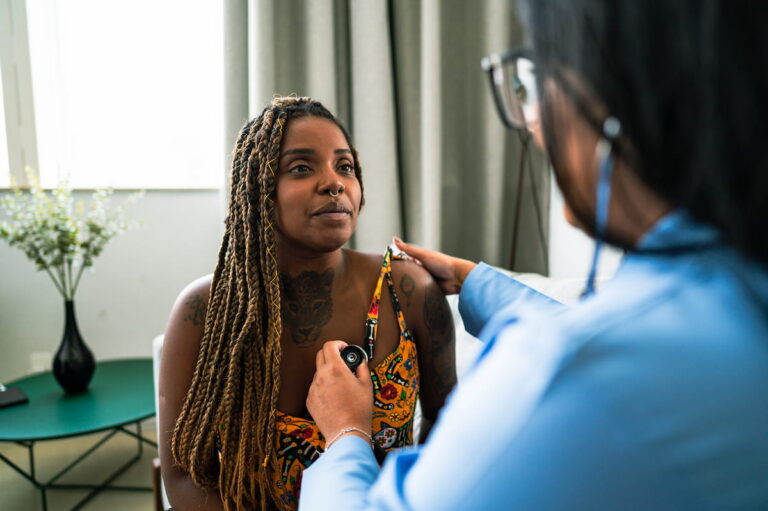
Imagine a world where every person with breast cancer has access to personalized treatments and prevention strategies tailored to their unique genetic makeup. That’s the exciting promise of genetic testing, a groundbreaking tool that’s transforming cancer care as we know it. A recent study from Invitae, a leading medical genetics company, revealed that machine learning has been instrumental in clarifying more than 20 percent of uncertain genetic test results for hereditary breast cancer, particularly benefiting underrepresented populations. This study also highlighted that Black individuals with a history of breast cancer had a definitive classification (22 percent) based on machine learning evidence, compared to their white counterparts (12 percent).
To dive deeper into this research and its implications, BlackDoctor.org sat down with Dr. Ed Esplin, a Clinical Geneticist at Invitae and co-author of the study. Dr. Esplin shared insights into his work in cancer genetics, his mission to enhance access to genetic testing and healthcare for diverse populations, and the critical role of genetic testing in healthcare today. Dr. Esplin leads efforts in cancer genetics, conducting internal and collaborative research to understand cancer causes, improve treatment effectiveness across ancestries, and demonstrate how genetic testing can impact patient care. He focuses on using genetic testing to inform at-risk relatives, enabling early screenings and interventions to prevent cancer or reduce risk.
RELATED: Considering Genetic Testing? Here’s What You Should Know
Genetic testing is a vital tool for individuals with conditions like breast cancer. It involves sequencing a patient’s DNA to identify any gene changes that may increase cancer risk. However, interpreting these changes can be challenging, especially for variants of uncertain significance. This is where machine learning and diverse patient data come in, helping reclassify these variants and provide more accurate results for patients, regardless of their background.
“Everyone with breast cancer should consider genetic testing to ensure they have access to the most advanced surgical interventions, medical therapies, and post-treatment prevention options available,” Dr. Esplin shares. “Genetic testing typically takes 10-20 days to get results, but can sometimes be completed in as little as a week, allowing for timely decision-making in treatment.”
Here are nine things you need to know about genetic testing, according to Dr. Esplin:
Contrary to what some may believe, genetic testing is affordable for all patients with breast cancer.
“The cost of genetic testing can be as low as $100 or less with insurance coverage. For patients without insurance, there are options available to make testing affordable,” Dr. Esplin adds.
Advances in genetic testing are making healthcare more equitable.
“Advancements in studies like these improve healthcare for patients from diverse backgrounds by increasing the accuracy and clinical utility of test results, reducing uncertainty, and providing personalized treatment and prevention strategies based on genetics,” Dr. Esplin notes.
If you think not having a family history of breast cancer disqualifies you from benefiting from genetic testing, think again.
“The American Society of Breast Surgeons recently established new guidelines recommending genetic testing for all patients with breast cancer, regardless of family history or ancestry,” Dr. Esplin says.
It’s no secret that a negative result can be a relief, but it can also serve as vital information that guides your future care, according to a study that reported genetic testing positively impacted health outcomes for 2/3 of patients with positive results and 1/3 of patients with negative results.
“A negative genetic test result can lead to appropriate care decisions, avoiding unnecessary interventions for patients at average risk,” Dr. Esplin adds.
If you are considering getting a genetic test, which requires a blood sample, Dr. Esplin advises discussing with your primary healthcare provider.
“It is important to discuss testing with a doctor or counselor, share family history information, and understand the logistics of the testing process before undergoing genetic testing,” Dr. Esplin notes.
Genetic test results serve as a roadmap to personalized treatment and prevention strategies. They help healthcare professionals tailor care plans to each patient’s unique genetic makeup, leading to more effective and targeted care.
“Genetic testing results can help guide surgical interventions, eligibility for targeted therapeutics, and precision prevention measures for patients based on their individual genetics,” Dr. Esplin adds.
As noted above, genetic testing can inform decisions regarding the type of surgery a patient may choose. While some individuals may opt for bilateral mastectomy (removal of both breasts) to reduce their risk of developing cancer in the unaffected breast, others may choose unilateral mastectomy (removal of only the affected breast) based on their genetic test results and personal preferences.
Dr. Esplin highlights a study where 11 percent of patients with breast cancer who were planning bilateral mastectomy chose unilateral mastectomy after receiving genetic testing results.
RELATED: Breast Cancer And BRCA/Genetic Testing: What You Need To Know
According to a study, 90 percent of individuals with mutations in BRCA1 or BRCA2, which causes hereditary breast and ovarian cancer syndrome, don’t know they have it.
For individuals with these mutations, genetic testing can be particularly important in guiding decisions about preventive measures, such as prophylactic mastectomy or oophorectomy (removal of the ovaries).
“Companies like Invitae are working to make genetic testing accessible and expand guidelines to ensure that nobody who needs testing has to go without it, improving healthcare for billions of patients worldwide.”
If you or a loved one is facing breast cancer, don’t hesitate to discuss genetic testing with your healthcare provider. It can provide valuable information that may impact your treatment and care decisions.
Remember, you’re not alone in this journey, and there are resources available to help you navigate the process.
“Genetic testing has the power to transform cancer care by providing personalized treatment options and prevention strategies tailored to each individual’s genetic makeup. Everyone with breast cancer should consider genetic testing to ensure they have access to the most advanced care available,” Dr. Esplin concludes.


By subscribing, you consent to receive emails from BlackDoctor.com. You may unsubscribe at any time. Privacy Policy & Terms of Service.