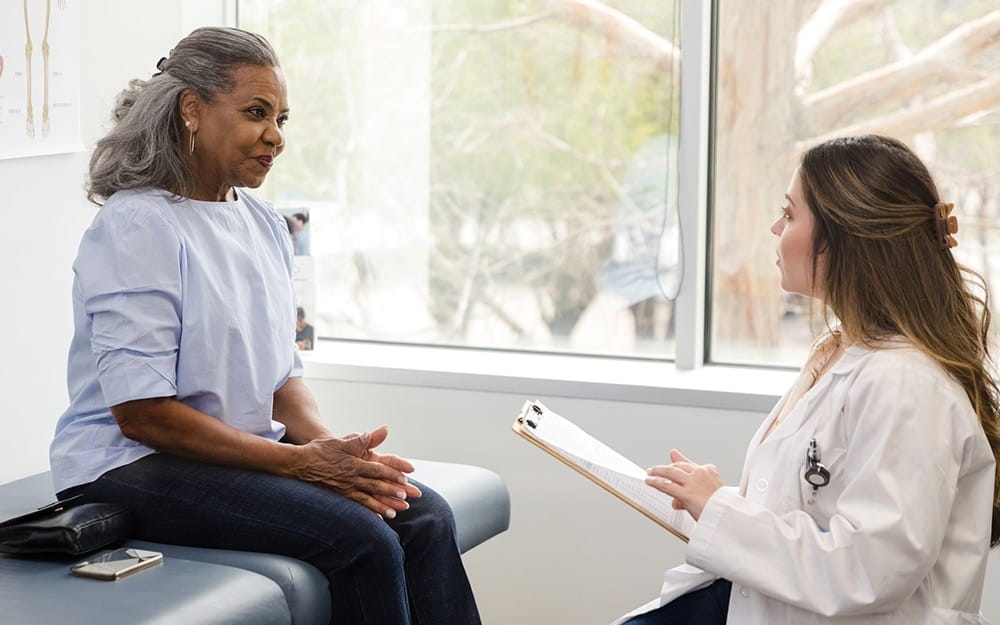
“What is your housing situation today? Are you worried about losing it?”
“In the past 12 months, has lack of reliable transportation kept you from medical appointments, meetings, work or from getting things needed for daily living?”
“How often do you feel lonely or isolated from those around you?”
Most people don’t think of these as medical questions. But just like doctors check a patient’s pulse, blood pressure and medical history, or take X-rays for broken bones, social needs can be vital signs. Cedars-Sinai’s Community Connect Program, which launched in August 2021, is carving a path for hospitals to implement this new type of diagnostic screening.
Living conditions such as poverty, unstable housing, violence and loneliness can determine whether a patient is able to take medications they’re prescribed, understand their care and get—and stay—well long-term. Social factors are responsible for up to 90% of a community’s health, according to a study in the American Journal of Preventive Medicine, a far greater impact than genetics and even medical care (20%). In turn, vulnerability is linked to a wide range of serious illnesses including cancer, dementia, heart disease and stroke, worse quality of life, more hospitalizations and early death.
“If someone’s worried about where their next meal is going to come from or where they’re going to sleep that night, they’re not worried about seeing their primary care doctor or refilling a prescription,” said Katie Hren, associate director of community health at Cedars-Sinai. “So, we’re only going to get so far without really talking about these things.”
Nurses screen every adult admitted to Cedars-Sinai Medical Center, Cedars-Sinai Marina del Rey Hospital and Huntington Hospital, an affiliate of Cedars-Sinai, for five areas of health-related social needs:
Anyone who needs support is referred to a social worker. They try to learn more about patients’ physical, mental and emotional health by gauging independence, health literacy and if they are able to afford medical care, as well as if they use substances or are socially isolated.
“We look at every single patient who comes through our doors as a whole person,” Hren said.
Cedars-Sinai has screened almost 125,000 patients for at least one of these social drivers, connecting more than 4,700 people to care. The screening tool is now live throughout primary and outpatient care and the Emergency Department, where researchers are studying the level of need and the possibility of implementing universal screening.
“If someone’s worried about where their next meal is going to come from or where they’re going to sleep that night, they’re not worried about seeing their primary care doctor or refilling a prescription.”
In January 2024, the Centers for Medicare and Medicaid Services (CMS) dramatically expanded efforts to tackle
social needs with new hospital quality measure requirements.
Hren called the focus a “culture shift” in medicine.
Traditionally, a doctor would just treat a broken leg medically. Now, they must consider if a patient has the diet, follow-up physical therapy and safe neighborhood walking spaces necessary to fully heal. For unhoused patients, they might have to switch out medication that must be refrigerated or kept cool.
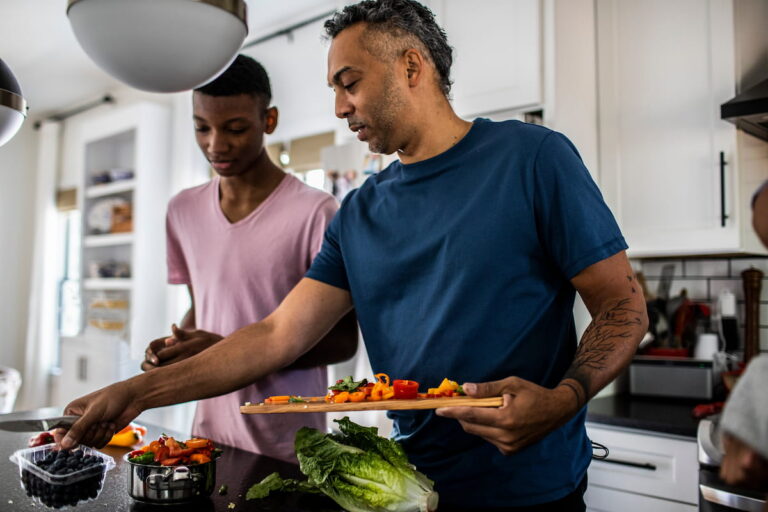
Others could need food pantries, meal deliveries or infant formula. People who can’t afford fresh vegetables and other healthy foods are more susceptible to Type 2 diabetes, anemia and other nutritional deficiencies, as well as breastfeeding challenges.
The CMS requirements are paving the way for private health insurers to take on these social drivers, explained Cynthia Deculus, vice president of population health at Cedars-Sinai. Experts see them as key to unlocking health equity.
“COVID-19 played a big role in pointing out and bringing to the forefront health inequities that have existed forever and how social factors impact health,” Deculus said. “For example, where people lived— and the kinds of jobs they had—had a direct correlation to whether they got extremely sick, hospitalized or died from COVID-19 in those early days.”
Black and Latino communities bore the brunt. Social risk factors are also tied to other long-standing health inequalities, according to the CMS, including cancer, diabetes, heart and kidney disease, maternal and infant health, and mental health.
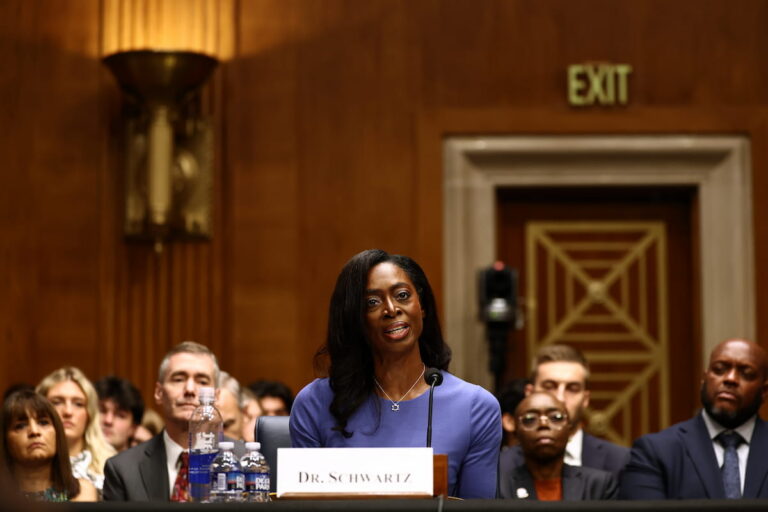
“These differences aren’t because of race itself,” said Cedars-Sinai Chief Health Equity Officer Christina Harris, MD. “It’s the unjust systems and uneven access to resources that have been determined by someone’s race and threaten their health.”
“Universal screening gives us a chance to truly grasp who’s in need,” Harris explained.
Data can uncover changes over time, why there are differences between and within communities and which areas to target to support people in reaching their healthiest state.
“It’s always surprising how many of our seniors who have excellent health insurance are living in their cars, food-insecure or aren’t sure if they’ll be able to pay their utility bills,” Deculus said. “Insurance doesn’t mean social needs aren’t impacting someone’s health.”
Behavioral health challenges, too, keep people from being able to run errands, care for themselves or repeatedly seek outside support.
She added that overlooking these circumstances keeps vulnerable people cycling in and out of the hospital. “Multi-visit patients” to academic medical centers are just 1.6% of patients, but 8.4% of bed days and 7.1% of cost, a data analysis of patients at more than 100 U.S. institutions found.
Experts are hopeful the new standard will stop them from falling through the cracks, but that also means ensuring there’s a community safety net to catch them.
“We’re not afraid to ask these hard questions,” Hren said. “And we’re not afraid to try and find the resources and supports, if they’re out there, or provide them ourselves.”
Alongside screening, Cedars-Sinai built robust community partnerships. The program refers patients to more than 105 partners in the Community Connect Network, which provides support with housing, food, parenting, healthcare and finances.
Community Connect follows up after discharge to “close the loop,” providing community health workers for weeks to people who need extra support and linking about 60% to services. That’s higher than the national average, despite seeing 50% to 80% more patients. They also target grants to help partners keep up with higher demand.
Experts said hospitals must confront the challenge to close the gaps but be realistic with patients about community resources.
“We are not going to solve all these problems on our own,” Deculus said. “We have got to be part of an entire ecosystem.”


By subscribing, you consent to receive emails from BlackDoctor.com. You may unsubscribe at any time. Privacy Policy & Terms of Service.