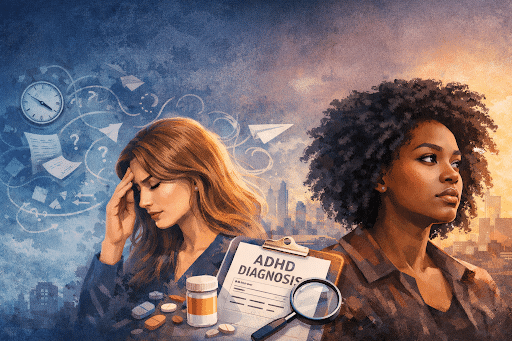
For years, people thought that attention deficit hyperactivity disorder (ADHD) was a problem that only kids had. It was marked by loud, restless boys who couldn’t sit quietly in class. Girls and women were rarely present in that photograph. Today, that understanding is beginning to shift.
More adult women are coming to the conclusion that their years of trouble with focus, time management, emotional overload, and exhaustion may not be personal failures, but rather indications of undiagnosed ADHD from earlier in life. Still, this progress hasn’t reached everyone equally. Black women, in particular, continue to be overlooked and underdiagnosed, pointing to deeper issues in how mental healthcare is delivered and who it serves.
In recent years, ADHD diagnoses among adults have increased sharply, especially among women. To many, it feels as though ADHD is suddenly “everywhere.” But experts emphasize that this rise does not mean ADHD is new—it means it is finally being recognized.
Historically, ADHD research and diagnostic criteria were shaped around young boys who exhibited overt hyperactivity and disruptive behavior. Girls and women, however, are more likely to present with inattentive symptoms, such as difficulty sustaining attention, chronic disorganization, forgetfulness, or internal restlessness. These traits are easier to overlook in school and clinical settings.
According to Pharmacy Times, many women with ADHD learn early to mask their symptoms by overcompensating, people-pleasing, or pushing themselves toward perfectionism—often at the cost of chronic anxiety, depression, and burnout. This phenomenon has led to the term “the lost girls,” referring to women whose ADHD went unrecognized until adulthood.
Greater awareness of adult ADHD has played a major role in shifting this pattern. Educational campaigns, social media discussions, and improved clinical understanding have encouraged more women to seek evaluations later in life, particularly when career demands, parenting responsibilities, or hormonal changes exacerbate symptoms.
RELATED: 9 Signs Of Adult ADHD Most Overlooked
Another reason adult ADHD diagnoses—especially among women—are rising is the evolution of diagnostic frameworks themselves.
Earlier versions of diagnostic manuals emphasized hyperactivity and external behavioral issues. More recent criteria better reflect the full spectrum of ADHD presentations, including inattentive and combined types. This shift has been particularly important for women, whose symptoms often manifest internally rather than through disruptive behavior.
As outlined by ADHD Online, clinicians today are also more aware that ADHD does not disappear after childhood. Adults who were never evaluated—or who were misdiagnosed with anxiety, depression, or mood disorders—are now being reassessed with a more nuanced understanding of how ADHD presents across the lifespan.
Crucially, research indicates that more than half of adults with ADHD receive their diagnosis in adulthood, and women are significantly more likely than men to be diagnosed later in life. Many women report a sense of relief upon diagnosis, describing it as a missing piece that explains years of struggle rather than personal failure.
The numbers reinforce what many clinicians and patients are experiencing firsthand.
Over the past two decades in the United States, adult ADHD prevalence has increased from approximately 6.1% to over 10%, with especially notable growth since 2020. While some critics question whether ADHD is being “overdiagnosed,” most experts agree the trend reflects improved identification of previously missed cases, not a sudden surge in new ones.
Healthcare data analyzed by Epic Research shows that ADHD diagnoses among adults are rising across all age groups, but the most dramatic increase has occurred among women aged 23 to 49. In this demographic, diagnosis rates have nearly doubled in recent years.
Several factors may explain this acceleration:
Importantly, these trends suggest progress—but they also highlight who is still being left behind.
Despite rising awareness overall, racial disparities in ADHD diagnosis remain significant. Research consistently shows that Black women and girls are less likely to be diagnosed with ADHD compared to their white peers—even when presenting similar symptoms.
According to HealthyWomen.org, Black girls are more likely to be disciplined in school settings rather than referred for behavioral or learning evaluations. Symptoms that might prompt assessment in white children are often interpreted as defiance or attitude in Black children, reinforcing harmful stereotypes rather than leading to support.
These patterns extend into adulthood. Black women face multiple barriers to diagnosis, including:
A large study published in JAMA Network Open further confirms that ethnic and socioeconomic inequalities significantly influence who receives an ADHD diagnosis and who does not. The result is that many Black women struggle for years without answers, often being misdiagnosed with anxiety, depression, or personality disorders instead.
RELATED: Am I Crazy? 4 Signs of Adult ADHD Often Ignored
Delayed ADHD diagnosis can have long-term consequences for women’s mental health, careers, and self-esteem.
Many undiagnosed women internalize their struggles, believing they are lazy, irresponsible, or “bad at life.” Over time, chronic stress from unmanaged ADHD can contribute to anxiety disorders, depression, sleep issues, and burnout. For Black women, these effects are compounded by systemic stressors and racialized expectations around strength and resilience.
Late diagnosis is not inherently negative—many women find empowerment and clarity once they finally understand their brains. However, equitable diagnosis requires earlier recognition, unbiased screening, and accessible care for all women.
For adults who suspect they may have ADHD but are unsure where to start, accessible screening options can be an important first step.
ADHD Advisor offers virtual ADHD screening and ADHD diagnosis online services specifically tailored to adults. Their platform allows individuals to explore symptoms, receive professional evaluations, and access care without the barriers that often accompany traditional in-person healthcare.
For women—especially those who were overlooked in childhood—telehealth services like ADHD Advisor can reduce obstacles related to time, location, and stigma, making it easier to seek answers and support.
The rising number of adult ADHD diagnoses among women reflects meaningful progress in awareness and clinical understanding. Yet the persistent underdiagnosis of Black women reminds us that progress is uneven.
Closing these gaps will require:
ADHD is not a character flaw or a childhood phase—it is a lifelong neurodevelopmental condition that deserves recognition and care. By understanding who has historically been overlooked, we can move toward a more inclusive and accurate model of mental health diagnosis—one where all women are seen, heard, and supported.


By subscribing, you consent to receive emails from BlackDoctor.com. You may unsubscribe at any time. Privacy Policy & Terms of Service.