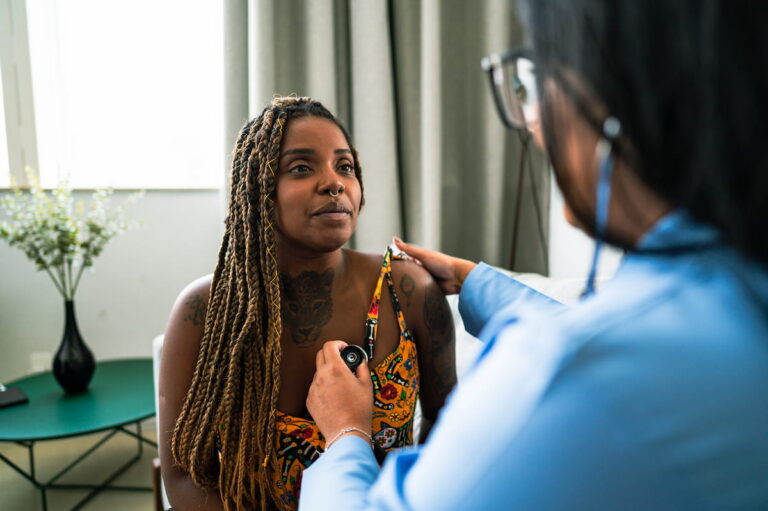
“I was told it was just stress.” “They said my labs were normal.” “I knew something was wrong—but no one listened.” These are not isolated experiences. For many Black women, this is the reality of navigating healthcare. Being dismissed, minimized, or not taken seriously in medical settings is not just frustrating; it is harmful. It can delay diagnosis, worsen outcomes, and make patients hesitant to seek care again.
And the data support what many Black women have been saying for generations. Research from KFF shows that Black adults report more unfair treatment in healthcare settings and are more likely to say a provider assumed something about them without asking, suggested they were personally to blame for a health problem, or ignored their concerns.
But here is the truth:
And you are allowed to leave an appointment with more than “just wait and see” when you know something in your body has changed.
Dismissal does not always sound cruel. Sometimes, it sounds calm. Sometimes, it sounds professional. Sometimes, it sounds like reassurance. “It’s probably just stress.” “You’re fine.” “Everything looks normal.” “That’s common.” “Let’s just monitor it.”
Those statements are not always wrong. Stress can affect the body. Some symptoms are common. Monitoring can be appropriate. But dismissal occurs when those explanations become a stopping point rather than a starting point. It happens when your symptoms are not explored fully.
It happens when your pain is minimized. It happens when a provider assumes rather than investigates. And for many Black women, this happens repeatedly, across different doctors, clinics, and stages of life. Over time, that pattern creates a dangerous gap between what you are experiencing and what is being taken seriously.
Healthcare disparities are real. Black women are more likely to experience delayed diagnoses, undertreatment of pain, poor communication, and feeling unheard during medical visits. This is not because Black women are “bad patients.” It is not because they are too emotional, too sensitive, or not explaining themselves well enough.
It is because healthcare systems are shaped by bias, unequal access, and long-standing patterns of medical racism. KFF has reported that racism and discrimination continue to contribute to disparities in care, including how patients are treated and whether they feel respected during medical encounters.
That matters. Because when a patient does not feel heard, they may stop asking. When a symptom is dismissed too many times, they may start doubting themselves. And when care is delayed, conditions that could have been caught earlier can become more serious. That is why advocacy matters.
Not because the burden should be on Black women to fix the system. But having tools can help you protect yourself as you move through it.
RELATED: Routine Checkups Black Women Commonly Miss—and Why They Matter
One of the most powerful things you can do before an appointment is organize your story. Doctors often work with limited time. That means the clearer you are, the harder it becomes to have your concerns brushed aside. Before your visit, write down what has been happening, including:
Instead of saying, “I just don’t feel right,” you can say, “I’ve had this symptom for six weeks. It happens three to four times a week, and it is getting worse.” That kind of statement gives your provider a timeline, frequency, and progression. It also makes it clear that this is not a vague concern.
A symptom timeline can be especially helpful if you have seen multiple providers or if symptoms have changed over time. You do not need anything fancy. You can write it on your phone, in a notebook, or print it out before your appointment. Start with the first day you notice something is wrong.
Then add major changes. For example:
This gives your doctor a fuller picture. It also prevents you from having to remember everything while sitting on an exam table, nervous, rushed, or already feeling dismissed.

If you have previous lab results, imaging reports, discharge papers, medication lists, or visit summaries, bring them with you. Even if the doctor’s office says they can access them, bring your own copy when possible. Medical records do not always transfer smoothly. And when they are missing, patients often end up repeating the same story again and again.
Having documentation helps protect your time and strengthens your case. It also allows you to say, “Here is what has already been done. What is the next step?” That question moves the visit forward.
How you communicate matters. Not because you need to prove your pain. Not because your experience is only valid if you say it perfectly. But because direct language can cut through assumptions. Instead of saying, “Maybe it’s nothing,” try saying, “Even if this is common, it is not normal for me.” Instead of saying, “I don’t know, I just feel off,” try saying, “Something has changed in my body, and it is affecting my daily life.”
Instead of saying, “I guess I can wait,” try saying, “I am concerned about waiting without a clear plan.” These statements are calm, but firm. They show that you are paying attention. They also make it harder for the appointment to end without a next step.
One of the best ways to push for answers is to ask questions that require explanation. Try asking, “What else could this be?” That question opens the door to differential diagnosis, which means other possible explanations. You can also ask, “What are we ruling out today?”
This helps clarify whether your provider is investigating your symptoms or simply assuming. Another strong question is, “Can we test for anything that would explain this?” If the provider says testing is not needed, follow up with, “What symptoms would make testing necessary?” That gives you a clear standard. It also tells you what to watch after you leave.
If you feel like your concern is being brushed aside, you can slow the conversation down. Try saying, “I hear what you’re saying, but I am still concerned. I would like to explore this further.” You can also say, “Can you explain why you do not think this needs further testing?” If you requested a test, referral, or imaging and the provider refuses, you can ask, “Can you document in my chart that I requested further evaluation, and it was not recommended?”
That question can shift the tone of the visit. It does not have to be said with anger. It can be said calmly. But it introduces accountability. And sometimes, accountability changes how seriously your concern is handled.
Not every symptom needs immediate testing. But persistent symptoms deserve attention. If something keeps happening, worsens, disrupts your daily life, or does not improve with basic treatment, it is reasonable to ask what else should be checked. You might say, “Since this has been going on for several weeks, what testing would help us understand the cause?”
Or “If the first explanation is stress, how do we confirm that and rule out medical causes?” That question is important because stress should not become a catch-all diagnosis. Stress can affect health, but it should not be used to avoid investigating symptoms, especially when those symptoms are new, worsening, or affecting your ability to function.
Seeking a second opinion is not disrespectful. It is not dramatic. It is not “doing too much.” It is a normal part of healthcare. If you feel unheard, if your symptoms continue, or if you are not comfortable with the explanation you were given, you have every right to consult another provider. You can simply say, “I would like another perspective before deciding what to do next.” Or you can say, “I want to make sure we are not missing anything.” You do not need to apologize for wanting clarity. You do not need to protect a doctor’s feelings at the expense of your health.
Advocating for yourself while sick, tired, anxious, or in pain can be exhausting. That is why bringing someone with you can help. A trusted friend, partner, sibling, parent, or adult child can listen, take notes, ask follow-up questions, and help you remember what was said. Sometimes, just having another person in the room changes the way providers communicate.
Your support person does not have to speak for you. They can simply help make sure you are not carrying the whole appointment alone. Before the visit, tell them what you need. You might say, “If I get overwhelmed, remind me to ask about testing.” Or “If the doctor says everything is fine, help me ask what the next step is if symptoms continue.” That kind of support can make a difference.
One of the hardest parts of being dismissed is the self-doubt it creates. You start asking yourself, “Am I overreacting?” You wonder if it might really be stress. You try to convince yourself to wait longer. But you live in your body every day. You know when something has changed. You know when a symptom feels unusual, severe, or persistent. Trusting your body does not mean assuming the worst. It means honoring the signal. It means saying, “This deserves attention.”
Dismissal is not just clinical. It is emotional. It can make you feel invisible. It can make you feel embarrassed for asking. It can make you less likely to seek care the next time something feels wrong. And that is dangerous. The more a person is dismissed, the more likely they are to delay care. The more they delay care, the more serious a condition can become before it is finally diagnosed and treated. That is why being heard is not a luxury in healthcare. It is part of safe, effective care.
Advocacy does not mean being aggressive. It means being prepared. It means being clear. It means being persistent. It means asking, “What else could this be?” It means saying, “This is not normal for me.” It means requesting documentation.
It means getting another opinion when your concerns are not being addressed. And most importantly, it means believing that your health is worth the effort. If you have ever felt dismissed in a doctor’s office, you are not imagining it. And you are not powerless. You can prepare for your symptoms before the appointment. You can ask direct questions. You can request testing or referrals. You can bring someone with you. You can get another opinion.
Getting answers should not depend on how hard you have to fight. But until the system consistently listens, having tools to advocate for yourself can make all the difference. Your voice matters. Your symptoms matter. And your body deserves to be taken seriously.


By subscribing, you consent to receive emails from BlackDoctor.com. You may unsubscribe at any time. Privacy Policy & Terms of Service.