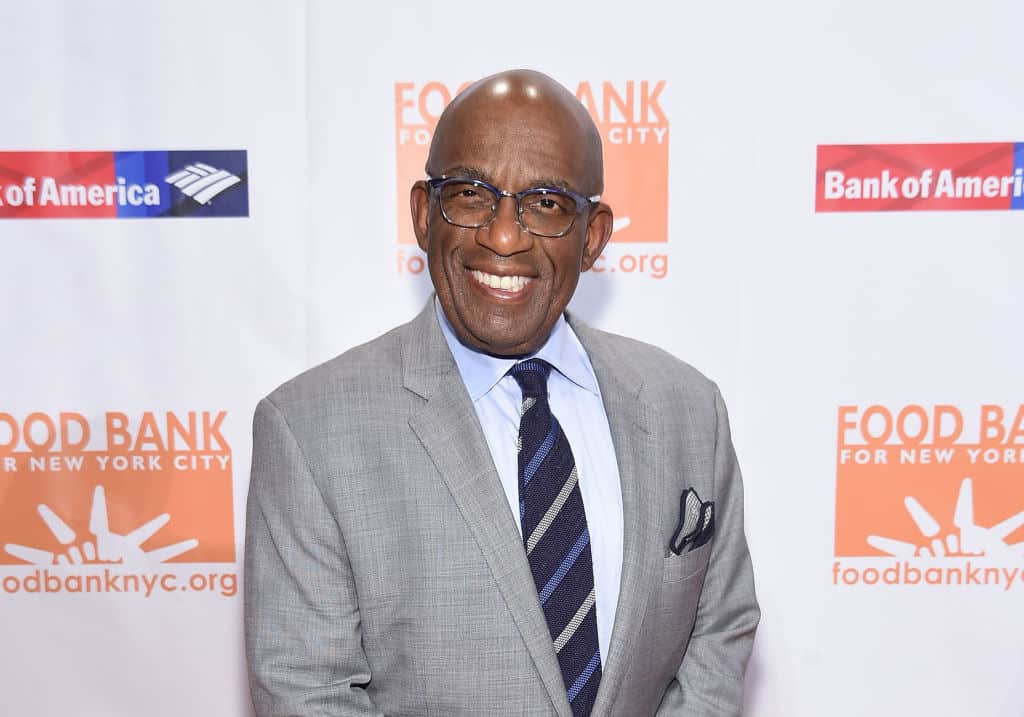
Al Roker, the long-time co-anchor on the TODAY show and arguably one of America’s favorite weathermen, announced today that he has been diagnosed with prostate cancer and will be undergoing surgery to have his prostate removed.
The now 70-year-old explained he wanted to publicly reveal his diagnosis to shed light on this disease that has and still is disproportionally affect Black men.
In fact, the Centers for Disease Control (CDC) states that one in 7 African American men, 1 in 9 men overall, will be diagnosed with prostate cancer in their lifetime.
“The problem for African American men is that any number of reasons from genetics to access to health care, and so we want to make it available and let people know they got to get checked,” Al said on TODAY.
The detection of Al’s prostate cancer began with a routine physical when his doctor discovered he had an elevated prostate-specific antigen (PSA) in his bloodwork. That led to him getting an MRI, followed by a biopsy, to confirm his diagnosis.
“When he started, he closed his door and said, ‘I always like to have these discussions face to face,'” Al said. “And I was like, ‘Uh-oh. Well, that doesn’t sound good.’
The father of three confessed, “You hear the word ‘cancer’ and your mind goes, it’s the next level, you know?”
Detection is key for anyone who may be diagnosed with prostate cancer, especially Black men.
Knowing the symptoms is also key to even thinking that you should get checked in order for it to be detected.
Urinary Symptoms
If a patient experiences bone pain and swelling in the lower extremities—especially when accompanied by urinary, erectile or ejaculation dysfunction—these could be symptoms of advanced prostate cancer.
While Roker didn’t feel any symptoms per se before getting his annual physical, physicians recommend that you consult with your doctor if you experience any of the above symptoms discussed on this page particularly if they have been going on for a while. You will need a thorough work-up to determine the underlying cause, which may or may not be prostate cancer.
Results from a recent Harris Poll survey of 410 men with advanced prostate cancer and 95 caregivers found that nearly 7 in 10 (68 percent) of men surveyed admitted to sometimes ignoring symptoms like pain.
The survey, conducted by eight patient advocacy groups comprising the International Prostate Cancer Coalition (IPCC) also showed that 71 percent of men don’t know what causes the pain and more than half say they feel pain is just something they have to live with.
Black men don’t just get this disease more often than white men. They also tend to get it at an earlier age. And their cancer tends to spread more quickly.

“It’s a good news-bad news kind of thing,” Al said. “Good news is we caught it early.
Not great news is that it’s a little aggressive, so I’m going to be taking some time off to take care of this.”
“I think guys tend not to be very proactive about their health, to begin with,” Roker shares. “Certain elements of our health, we’re really reticent to talk about.”
“Certainly, when you talk about prostate cancer, African-American males are almost four times more likely to develop prostate cancer and twice as likely to die from it. There are any number of reasons for that, from access, or lack thereof, to health care and testing to being embarrassed. I’ve had to deal with it.”
“Listen, it’s not a walk in the park, but given the alternative, there are any number of different kinds of treatment protocols that you can choose. I chose surgery because I’m of the mindset that I just want this out; I don’t want to have to worry about it. That’s two and a half years ago, and I’m now at the point where I only have to get checked once a year, and that’s that. Life goes on.”
“Look, the fact of the matter is, if you live long enough as a male, you will probably die with prostate cancer. But if you get checked and tested, you will not die from it.”
“If you live long enough as a male, especially as an African American male, you will probably die with prostate cancer, meaning you may develop it. But if you’re in your late 80s or 90s, you’ll probably die with prostate cancer, but that won’t be the reason why you died. Whereas if you don’t get tested, if you don’t get checked, as an African-American male, you are twice as likely to die from it than your white counterpart. So, what do you want? What’s the outcome that you’re looking for? [In avoiding getting tested, some people would say] ‘Oh, I would die of embarrassment.’”
“Well, it would be embarrassing if you died because you didn’t get tested. It would be beyond embarrassing; it would be a tragedy—especially with something like prostate cancer that can be so easily treated.”



By subscribing, you consent to receive emails from BlackDoctor.com. You may unsubscribe at any time. Privacy Policy & Terms of Service.
Enter your name and email to receive the download link.
Welcome to BlackDoctor AI Search. Explore 35,000+ articles and videos — your health questions, answered faster.