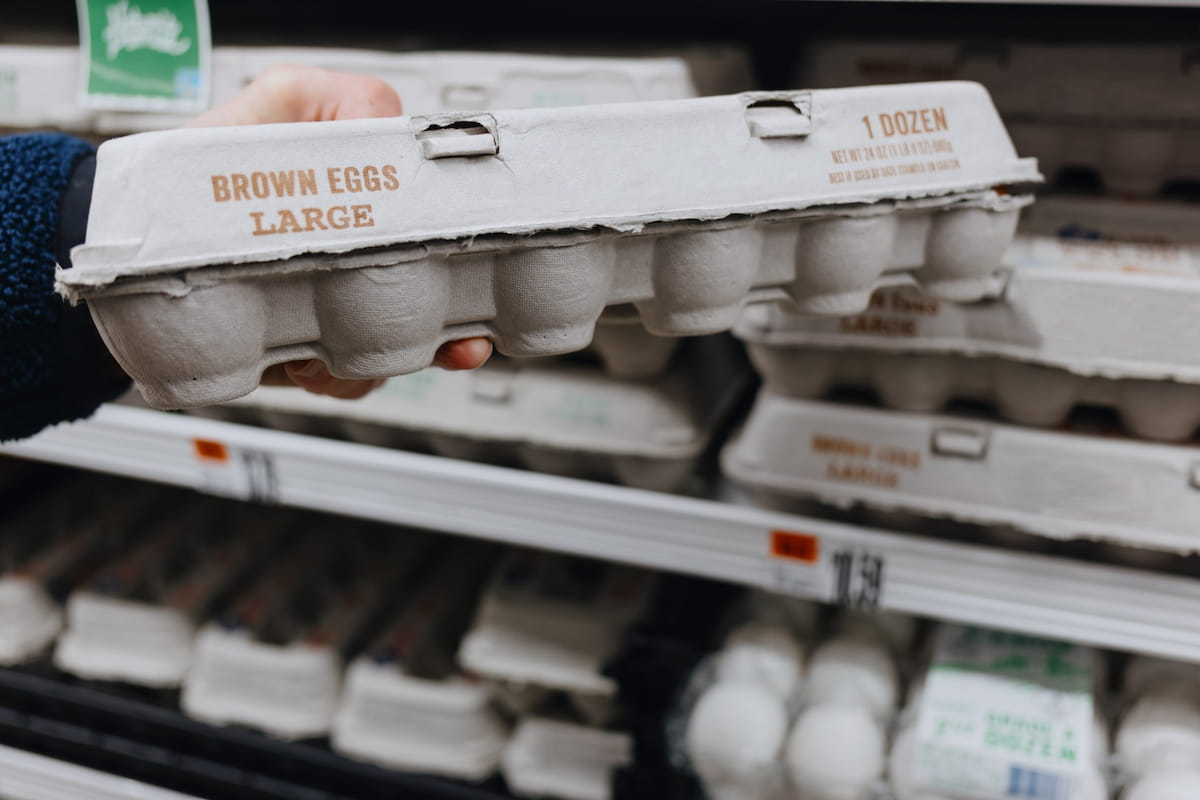
On Tuesday, the Food and Drug Administration (FDA) issued a recall of over 6 million eggs the highest risk level—Class I.1
Some of the recalled eggs, produced by the Black Sheep Egg Company of Arkansas, tested positive for seven strains of Salmonella, including several that can cause foodborne illness.
The Class I status is the highest recall level and means there’s a “reasonable probability” that eating the recalled eggs may cause “serious adverse health consequences or death.”
The recalled eggs have best-by dates of 8/22/2025 through 10/31/2025 stamped on the side of the cartons. In stores, recalled Black Sheep Eggs products can be identified with two UPCs: 860010568507 and 860010568538.
However, the eggs were also sent to wholesale locations in Arkansas and Missouri, as well as wholesale and broker locations in Mississippi, Texas, California, and Indiana. Distributors may have repackaged the eggs, which are now being sold under a different brand.
For a list of all contaminated eggs, check out the most recent FDA report. The list includes:
The FDA has urged consumers who purchased these recalled eggs to return them to the place of purchase for a full refund.
While these recalled eggs have been identified as a potential risk of Salmonella contamination and not a confirmed contamination, if you consumed these recalled eggs, it’s still a good idea to monitor yourself for Salmonella symptoms, which usually begin within six hours to six days after eating contaminated food. Common symptoms include stomach cramps, watery diarrhea, headache, nausea, vomiting, and loss of appetite. If you are experiencing any Salmonella symptoms, you should contact your healthcare provider.
Per the FDA, for the best quality, you should use eggs within three weeks of their purchase date. Donovan, however, gives a slightly longer shelf life—six weeks in the fridge for farm-fresh eggs, and four weeks in the fridge for eggs from a grocery store. Grocers argue that store-bought eggs will already be older because of shipping which is why they have a shorter shelf life.)
If you’re sourcing eggs straight from your own chickens, a good rule of thumb is that they’ll be good for up to two weeks on your kitchen counter or otherwise unrefrigerated if left unwashed. Once they’re rinsed—only necessary if the eggs are covered in dirt or chicken droppings—they’ll need to go straight into cooler temperatures, where they can wait out the rest of their shelf life. Eggs are porous, and the first layer they are laid with, the “bloom” layer, prevents bacteria from getting in. Once the bloom has been washed away, however, eggs require refrigeration for protection.
Fill a bowl with water, and carefully place an egg on top. If the egg sinks like a stone, laying down on its side, it’s still very fresh! If it sinks but doesn’t lay flat—and instead it kind of stands up, wobbling—your egg is OK and probably just right for hard-boiling. Egg salad, anyone? If the egg floats on the top, that’s an indication that your egg is possibly past its prime. Floating doesn’t necessarily mean it’s gone bad, just that it’s not as fresh as it could be.
If your eggs are beyond the “best by” date but they’ve passed the water test—meaning, they were packed a reasonable amount of time ago and they wobbled or sank onto their sides in water rather than floating on top—crack one open.
Obviously, if you crack open an egg and it smells bad, it’s fit for the garbage. But there are a few more subtle things to look for. A fresh egg will have a bright orange yolk and the whites will still have some spring to them. If the yolk is dull and yellowish and the whites run out lifelessly onto the plate, the egg is old. But again, an older egg isn’t necessarily a bad egg. So give it a sniff; your nose will know. An egg should have a neutral smell. If there’s no funky odor, it’s probably OK. If you pick up sour or mildewy notes on the nose, toss it.
Remember, it’s better to be safe than sorry. So when in doubt, throw it out.
Don’t think that simply boiling your eggs will preserve them. Boiling them, in fact, may do the opposite and speed up their demise. Once you boil an egg it stays fresh for only about a week. This means you could take half the eggs from a carton of fresh eggs, boil them, and those eggs could go bad well before the raw eggs that you left alone. Though it sounds strange, it actually makes sense: The boiled eggs go bad faster because boiling removes a naturally occurring waxy covering that protects the raw eggs from bacteria. Without it, bacteria can sneak through the porous shells.
The best way to test if your eggs are still good after you’ve boiled them is, again, the smell test. Basically, you’ll notice the smell is off if an egg is starting to go bad. A good nose doesn’t lie.


By subscribing, you consent to receive emails from BlackDoctor.com. You may unsubscribe at any time. Privacy Policy & Terms of Service.