As the distinction between smart homes and smart health narrows, voice applications—powered by Alexa, Google Assistant, Siri, and new AI voice platforms—are taking center stage. These tools aren’t just where we ask for recipes or weather updates anymore; they’re poised to play a crucial role in health recovery, wellness, and social support. From mitigating post-surgery isolation to addressing disparities in Black wellness spaces, voice apps offer a novel means of delivering care that’s continuous, personal, and hands-free. But as with any powerful technology, we must confront key issues: equity, privacy, safety, and bias.
1. Smart Homes, Smart Healing: Why Tech Belongs in Black Wellness
Voice-first health tech meets Black wellness
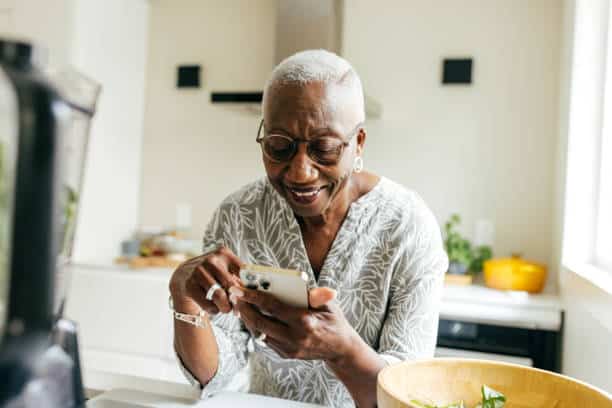
Smart homes with embedded voice assistants offer more than convenience—they can serve as healing hubs. For Black communities, where cultural mistrust of healthcare systems and limited access to providers remain real issues, voice tech presents an accessible, low-barrier pathway to healing.
A recent ArXiv study involving Black older adults found that culturally tailored voice recovery curricula—which include voice interactions in Black vernacular, references to culturally relevant music, and race-aware examples—helped build trust and engagement, especially when users lacked strong caregiver support.
Featured on BlackDoctor
Why this matters
Accessibility at home – Voice tech removes visual and tactile barriers like small screens or complex user interfaces.
Cultural resonance – Integration of relevant language, tone, and examples can make guidance feel less foreign, more comforting.
Reducing reliance on in-person care – For those hesitant to engage with traditional healthcare, a familiar voice at home may serve as a bridge to wellness.
Care strategies
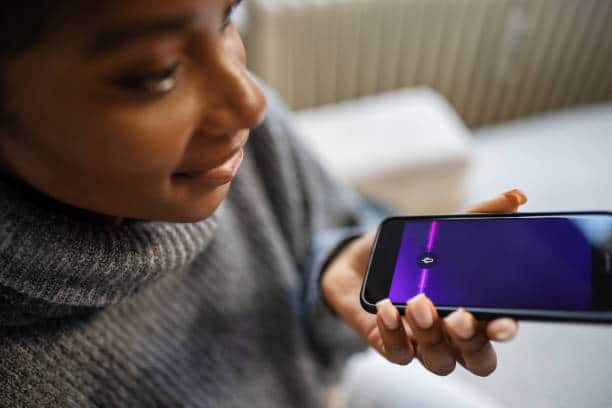
Voice apps offering medication reminders, guided breathing exercises, or emergency voice alerts create mini wellness ecosystems tailored to Black experiences.
Organizations and developers should embed culturally resonant content, enable voice role-modeling, and allow users to pick accents or voices that feel affirming.
2. Post-Surgery Isolation: Can Voice Assistants Fill the Gaps?
The loneliness of recovery
Whether you’re recovering from outpatient surgery or managing chronic illness, healing often involves long hours alone. Emotional and cognitive challenges can complicate physical recovery, and that’s where voice assistants have begun to help.
A study published in PMCID explored post-surgical discharge support via voice-enabled frameworks using consumer smart-home devices. Patients could report pain, follow medication schedules, and receive prompts—all via voice commands.
Another research review predicts that within five years, voice assistants will handle routine health checks, staff-patient communication, and even aspects of self-therapy, especially valuable for recovery care.
Hands-free support – Especially helpful when mobility is compromised.
Companionship – Conversational AI lessens feelings of isolation.
Consistent adherence – Voice reminders and prompts increase compliance.
Enhanced monitoring – Voice apps can record recovery data and alert caregivers/physicians to anomalies.
Navigating Tech Access in Black Communities
The reality of digital divides
While Black households increasingly possess smartphones and smart speakers, disparities persist in broadband access, digital literacy, and culturally tailored content. Without addressing these gaps, the healing power of voice tech may remain out of reach.
Challenges at a glance
Broadband limitations – Consistently fast Wi-Fi is essential for reliable voice-app experiences.
Vernacular bias – Voice models struggle with African American Vernacular English (AAVE), affecting accuracy.
Trust barriers – Historical mistrust in tech and health systems requires culturally sensitive onboarding and interfaces.
Economic constraints – Smart home devices are often lower-priority purchases, unless subsidized.
Subsidized voice kits: Partnerships between public health systems and tech firms could provide reduced-cost devices.
Accent and vernacular tuning: Developers must train models on diverse voices to improve recognition accuracy.
Community-based design: Co-creation with Black users ensures relevance, trust, and cultural resonance.
Education programs: Digital literacy workshops that highlight simple voice-health use cases can drive adoption.
4. Safety, Privacy, and AI Bias: What Families Should Know
While voice healing offers promise, navigating the ecosystem safely is critical: smart assistants record audio, AI models may marginalize users, and privacy remains a major concern.
Privacy & Data Risks
Voice assistants “listen” continuously for wake words, and research has shown they sometimes record unintended speech snippets. One investigation into Echo devices found 30–38 percent of misrecorded audio captured private conversations. Other research reveals that voice apps collect, store, and share data in opaque ways, embedding user profiling via metadata.
Companies often express intent to anonymize or secure data, but policy labelling is weak. One large-scale analysis of Alexa skills found many violated privacy policy standards, with third-party apps failing to disclose data collection practices.
Tips for families
Review and disable unnecessary recordings via Alexa/Google privacy dashboards.
Manually delete transcripts periodically.
Audit skill permissions, only enabling trusted health-focused apps.
Use local processing (e.g., on-device models) where possible.
Educate at-risk users—older adults may inadvertently overshare sensitive info.
Algorithmic Bias & Accessibility
Voice recognition systems struggle more with darker voices and AAVE. A 2020 study found that Amazon, Apple, Google, and Microsoft error rates were higher for Black speakers vs. white speakers. This disparity risks frustrating users and may exclude those who are most in need.
Gender bias also persists—most assistants default to soft, female voices, reinforcing “submissive” archetypes, as articulated in UNESCO’s “I’d Blush If I Could” report.
Open-source voice datasets must include diverse voices to train better models.
Non-gendered voice options like “Q” help where gendered voices may be off-putting.
Ongoing user audits should include marginalized voices to test assistant performance.
Policy-level change—tech companies should be held accountable for measuring and correcting bias.
Safety & Health Accuracy
Voice apps are not medical devices but operate in the health-tech space nonetheless. Miscommunication or incorrect prompts risk physical harm. Brookings highlighted how algorithmic mistakes can lead to patient safety risks, ranging from minor errors to serious misdiagnosis.
Best practices for households
Use voice apps for reminders and monitoring, not diagnosis or directive treatment advice.
Medprompt apps are best when clinician-vetted, ideally with clear disclaimers.
Monitor app logs to catch errors, misunderstanding of speech, or missed prompts.
Maintain a hybrid approach—combine voice assistance with human check-ins.
The Future of Voice-Powered Healing
Consensus from Delphi panels and healthcare research predicts that voice assistants will be commonplace in health within five years, supporting chores like anamnesis, self-therapy, communications, and elder care. Refinements in natural language processing (NLP), emotional detection, and cultural tuning will enhance accessibility and trust.
Examples on the horizon
VIPAs for self-therapy: Conversational agents guiding meditation, pain management, and emotional check-ins.
Companion AI: With emotion-sensing tech, assisting older adults coping with loneliness, similar to Everfriends.
Integrated patient monitoring: Devices detecting abnormal breathing, falls, or vital signs and alerting caregivers.
To truly realize this, developers must ensure equitable access, privacy safeguards, bias mitigation, and ongoing trust-building, especially in communities that often face healthcare exclusion. The goal isn’t just healing—it’s creating a voice-driven caregiving ecosystem that respects culture, identity, and safety.
Recommended family checklist for voice-powered recovery:
Choose a clinician-approved health skill.
Customize voice/accents that feel comfortable.
Regularly delete recordings and transcripts.
Monitor for miscommunication or lapse in reminders.
Use on-device/offline features if available.
Pair voice apps with human interactions for safety.
Stay alert to bias, test and report errors.
Voice apps are no longer novelties; they represent next-gen care modalities—potent in home recovery, wellness enhancement, and emotional support. For Black individuals recovering from surgery, living in tech-disadvantaged areas, or in isolated environments, voice assistants can provide culturally attuned, hands-free, empathetic and trustworthy care.
BlackDoctor is the world’s largest and most comprehensive online health resource specifically for the Black community. BlackDoctor understands that the uniqueness of Black culture - our heritage and our traditions - plays a role in our health. BlackDoctor gives you access to innovative new approaches to the health information you need in everyday language so you can break through the disparities, gain control and live your life to its fullest.
✦ AI Search Disclaimer This AI-powered search tool helps you find relevant health articles from the BlackDoctor.org archive. Please keep the following in mind:
✦ For Informational Purposes Only The information provided through this AI search is for general educational and informational purposes only. It is not intended as a substitute for professional medical advice, diagnosis, or treatment.
✦ Always Consult a Healthcare Provider Never disregard professional medical advice or delay seeking it because of something you have read through this search tool. If you have a medical emergency, call your doctor or 911 immediately.
✦ AI Limitations This search tool uses artificial intelligence to help match your queries with articles in our archive. While we strive for accuracy, AI-generated results may occasionally be incomplete, outdated, or not fully relevant to your specific situation.
✦ No Doctor-Patient Relationship Using this search tool does not create a doctor-patient relationship between you and BlackDoctor.org or any healthcare provider.
Explore over 35,000 articles and videos across black health, wellness, lifestyle and culture