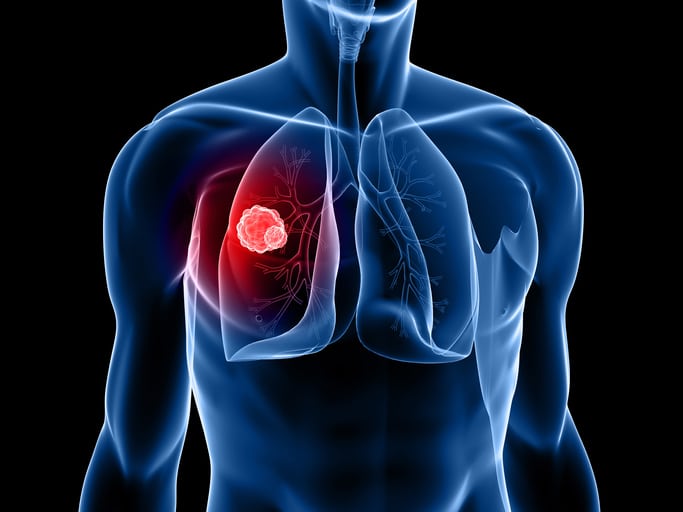
When you hear the words “lung cancer,” cigarette smoking may automatically register in your mind since the topics of lung cancer and smoking are quite synonymous with each other. While cigarette smoking is the leading cause of this disease, the truth is, no one is immune from lung cancer.
With November being Lung Cancer Awareness Month, it’s no better time than now to consider your lung health. BlackDoctor.org spoke with Dr. David Cooke of the American Lung Association, to discuss the importance of getting screened for lung cancer and how conveniently simple it is to go through the process.
One out of every four cancer deaths are from lung cancer, making it the deadliest cancer among both men and women that kills more people than breast, colon and prostate cancers combined. American Cancer Society estimates that within this year, there are 222,500 new cases of lung cancer and roughly 155,870 deaths from lung cancer.
For both smokers and non-smokers, the chances of a man developing lung cancer in his lifetime is about 1 in 14, while for a woman, it’s 1 in 17. However, African-American men are about 20% more likely to develop lung cancer than white men and that rate is about 10% lower in African-American women than in white women.
“There’s a higher incidence of lung cancer in the African American community compared to other communities such as White, Asian-American and Hispanic communities,” Cooke said. Although lung cancer is higher in certain demographics and smokers have an increased chance of getting lung cancer than non-smokers, every one should get checked for lung cancer.
“All you need are lungs to get lung cancer,” Cooke said.
While everyone is at risk to develop lung cancer, there are individuals who have the highest risk of getting the disease.
“Those individuals who are aged 55-80, who are current smokers or they quit smoking within the last 15 years and they smoked the equivalent of 30 “pack years” [or] a pack of day for thirty years, two packs a day for 15 years or any combination that equals to 30 [have the highest risk of getting lung cancer],” Cooke said. For people who fall into the high risk category, there is a screening test called a Low-Dose Computed Tomography (LDCT) scan, that can detect lung cancer in its earlier stages (stages one or two), which has the highest chance for curing lung cancer.
“Nine million Americans are eligible for lung cancer screening with Low-Dose CT scan, but less than five percent of high-risk Americans are being screened for lung cancer.” Cooke said. “Of those five percent, if we screen just half of those individuals, we’d save 15,000 lives per year.”
The LDCT is fairly quick scan that takes less than a minute to complete and if you do fall within the high-risk category, the scan is covered by medicare, medicaid and some insurance. It’s important to note that this scan should only be done at facilities that have the correct type of CT scanner, as well as, have a lot of experience with conducting LDCT scans for lung cancer screening.
Due to being screened in the earlier stages of lung cancer, more than 430,000 people diagnosed with the disease at some point in their life, are alive today.
Besides smoking, there are other various risk factors that play a role in possibly developing lung cancer such as family history, exposure to radon, environmental exposures to asbestos and second-hand smoke. Nearly 80% of those diagnosed with lung cancer are former or non-smokers.
To avoid the risk of getting lung cancer, there are a couple of things you can do.
If you’re a non-smoker, avoid individuals and situations where you’d be around second hand smoke and encourage your loved ones to quit smoking themselves; and if you are a smoker, the main thing is to break the habit.
“Quitting smoking is the best thing you can do to improve your lung health if you’re a smoker,” Cooke said. “The toxins within cigarette smoke are really damaging to your lungs, as well as that second-hand smoke that an endanger [the health of] your family and friends and other loved ones.” As you quit smoking, your lungs can improve and the risk of lung cancer can diminish. “Once you’ve quit [smoking] greater than 15 years, your risk of lung cancer diminishes to the point where you fall out of that high risk category of individuals that will benefit from LDCT,” Cooke said. “It’s never too early to quit and it’s never too late to quit and there are not too many attempts or tries to quit.”
If you’d like to do a LDCT scan, consult with your doctor or health care provider and ask questions to determine if you would benefit from the screening. To learn more information about lung cancer and to take the lung cancer screening eligibility quiz today, please visit www.savedbythescan.org


By subscribing, you consent to receive emails from BlackDoctor.com. You may unsubscribe at any time. Privacy Policy & Terms of Service.