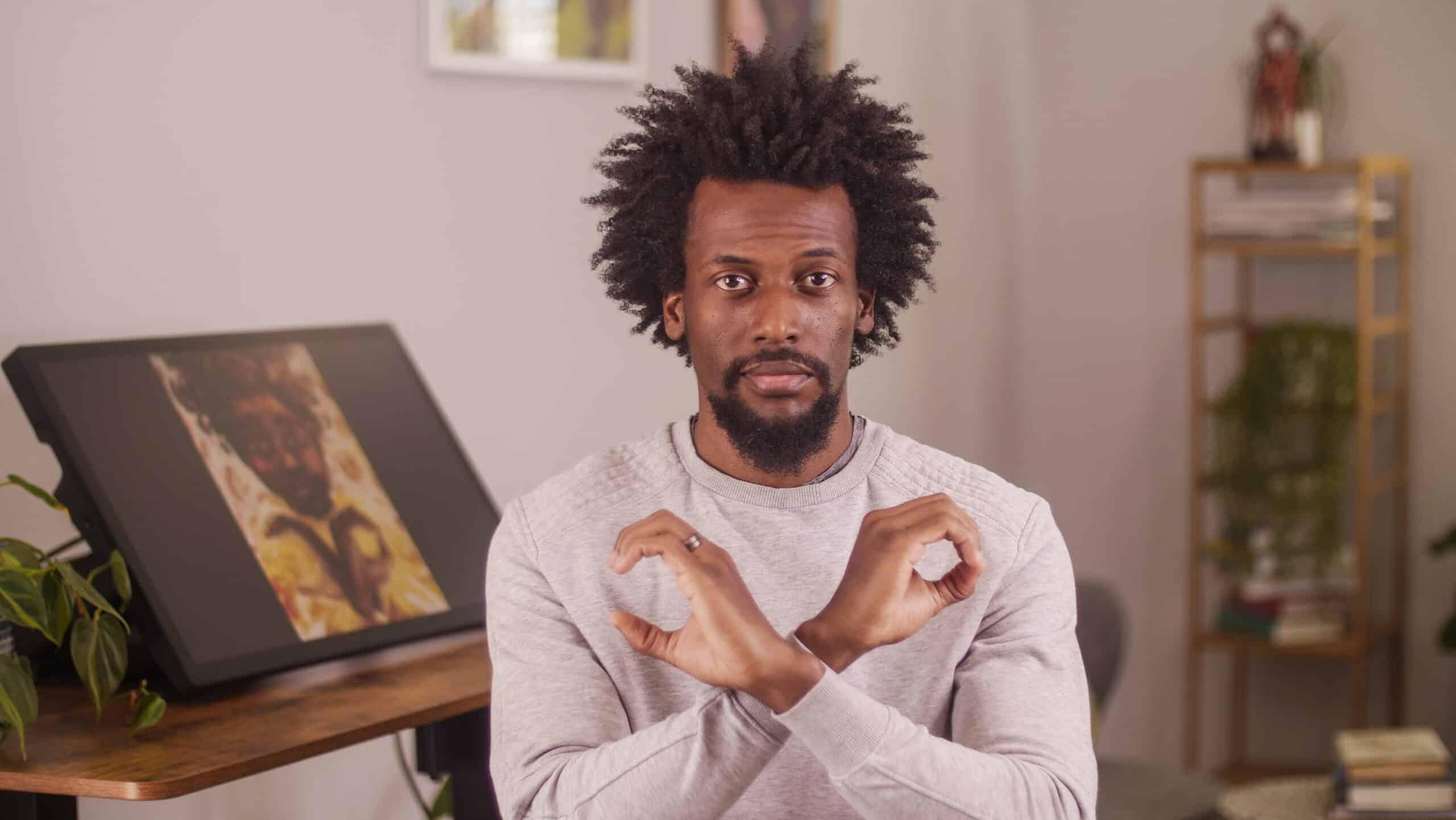
Nikkolas Smith is a widely celebrated artivist (artist and activist). Whether it’s a portrait of George Floyd, who was killed by a police officer in 2020, or a mural of the late Chadwick Boseman, who passed away in 2020 from colon cancer, Smith’s art has followed the lead of Nina Simone in reflecting the times of Black lives.
Most recently, the Los-Angeles based artivist was commissioned by the American Red Cross to bring awareness to sickle cell disease, a genetic blood disorder that predominantly affects those in the Black community.
The result is a thoughtful piece titled “Transfusion”, which was inspired by the four sickle cell warriors he spoke to in order to get a better understanding of what sickle cell patients go through on a daily basis.
According to the American Red Cross, “an estimated 100,000 people across the U.S. — the majority of whom are of African descent — have sickle cell disease and may require regular blood transfusions to help manage their disease.”
Smith, a blood donor himself, hopes his work with American Red Cross will help shed light on what he calls an invisible disease and encourage more Blacks to donate blood.
BlackDoctor.org sat down with Smith to discuss his work with the American Red Cross, what inspired ‘Transfusion’, what he learned about sickle cell warriors, and what’s next for the artivist.
RELATED: Black Blood Donors: 3 Ways Your Blood Can Save a Life
I guess if I could back up a little, I think my whole life I’ve always heard about sickle cell disease and how it is so prevalent in the Black community. And all through my life, hearing stories about people that we know– a friend of a friend or a friend of the family– who lives with the disease, I didn’t know a lot about how bad it was or how difficult it is to live through this. When the Red Cross came to me, it was great that I was able to connect with a group of folks who live with sickle cell every day and they gave me a much better understanding of what exactly the disease is, how they cope with it, how they make it through so it was a really big eye opener for me to have a better understanding of exactly what the disease is and how I could help try to get people inspired to make a difference in the lives of these warriors through my artwork.
We had a really great talk with these warriors young and old who have been living with this their entire life. There are a few things that my eyes were opened to about their struggles and their disease:
So they told me so many stories of how difficult that is and also the fact that they need transfusions. It’s not that they just live with this illness and don’t do anything, they actively – monthly sometimes – need to get blood transfusions so that they can alleviate the pain and get some new cells and feel better. So it’s really like a constant process. It’s not like something that they just sit back and have to deal with and don’t do anything about it. There’s a constant proactive fight…those are the three big takeaways from it.
I think there are simply not enough Black donors out there. We need more and it’s clear that it will directly benefit warriors. I’m sure [there are] dozens of ways that this can benefit people, but specifically, all these sickle cell warriors who are out there. For patients with sickle cell disease, blood donors who are Black are almost three times more likely to be a match for the blood that’s needed and that was another eye-opener for me. We are in a better position to directly help sickle cell patients being Black. That statistic alone is huge – there’s a great chance that if you give blood, you’re gonna be able to help some of these warriors be able to live a more peaceful life and pain-free life. That’s something that – when I posted about it and put it out there to my followers and everything – that was one of the main points that I wanted to drive home is that you can directly benefit somebody today. Also, it’s so simple to sign up for [a] blood donation.
RELATED: 9 Things Blacks Need to Know About Donating Blood
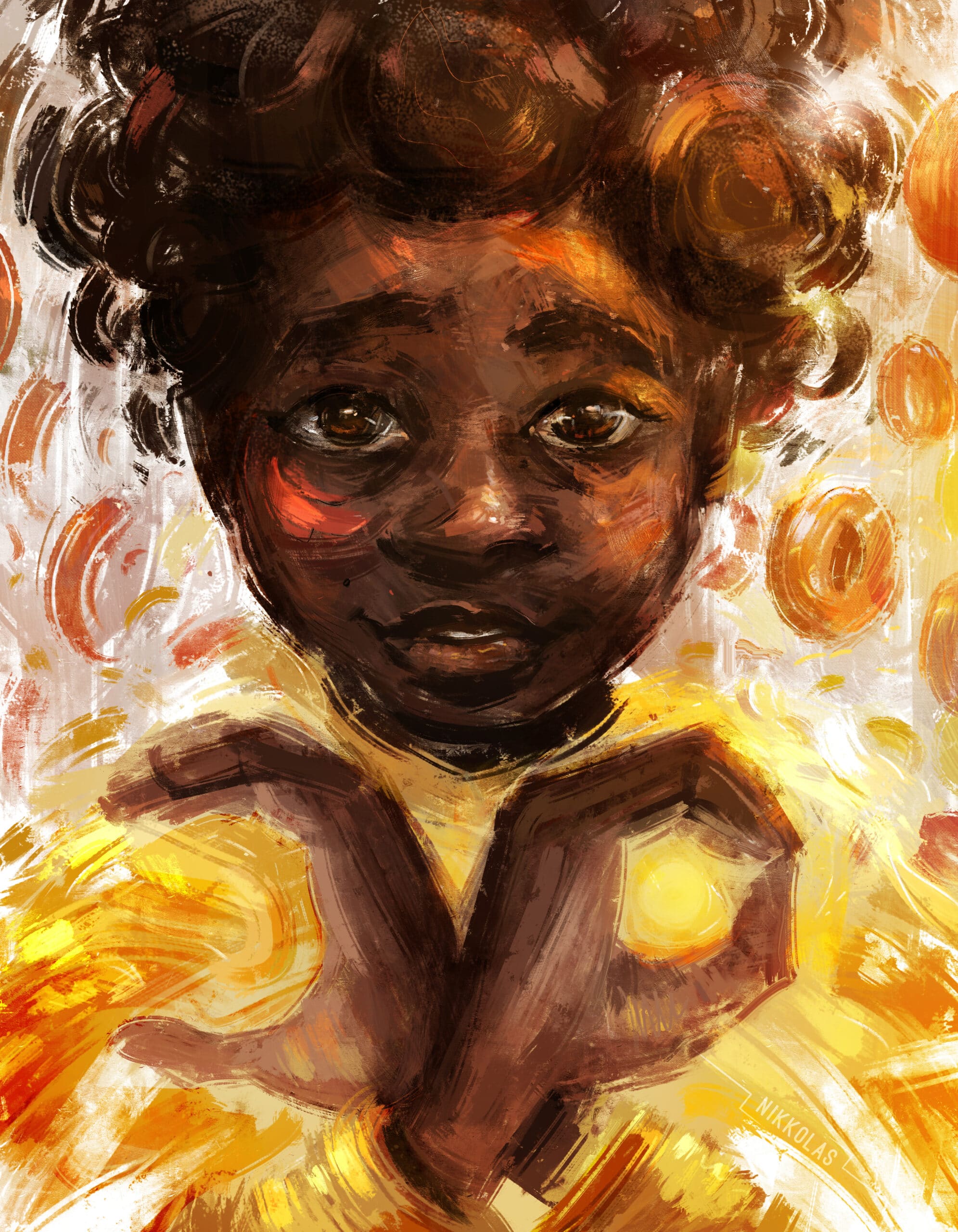
So the piece that I called ‘Transfusion’ there’s a couple of parts to it:
That was really the whole intent of the piece and I’m just so honored that I could be able to be a part of this. I was really happy to see the reception of the piece and how people received it.
Going back to the struggles that they have – part of the things that we were talking about on the call with the warriors was how many day-to-day things that a lot of us take for granted. While they’re waiting for their next transfusion, they’re dealing with life. So it’s like dealing with bosses and teachers, and even family members who may not even believe them when they say that they’re not feeling well. I feel like they have to have this extra level of patience and calmness to be able to even get to that next transfusion because there’s one young boy who when he’s dealing with this extreme pain and not able to go to class or finish his homework or whatever, he deals with teachers who literally don’t comprehend what he’s saying or maybe don’t believe him when he explains how painful it is. It’s very easy for his grades to suffer and that can be very discouraging for young students. And just all the warriors – they all receive that kind of question of ‘Well you don’t look sick, what’s wrong? Is there something really wrong?’ It’s the worst pain that you’ve ever felt in your life, so just a reminder… there’s something that we can all do to try to help them in their process of trying to get transfusions and trying to live healthier lives and get rid of this disease.
Next for me and my artivism journey [is] my new picture book, which is called “The Artivist” on September 5th. I’m very excited because it’s about what I just did with the American Red Cross. It speaks on tackling global health, war, racism, inequality – all these things – and tries to show how artivism can really inspire people to make a positive change in the world related to all of these broken bones (things that aren’t working right in the world). That’s what artivism is about and it’s a picture book so it really speaks to the young creatives, but really it’s for all ages – anybody who was created. I think everybody is creative. How we can use our creativity to speak to these broken bones and try to make the world a better place? So very excited for that and excited for everybody to become an artivist in some way and call out these issues and try to bring us all together.
View this post on Instagram
If you are interested in donating blood, make an appointment now by using the Red Cross Blood Donor App, visiting RedCrossBlood.org/OurBlood or calling 1-800-RED CROSS (1-800-733-2767).

By subscribing, you consent to receive emails from BlackDoctor.com. You may unsubscribe at any time. Privacy Policy & Terms of Service.