The COVID-19 pandemic’s impact has been felt in communities across the U.S., from the largest urban centers to the smallest rural communities. Black Americans (8.2 percent) are the second-largest minority group, behind Hispanics, in rural and small-town areas.
Prior research has demonstrated, rural communities face unique challenges in responding to the pandemic due to inequities in the medical workforce and provision shortages, including higher medical risks and limited telehealth access.
Non-metro and rural counties experienced an elevated rate of growth in the spread of the virus. Countless stories of the most rural communities being impacted by the coronavirus include remote areas in Alaska and ranches in Texas.
Pew Research Center found that twice the number of coronavirus-related deaths existed in sparsely populated rural areas than in urban areas.
There is cause for concern because research finds that rural residents are among the most vaccine-hesitant groups, along with Republicans, individuals 30-49 years old, and Black adults.
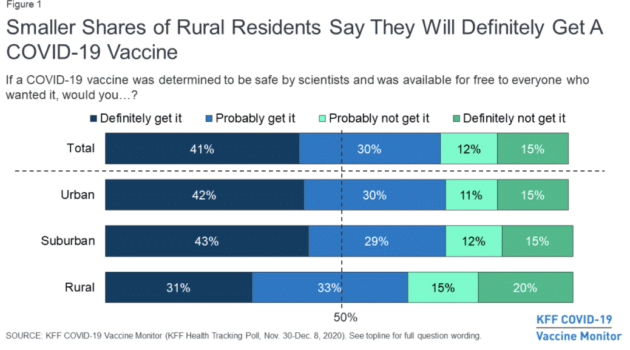
Individuals living in rural areas in the U.S. are significantly less likely to say they will get a COVID-19 vaccine that is deemed safe and available for free than individuals living in suburban and urban America. Slightly less than one-third (31%) of the people in rural areas say they will “definitely get” the vaccine, compared four in ten people in urban areas (42%) and suburban areas (43%).
An additional one-third of people in rural areas say they will “probably get it” while 35% say they will either “probably not get it” (15%) or “definitely not get it” (20%).
Factors associated with one’s willingness to get the coronavirus vaccine include their age, level of education, and – notably – their political party identification. For example, the KFF COVID-19 Vaccine Monitor finds that
Republicans are much less likely to say they will get a coronavirus vaccine compared to their independent and Democratic counterparts. Yet, even when we control for these factors, individuals living in rural areas are still more likely to be vaccine-hesitant compared to those living in suburban and urban areas.
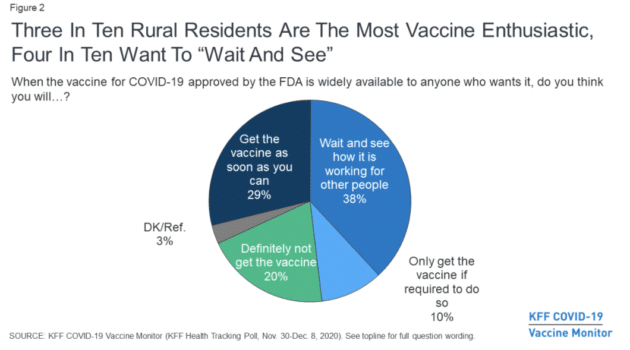
Hospitals are receiving the coronavirus vaccine slowly, and even more so in rural areas, despite that the KFF data also finds three in ten rural residents (29%) report being the most enthusiastic to get the vaccine saying they will get the COVID-19 vaccine “as soon as possible” (compared to 36% of urban residents and 34% of suburban residents).
An additional four in ten (38%) rural residents say they will “wait and see” before getting the vaccine, and one in ten say they will only get the vaccine if they are required to do so for work or other activities.
Partisan identification and demographics don’t completely explain the greater hesitancy, which begs the question what else is driving attitudes about getting a vaccine among rural residents?
While rural residents are just as likely as those living in urban and suburban communities to know someone who has tested positive or died from coronavirus, four in ten rural residents (39%) say they are not worried they or someone in their family will get sick from the coronavirus, compared to 23% of urban residents and three in ten suburban residents (30%).
In addition, half of rural residents say the seriousness of coronavirus is “generally exaggerated” compared to 27% of urban residents and 37% of suburban residents.
And, for rural residents, getting a COVID-19 vaccine is seen more as a personal choice (62% ) than as part “of everyone’s responsibility to protect the health of others” (36%). A majority of urban residents (55%) say getting vaccinated is part of everyone’s responsibility as do nearly half of suburban residents (47%).
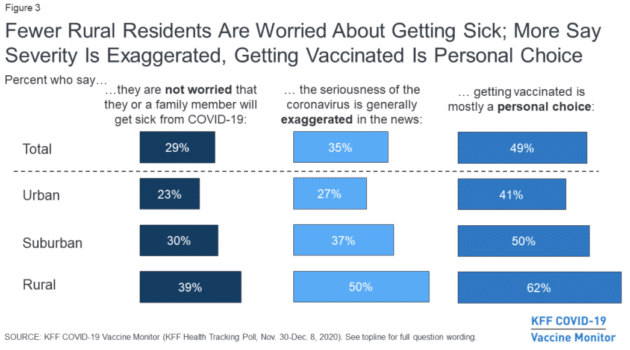
Figure 3: Fewer Rural Residents Are Worried About Getting Sick; More Say Severity Is Exaggerated, Getting Vaccinated Is Personal Choice
When it comes to reaching rural residents, a large majority of rural Americans (86%) say they trust their own doctor or health care provider to provide reliable information about a COVID-19 vaccine.
Smaller shares say they trust the FDA (68%), the CDC (66%), their local public health department (64%), Dr. Fauci (59%), or state government officials (55%).
Vaccine hesitancy among rural residents is more than just partisanship and is strongly connected to their views of the seriousness of the coronavirus and the reasons for getting vaccinated.
Effective messages need to be delivered by trusted messengers and take into account these strongly held beliefs in order to have successful vaccine uptake in rural America


By subscribing, you consent to receive emails from BlackDoctor.com. You may unsubscribe at any time. Privacy Policy & Terms of Service.