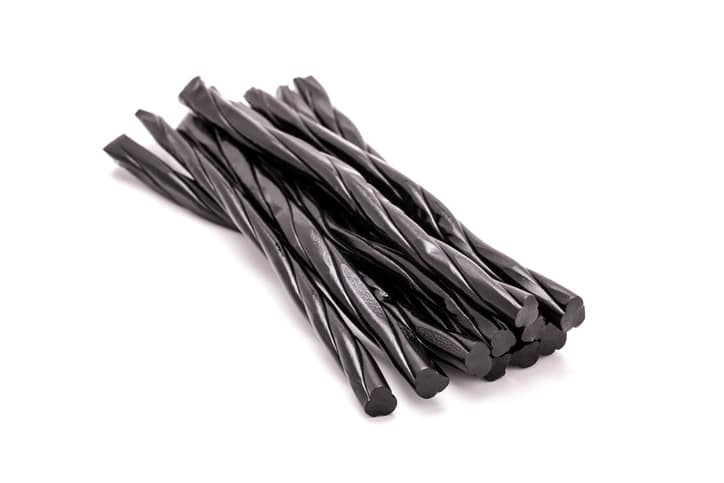
When it comes to black licorice, most people either love it or hate it. Black licorice enthusiasts wait patiently for Halloween to satisfy their black licorice cravings. Unfortunately, many black licorice lovers will receive a trick rather than a treat if they overindulge. It’s true! Too much black licorice can cause serious harm, says the FDA. If you’re 40 or older, eating 2 ounces of black licorice a day for at least two weeks could land you in the hospital with an irregular heartbeat.
What Is Black Licorice?
Black licorice, also known as licorice root, licorice, liquorice, sweet root, gan cao, gan-zao or Chinese licorice, is a low-growing shrub primarily grown for commercial use in Greece, Turkey, and Asia. Licorice is harvested from the plants’ roots and underground stems. According to the National Institutes of Health (NIH), the licorice root has a long history of use in both Eastern and Western medicine.
Today, people use it as a dietary supplement for digestive problems, menopausal symptoms, cough, and viral infections, such as hepatitis. Licorice supplements are available as capsules, tablets, and liquid extracts. At this time the NIH says there are insufficient data available to determine if licorice is effective in treating any medical condition.
What Do We Know About Safety?
In large amounts and with long-term use, licorice root can cause high blood pressure and low potassium levels, which could lead to abnormal heart rhythms, as well as edema (swelling), and congestive heart failure. The U.S. Food and Drug Administration (FDA) says these side effects are due to glycyrrhizin – a sweetening compound derived from licorice root.
Dr. Linda Katz, Director of FDA’s Office of Cosmetics and Colors, says last year the agency received a report of a black licorice aficionado who had a problem after eating the candy. And several medical journals have linked black licorice to health problems in people over 40, some of whom had a history of heart disease and/or high blood pressure.
Katz says potassium levels are usually restored with no permanent health problems when consumption of black licorice stops.
Licorice root that is sold as a dietary supplement can be…
…found with the glycyrrhizin removed, resulting in a product known as deglycyrrhizinated licorice or DGL.
Licorice is also used as a flavoring in food. Many “licorice” or “licorice flavor” products manufactured in the United States do not contain any licorice. Instead, they are made with anise oil, which has the same smell and taste.
The NIH advises pregnant women to avoid using licorice root as a supplement or consuming large amounts of it as food.
What Should You Keep in Mind?
If you are a black licorice enthusiast, you should keep this advice from the FDA in mind:

Constance Brown-Riggs, MSEd, RD, CDE, CDN is a registered dietitian, certified diabetes educator, national speaker and author of The African American Guide to Living Well with Diabetes. She is a Dannon One Yogurt Every Day Nutrition Advisor.


By subscribing, you consent to receive emails from BlackDoctor.com. You may unsubscribe at any time. Privacy Policy & Terms of Service.