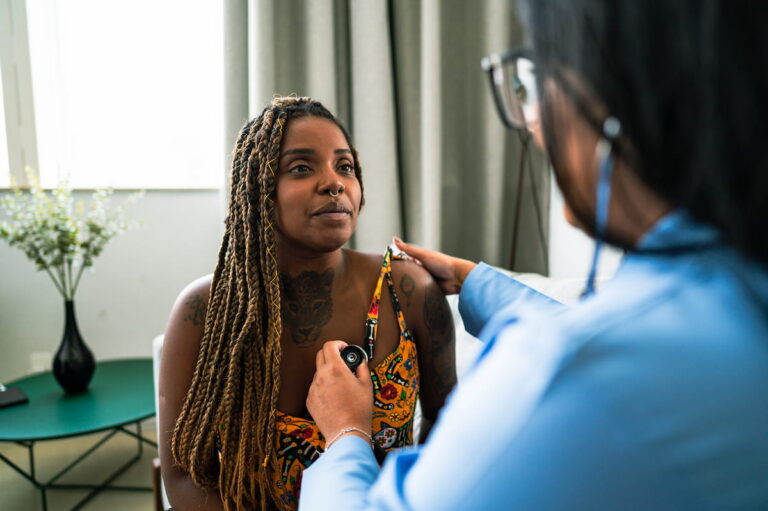
New research presented at the 2025 American Society for Clinical Oncology’s (ASCO) annual meeting has shed light on the availability of clinical trials for triple-negative breast cancer (TNBC) across the United States, specifically focusing on whether these trials are located conveniently for Black women. While the study found that simply living far away might not be the main reason for differences in who joins trials, it also revealed that millions of women still live in areas where no trials are available. This points to the need for trials to be offered in more locations, but also suggests that other efforts are needed to truly make these important studies more accessible.
Triple-negative breast cancer is a particularly aggressive type of breast cancer that, despite recent treatment improvements, often has a less favorable outcome compared to other breast cancer types. In the U.S., Black women are more frequently diagnosed with TNBC, often at later stages, and experience higher rates of death even after accounting for socioeconomic factors. Given that clinical trials are essential for developing better TNBC treatments, the fact that Black women are not well-represented in these studies is a serious concern.
To understand potential limits to trial access, researchers looked at where TNBC clinical trials were located for Black women in the U.S.. They examined over 510,000 trials listed on ClinicalTrials.gov as of September 30, 2024. Their study focused on Phase II and III treatment trials that were actively recruiting in the U.S. and mentioned “breast” in their title or disease description. They then narrowed these down to only TNBC trials by searching for specific terms like “TNBC” or “HER2 negative and hormone receptor negative”. The researchers counted how many trials were in each county and used population data from the U.S. Census Bureau to see if there were differences in trial availability based on geography and demographics.
The study identified 108 active TNBC trials. Of these, 58 (54%) were for metastatic TNBC (cancer that has spread), and 50 (46%) were for non-metastatic TNBC. These trials were conducted at 1,230 study sites across the U.S.. Most sites (57%) offered both metastatic and non-metastatic trials, while 37% only had non-metastatic trials and 7% only had metastatic trials. The majority of these sites (81%) were running Phase II trials, with fewer (19%) running Phase III trials.
The results showed that TNBC trials are not evenly spread across the country. For example, 37% of Black women aged 18 and older in Alabama, as well as 34% of non-Black women in the same age group in Alabama, lived in areas where there were no TNBC trials in their county or a neighboring one. In contrast, all women aged 18 and older in nine other states had a trial available in their county or a nearby one.
Despite these regional differences, the study concluded that, at a national level, geographic distance doesn’t seem to be the primary reason for differences in TNBC trial participation between Black and non-Black women. However, the researchers pointed out that millions of women still live in areas without any trials, meaning that making trials available in more places is a necessary step, but not the only one, to improve access. They also found that most study sites had fewer than five TNBC trials, and a third of sites didn’t offer any trials for metastatic TNBC. This suggests that even when a woman lives near a study site, she might struggle to find a trial that is right for her.
This study’s findings underscore a vital point: the participation of Black women in clinical trials is not just important for fairness, but it’s crucial for the science itself.
First, people’s bodies can react differently to medicines due to biological and genetic variations. Since Black women are more likely to get TNBC at later stages and face higher death rates, there might be specific biological factors or ways the disease progresses in them that can only be understood if they are part of the research. If a medicine is mainly tested on other groups, it might not work as well or be as safe for Black women, which could worsen existing health inequalities. Clinical trials that include a diverse group of people help ensure that new treatments are thoroughly tested for everyone, leading to more fair healthcare outcomes.
Second, the life experiences and social circumstances of Black women can influence their health, how they get sick, their access to medical care, and how well they stick to treatments. Things like economic status, environmental factors, and biases in the healthcare system can all affect health results. When Black women are included in trials, researchers can gain a more complete understanding of these complex interactions. This helps in developing treatments that are not only medically effective but also culturally sensitive and easy to access. This comprehensive approach ensures that treatments are practical and truly beneficial for diverse communities.
Finally, building trust and empowering communities are key. Throughout history, Black communities have faced unfair treatment and exploitation in medicine, leading to understandable distrust. Actively and respectfully involving Black women in how clinical trials are designed and carried out can help rebuild this trust. When Black women see themselves represented in research, it increases their confidence in the medical field and the new treatments being developed. Their participation validates the research findings and encourages more people in their communities to use effective therapies, ultimately leading to better health for Black women and for everyone. The study’s finding that distance isn’t the only barrier suggests that deeper societal and healthcare system issues related to participation must also be addressed to ensure fair access to life-saving clinical trials.


By subscribing, you consent to receive emails from BlackDoctor.com. You may unsubscribe at any time. Privacy Policy & Terms of Service.