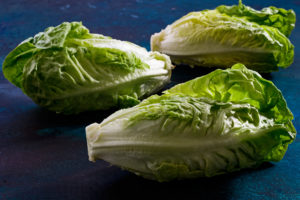
Just ahead of the Thanksgiving holiday, the CDC is advising that U.S. consumers not eat any romaine lettuce, and retailers and restaurants not serve or sell any.
The recalled products have “use by” dates ranging from Oct. 29 to Nov. 2, according to the C.D.C.
“The products identified are already significantly past their use-by dates, so this voluntary recall most likely does not affect any product currently on store shelves,” Ready Pac Foods said in a statement on Thursday. “We are working with our retailers to help ensure that this is the case.” Missa Bay produced the recalled products for Ready Pac Foods, the company said.
The Centers for Disease Control and Prevention said the outbreak includes all types of romaine lettuce that were harvested from the Salinas growing region of California, including
prepackaged salads, whole heads of romaine, and romaine hearts.
The salads, which were shipped to more than 20 states, have the number “EST. 18502B” inside the Agriculture Department mark of inspection. Consumers should look for that number to know if their product was subject to recall, according to the department.
Consumers who have any type of romaine lettuce in their home should not eat it and should throw it away, even if some of it was eaten and no one has gotten sick.
This advice includes all types or uses of romaine lettuce, such as whole heads of romaine, hearts of romaine, and bags and boxes of precut lettuce and salad mixes that contain romaine, including baby romaine, spring mix, and Caesar salad.
If you do not know if the lettuce is romaine or whether a salad mix contains romaine, do not eat it and throw it away. Wash and sanitize drawers or shelves in refrigerators where romaine was stored. Follow these five steps to clean your refrigerator.
Restaurants and retailers should
not serve or sell any romaine lettuce, including salads and salad mixes containing romaine.
If you our a loved one have symptoms of an E. coli infection:
Since the initial investigation notice, 23 additional ill people have been reported. As of November 21, 2019, a total of 40* people infected with the outbreak strain of E. coli O157:H7 have been reported from 16 states. A list of the states and the number of cases in each can be found on the Map of Reported Cases page.
Illnesses started on dates ranging from September 24, 2019, to November 10, 2019. Ill people range in age from 3 to 89 years, with a median age of 22. Sixty-five percent of ill people are female. Of 39 ill people with
information available, 28 hospitalizations have been reported, including 5 people who developed hemolytic uremic syndrome (HUS), a type of kidney failure. No deaths have been reported.
This investigation is ongoing, and CDC will provide more information as it becomes available.
SOURCES:
www.cdc.gov
*UPDATE: As of November 25, 2019, 67 people have been infected with E. coli due to the romaine lettuce recall.

Bryana Holcomb is the Editor of BlackDoctor.org and graduate of the University of Illinois at Urbana Champaign. She has a Bachelor of Arts in Gender and Women’s Studies, an MBA in Management Strategy, and Life Coaching and Nutrition certifications. Connect with Bryana on Instagram, @BryDelicia.



By subscribing, you consent to receive emails from BlackDoctor.com. You may unsubscribe at any time. Privacy Policy & Terms of Service.