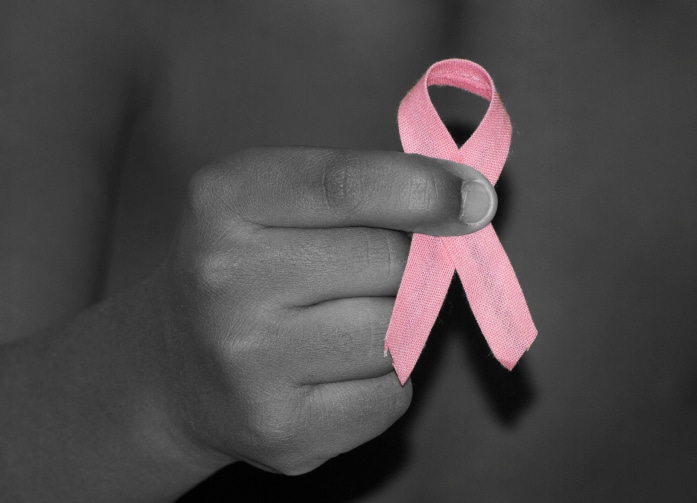
About 40% of women will discover a breast lump at some point in their lives. Although a lump doesn’t necessarily mean cancer, what women do immediately after that discovery can mean the difference between survival or not.
So what do you need to know if you find a breast lump?
RELATED: Breast Lumps: What’s Normal, What’s Not
This is a myth, thankfully, but a widespread one. Every woman [with a breast lump] thinks it’s cancer until proven otherwise. The older a woman is, the more petrified she is that she is the one in seven or eight to get breast cancer. But some women shift to denial. They will think cancer can’t possibly be happening to them, or they think they’re too young. The lump is more likely to be cancerous in older women who have gone through menopause than in younger women.
When a lump turns out not to be cancer, what else might it be? It could be a cyst (a fluid-filled sac that can be drained), an abnormal noncancerous growth such as a fibroadenoma or, much less often, a blood clot that causes lumpiness. It could also be a “pseudo lump,” caused by hormonal changes that isn’t a lump at all. Whatever the cause, it’s important to get any lump evaluated. A physical examination, a mammogram, and perhaps an ultrasound are all recommended.
RELATED: What Does a Breast Cancer Lump Feel Like?
Not always. Cancerous lumps and noncancerous, or benign, lumps, can overlap. When a lump is cancer, women often assume it will be a single lesion that feels hard and doesn’t move around. That could be, but a cancerous breast lump could also feel smooth and be mobile.
You can’t always tell by how it feels. Cysts, if they are deep, will feel scary. If they are near the surface, they often feel round and smooth. But if they are deep, they can push the breast tissue forward. Something that feels fairly benign and smooth and movable can be a cancer. Something that feels very scary can be benign.
The best advice? Anything that feels different to you should get checked out. These days, checking out breast lumps is easier for several reasons. Breast surgeons and breast clinics are common and ultrasound is often available right in the office.
RELATED: Breast Cancer Symptoms That Aren’t Lumps
This is definitely not so. Cancer can be very small when it first presents. Size is never a good way to decide whether a lump is something to worry about. Breast lumps can range in size from a pea to a grapefruit. The lumps found on mammograms can be extremely small. When women actually feel a mass, it’s usually less than an inch in diameter, the size of a small cherry.
It’s not OK, and the older you are, the more this advice applies, doctors say. You should always be evaluated by a health care practitioner. Sometimes they will recommend watching it for a couple months in women who are still menstruating. You can have cysts [that feel like lumps], and they can change with the menses. Older women who have gone through menopause aren’t likely to have lumps change from hormonal influence, so watchful waiting isn’t typically considered an option.
Bottom line for older and younger women: Get evaluated. The worst approach is to go into denial and wish away the lump. If it turns out to be a cancer, two or three months can make a difference, especially in a younger person.
RELATED: Q&A: Is There A Cure For ‘Lumpy’ Breasts?
Absolutely! Only 5% or 10% of breast cancer is hereditary. The majority of women who get breast cancer have no risk factors. But women often believe otherwise. Most think, “If I don’t have a family history of cancer, a lump is not likely to be cancer.’ This is so far from the truth.
Not so, but some women are lulled into this false sense of security. Women who have been told for years they have cysts often assume a new lump is nothing to worry about. Whenever something new appears, doctors need to know about it. Don’t assume that just because previous lumps turned out to be cysts — or nothing at all to worry about — that the new lump is the same story.


By subscribing, you consent to receive emails from BlackDoctor.com. You may unsubscribe at any time. Privacy Policy & Terms of Service.