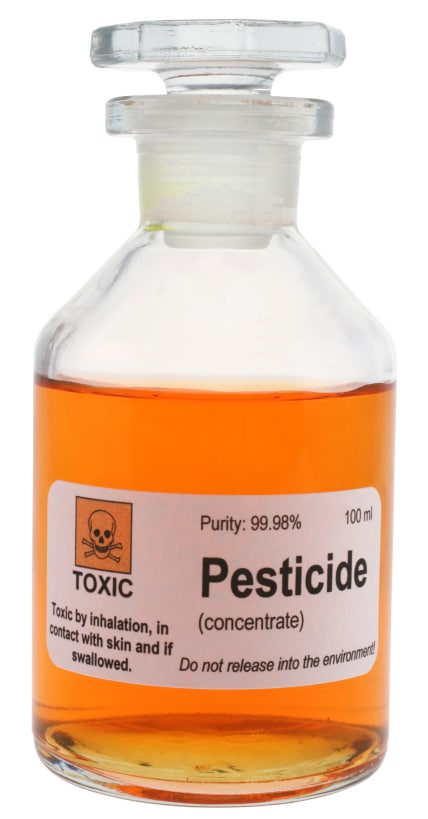
Children exposed to insecticides at home may have a slightly increased risk of developing leukemia or lymphoma, a new review finds.
The analysis, of 16 studies done since the 1990s, found that children exposed to indoor insecticides had an elevated risk of developing the blood cancers. There was also a weaker link between exposure to weed killers and the risk of leukemia.
The findings, reported online Sept. 14 and in the October print issue of Pediatrics, do not prove that chemical pesticides directly contribute to the cancers. And if they do, researchers said, several questions remain.
“We don’t know ‘how much’ exposure it takes, or if there’s a critical window in development,” said senior researcher Chensheng (Alex) Lu, an associate professor of environmental exposure biology at the Harvard School of Public Health in Boston.
“Is the window during pregnancy? Or even before pregnancy?” Lu said. “That will take a much deeper investigation.”
Despite the questions, Lu said he thinks it’s wise to act now, by limiting babies’ and children’s exposure to chemical pesticides — especially the indoor insect killers that this study linked to leukemia and lymphoma.
Childhood cancer is, fortunately, rare: In the United States, just under 10,400 children younger than 15 will be diagnosed with some form of cancer this year, the American Cancer Society estimates.
Leukemia and lymphoma — two types of blood cancer — are among the most common childhood cancers.
But unlike adult cancers, which arise after decades of lifestyle choices and environmental exposures, most childhood cancers “just happen,” said Dr. Ziad Khatib, a pediatric oncologist at Nicklaus Children’s Hospital in Miami.
“We think most cancers in children are due to chance,” said Khatib, who was not involved in the study.
But as the new review shows, he said, a number of studies have found an association between pesticides and certain childhood cancers. Plus, it’s biologically plausible that the chemicals could contribute to cancer in certain vulnerable children, Khatib added.
“We should always be cautious about exposing young children to any toxic chemicals,” he said. “It just makes sense.”
For the study, Lu’s team pooled the results from 16 international studies done between 1993 and 2013. All the studies compared children with cancer to a healthy group of kids, and gauged past pesticide exposure through parent interviews.
Overall, children who’d been exposed to any indoor insecticides were 43 percent to 47 percent more likely to have leukemia or lymphoma, the findings showed. Outdoor insecticides were not linked to the cancers.
Kids exposed to weed killers, meanwhile, had a 26 percent higher risk of leukemia, the investigators found.
Those figures might sound alarming, but Khatib said it’s important to keep them in perspective. “That would mean that instead of one in 10,000 kids developing leukemia, you’d have about 1.5 in 10,000,” he pointed out.
“It’s a very small risk,” Khatib added. Still, he said, it’s a risk factor that can be avoided.
“I think it’s important to get this information out to parents, and let them use their own best judgment,” Lu said.
If indoor pests are a problem, he added, there are “nonchemical options” for controlling, like denying bugs any food sources and using baits or traps.
But children can also be exposed to pesticides outside of the home — in schools, parks or playgrounds, Lu pointed out. So it also makes sense to limit pesticide use in those places, too, he said.
Copyright HealthDay News. All rights reserved.


By subscribing, you consent to receive emails from BlackDoctor.com. You may unsubscribe at any time. Privacy Policy & Terms of Service.