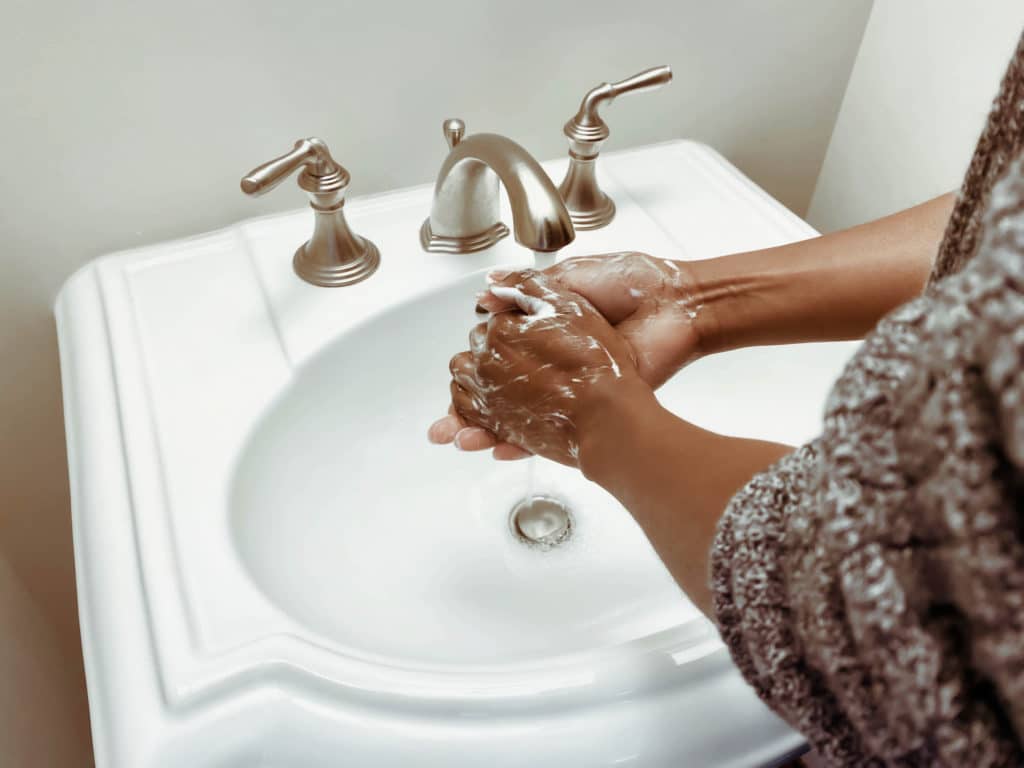
Americans are washing their hands much more than they did before the coronavirus pandemic, according to new research from the Centers for Disease Control and Prevention, but there’s still one group who is least likely to adhere to that guidance that washing hands helps protect us from the virus: young white men.
Long before the general public knew anything about what COVID was or how long it was going to stay, public health authorities advised Americans to wash their hands. Many of us can even remember growing up that teachers, doctors and health officials alike all encouraged us to wash our hands frequently. The CDC and other agencies also offered detailed seminars on how to do so properly.
Still, handwashing is considered an essential aspect of good hygiene, whether during a pandemic or not.
This news shouldn’t be surprising since some white men have been vocal, including President Trump, about their resistance to mask-wearing.
When the pandemic first arrived in the United States early in 2020, it quickly became clear that many Americans were simply not washing their hands regularly. Comments on social media spread like wildfire about those they observed in public restrooms who didn’t wash their hands after using the bathroom. And even those who were washing their hands often, weren’t doing it properly.
According to the CDC, fewer than three-quarters of Americans are washing their hands after coughing or sneezing, or in situations where they handle food.
After all, over 200,000 people have already died from this disease that they say can be prevented if we do the three things they recommended: washing hands frequently, wearing a mask, and keeping your distance when needed.
“Because older adults, Black persons, and Hispanic persons have been disproportionately affected by COVID-19, engagement in preventive behaviors by these persons is particularly important,” reports the CDC.
“Public health efforts should promote frequent handwashing for all, with attention to tailoring messaging to men, young adults, and non-Hispanic White adults,” encourages the CDC. “Particular focus should be placed on encouraging handwashing at important times such as before eating and after experiencing respiratory symptoms.”
The CDC recommends these four steps (that many are getting wrong):
1.) Wet your hands with clean, running water (warm or cold), turn off the tap, and apply soap.
Why? Because hands could become recontaminated if placed in a basin of standing water that has been contaminated through previous use, clean running water should
not be a factor. In recent tests, it does not appear to affect microbe removal. However, washing with non-potable water when necessary may still improve health. Please note, the warmer water may cause more skin irritation and is more environmentally costly.
Turning off the faucet after wetting hands saves water, and there are few data to prove whether significant numbers of germs are transferred between hands and the faucet.
2.) Lather your hands by rubbing them together with the soap. Be sure to lather the backs of your hands, between your fingers, and under your nails.
Why? Lathering and scrubbing hands creates friction, which helps lift dirt, grease, and microbes from skin. Microbes are present on all surfaces of the hand, often in particularly high concentrations under the nails, so the entire hand should be scrubbed.
3.) Rinse your hands well under clean, running water.
Why? Soap and friction help lift dirt, grease, and microbes—including disease-causing germs—from skin so they can then be rinsed off of hands. Rinsing the soap away also minimizes skin irritation 15. Because hands could become recontaminated if rinsed in a basin of standing water that has been contaminated through previous use, clean running water should be used.
4.) Dry your hands using a clean towel or air dry them.
Why? Germs can be transferred more easily to and from wet hands; therefore, hands should be dried after washing. However, the best way to dry hands remains unclear because few studies about hand drying exist, and the results of these studies conflict. Additionally, most of these studies compare overall concentrations of microbes, not just disease-causing germs, on hands following different hand-drying methods. It has not been shown that removing microbes from hands is linked to better health. Nonetheless, studies suggest that using a clean towel or air drying hands is best.


By subscribing, you consent to receive emails from BlackDoctor.com. You may unsubscribe at any time. Privacy Policy & Terms of Service.