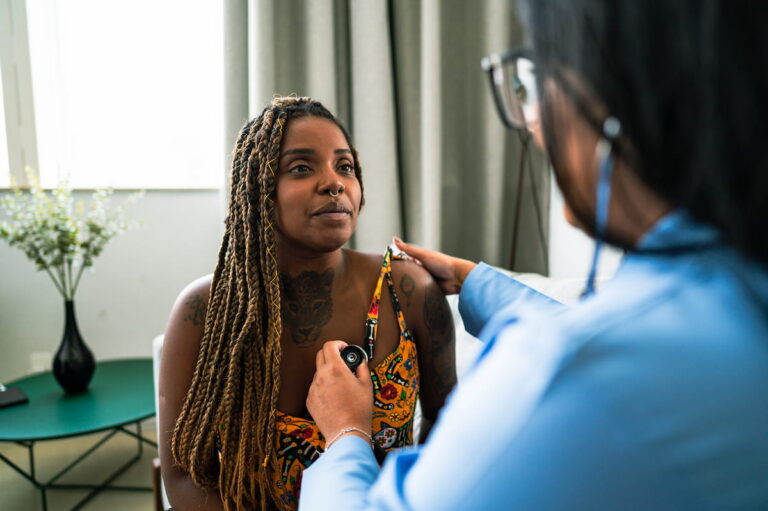
Newly updated stroke prevention guidelines from the American Heart Association and American Stroke Association say women with endometriosis and women with early-onset menopause are at greater risk. The guidelines also suggest the new weight loss drugs called GLP-1 inhibitors as an option for patients with diabetes, who have an increased risk for cardiovascular disease.

“The goal of these guidelines is to promote brain health and reduce individual risk of stroke, so that we are all living healthy lives with a great quality of life as we age,” said Alexis Simpkins, MD, PhD, associate professor of Neurology at Cedars-Sinai. “These recommendations bring together the best available evidence to guide conversations between healthcare providers and patients and help them prevent a primary stroke.”
Simpkins said the updated guidelines encourage patients to follow the Mediterranean diet, and urge health providers to assess stroke risk due to a patient’s social determinants of health. Social determinants of health are the nonmedical factors, such as access to healthy foods, opportunities for healthy physical activity, and access to healthcare, that influence health outcomes.
In addition to those with traditional stroke risk factors, several additional at-risk populations that were highlighted in the updated guidelines include:
“We don’t yet fully understand the reasons behind this elevated risk, especially in cases of endometriosis and early menopause,” Simpkins said. “This will require further investigation, but in the meantime, these patients and their healthcare providers should be having specific conversations about stroke risk and making plans to manage it.”

With more than 140,000 deaths from stroke occurring in the U.S. each year, Shlee S. Song, MD, co-director of the Comprehensive Stroke Program and professor of Neurology at Cedars-Sinai, recommends the Life’s Essential 8 checklist from the American Heart Association for risk-reduction strategies everyone can follow.
“The Essential 8 and social relationships keep us healthy and aging well,” Song said. “By staying connected and engaged in our social bonds, avoiding tobacco use, and paying attention to what we eat, physical activity, sleep, waist measurement, cholesterol, blood sugar and blood pressure, everyone can improve brain health and resiliency. This helps maintain quality of life and lowers risk of stroke, cardiovascular disease and other major health problems.”
For patients taking blood pressure medications, the updated guidelines emphasize the importance of getting high blood pressure under control—even if that means adding more medications.
“Blood pressure goals now are a little bit more aggressive than they were previously,” Simpkins said. “Maintaining a healthy weight and reducing salt intake are important, but many people need the help of medication to meet these goals. And if one medication does not work, providers and patients should not hesitate to add another.”
The Mediterranean diet, which emphasizes fruits and vegetables, lean proteins, healthy fats and whole grains, is recommended in the guidelines as the best eating plan—even better than a simple low-fat diet—for stroke prevention.
“The Mediterranean diet has the most scientific evidence for stroke reduction,” Simpkins said. “Our diet should provide nutrient-rich building blocks to help us function. If you’re only focusing on one aspect of your diet, such as total calorie count or total fat, but are ignoring nutritional content and how the food was processed, you will miss out on foods that are protective against cardiovascular events and potentially end up overconsuming foods that increase stroke risk. Ultimately, eating an unhealthy diet long-term is detrimental for brain health.”
“It’s important for each of us to be aware of our risk factors,” Simpkins said, “so that we can work with our healthcare providers to come up with a plan to address them.”
Read more on the Cedars-Sinai Blog: Strokes That Are Treatable—and Beatable


By subscribing, you consent to receive emails from BlackDoctor.com. You may unsubscribe at any time. Privacy Policy & Terms of Service.