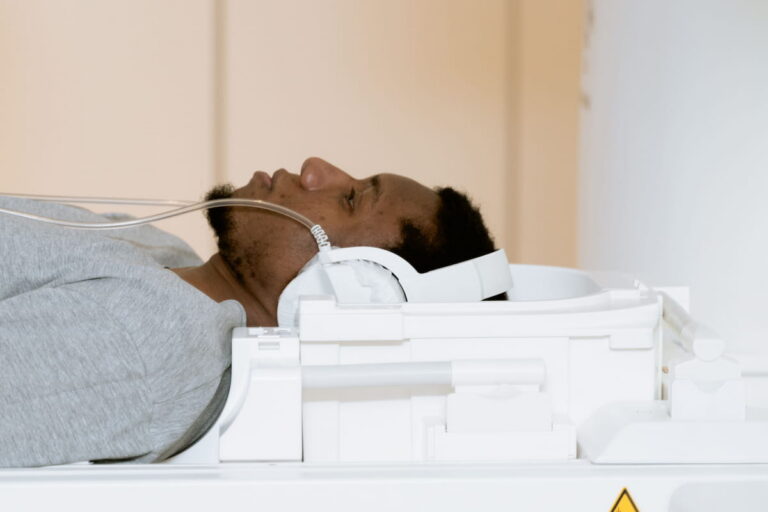
Finding out that you or someone you care about is experiencing COPD symptoms — or has been diagnosed with COPD (chronic obstructive pulmonary disease), which affects Black people at disproportionate rates — can be alarming and may leave you with a lot of questions.
Though COPD has no cure, it’s a condition that can be managed with the right treatments and medications, according to the American Lung Association (ALA).
Here’s what you need to know about COPD, its risk factors, common symptoms, stages, and the many treatment options available to those living with the condition.
COPD is a group of progressive, chronic diseases that constrict airflow in and out of the lungs so that less oxygen moves through the body.
“It’s three different illnesses, all of which create the same fundamental problem, which is you can’t blow out as fast as you should,” explains Dr. Scott Eisman, a pulmonary disease and critical care medicine specialist at Scripps Memorial Hospital Encinitas in California.
“And those three illnesses are asthma and chronic bronchitis and emphysema — and they’re all different,” he notes.
RELATED: 4 Breathing Techniques to Ease COPD Symptoms
According to the U.S. Centers for Disease Control and Prevention, most cases of COPD are caused by smoking. But did you know that as many as 25 percent of people in the United States with the disease have never smoked cigarettes?
“If you talk about chronic bronchitis and emphysema, the most common cause is cigarette smoking,” Eisman shares. However, he explains that asthma-related COPD can have various causes, including environmental toxins or certain preexisting conditions, such as gastroesophageal reflux disease.
Scripps Health states that chronic lung infections that damage lung tissues and some cases of chronic asthma, where lung tissues fail to relax after an asthma attack, can also cause COPD.
The risk factors for developing COPD, according to the American Lung Association, include:
Secondhand smoke exposure, including smoke from a coal or wood-burning stove
Aging, which leads to declining lung function, particularly for those over 40
Childhood respiratory infections
A history of asthma
Underdeveloped lungs
There are four stages of COPD. Countries throughout the world use the Global Initiative for Chronic Obstructive Lung Disease (GOLD) guidelines and recommendations for diagnosing and treating COPD. GOLD takes into account lung test assessments, COPD symptoms, and exacerbations (flare-ups) when determining your COPD stage, according to the COPD Foundation.
GOLD mostly focuses on two lung function readings:
How much air you can exhale in one second, known as FEV1 (forced expiratory volume in the first second)
How much air you can exhale in one total breath, known as FVC (forced vital capacity).
If your ratio of FEV1 to FVC is less than 0.7, you may be diagnosed with one of four stages of COPD:
GOLD Stage 1: FEV1 is greater than or equal to 80%, indicating mild airflow limitations. This is where you’ll start to notice some minor COPD symptoms.
GOLD Stage 2: FEV1 is 50% to 79%, indicating moderate airflow limitations. Here you’ll feel shortness of breath and a chronic cough.
GOLD Stage 3: FEV1 is 30% to 49%, indicating severe airflow limitations. COPD symptoms may become worse and affect your daily activities.
GOLD Stage 4: FEV1 is less than 30%, indicating very severe airflow limitations. At this stage, severe COPD symptoms will be affecting your quality of life, and you’ll need supplemental oxygen or other treatments.

Different people may experience different COPD symptoms, depending on the type and severity of COPD they have.
The ALA says that common COPD signs and symptoms include:
Coughing up mucus
Fatigue
Shortness of breath during daily activities
Wheezing
Tightness in the chest
Persistent coughing
Inability to breathe deeply
“A lot of people [with COPD] will complain of the inability to do things with their arms,” Eisman explains. “So, like carrying groceries, for example, becomes much more challenging because it changes the way that your chest is configured, which changes the way your lungs work.”
RELATED: 4 Breathing Techniques to Ease COPD Symptoms
The good news is that you don’t have to go through this alone. There are treatments that can help you breathe easier and live better. Since COPD has many different underlying causes, the treatment options are just as diverse and include:
A plan to stop smoking is the most important step for preventing further lung damage and reducing symptoms
COPD medications, such as inhalers that help open your airways and calm inflammation.
Pulmonary rehabilitation programs that include exercise training, social support, and nutritional and disease management education
Oxygen therapy to increase oxygen flow in the body if you’re experiencing shortness of breath
Noninvasive ventilation therapy to reduce carbon dioxide levels in your body
Complementary therapies such as massage, meditation, and reflexology
Lung surgeries, such as lung volume reductions, lung transplants, and bullectomies, which remove damaged air sacs in the lungs to improve breathing
Endobronchial valve therapy, such as Zephyr valve therapy, is another COPD treatment, particularly for people with severe COPD. During this procedure, Eisman says, doctors place valves into your lungs using a small tube with a camera called an endoscope. These valves help optimize your lung volume for better oxygen flow.
“By doing it this way, we’re able to accomplish that same optimization of your lung volume … without surgery,” Eisman adds. “And it’s been done now in about 50,000 or so patients worldwide over the last five or seven years, maybe a little longer, and there’s new literature out about it just now that it improves survival.”
Proper COPD treatments can have a major effect on people’s lives, Eisman says. It “can improve their exercise tolerance, their ability to do what we would call the activities of daily living, their ability to have a productive life [and] to live longer,” he says.
RELATED: What Can You Do to Manage COPD?
Q: Can COPD go away on its own?
A: No, COPD doesn’t disappear. But with the right treatment, you can control symptoms of COPD, slow down its progress, and continue to live a full life.
Q: How do I know if my cough is just a cough or a COPD symptom?
A: If your cough lingers for months, produces mucus, or comes with shortness of breath, that’s when it’s time to check in with a doctor.
Q: Is COPD only a smoker’s disease?
A: Smoking is the biggest risk factor, but it’s not the only one. About one in four people with COPD never smoked — genetics, pollution, and chronic asthma can also play a part.
Q: Can lifestyle changes really help?
A: Yes! Quitting smoking, moving your body, eating well, and sticking to your treatment plan can help you feel stronger day-to-day.
While COPD has no cure, with lifestyle changes, medications, rehabilitation programs, and advanced therapies, you and the people you love can significantly reduce symptoms and breathe easier. COPD doesn’t define you. Understanding and identifying the symptoms and COPD signs is the first step. With the right plan and support, you can still enjoy life and do the things that matter most.


By subscribing, you consent to receive emails from BlackDoctor.com. You may unsubscribe at any time. Privacy Policy & Terms of Service.