Stroll past the seasonal aisle at any grocery store this time of year and you’ll find a shelf piled with plastic flip-flops, a box sprouting colorful pool noodles and a “sizzling sale” on grilling accessories.
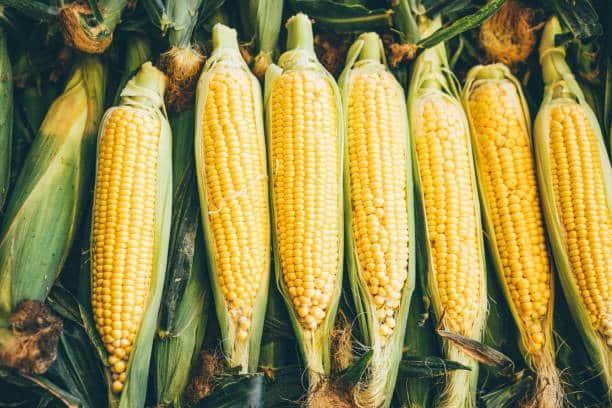
But when it comes to food, a true mark of summer is a staple of the classic American cookout: corn on the cob.
In many parts of the world, corn is called maize. It’s the name for the entire plant, which traces back nearly 10,000 years to southern Mexico.
The type of maize on your shopping list is likely sweet corn. Dent corn, named for the dimples that form on the top of kernels, is primarily used for livestock feed and ethanol production. Flint corn, with its colorful kernels that have a hard outer layer, is often used for fall decorations and for foods such as popcorn and hominy.
Corn can be a vegetable or a grain depending on when it’s harvested. When the kernels are soft and full of liquid, as you’ll find in the grocery store, corn is considered a starchy vegetable. If corn is harvested when fully mature and dry, it’s a grain. That’s why popcorn is a whole grain.
Corn kernels can be white, yellow, blue, red, purple or black. Natural compounds called phytochemicals give fruits and vegetables their various colors and may offer heart-protective benefits.
“Deeply colored fruits and vegetables tend to be richer in certain phytochemicals,” says Maya Vadiveloo, an associate professor in the department of nutrition and food services at the University of Rhode Island in Kingston. But if it comes down to choosing between white and yellow sweet corn, Vadiveloo says to go with taste preference rather than worry about one being “better for you.”
RELATED: Corn: Good Or Bad For You?
Crunching on corn may even help keep your eyes healthy thanks to carotenoids – a phytochemical that gives yellow corn its pigment.
However, the nutrient quality of corn does differ based on other variables.
“Sometimes fresh isn’t best, especially if it’s been transported over longer periods where some of the water-soluble vitamins might be lost,” Vadiveloo shares. “Frozen is probably the most consistent because it’s picked at peak freshness and nutrient quality.”
Canned corn is also an option, but Vadiveloo recommends checking the nutrition label for sodium, added sugar and saturated fat, especially
in creamed varieties. Rinsing the kernels of plain canned varieties can reduce sodium. Some brands offer options with low sodium or no salt added.
According to the U.S. Department of Agriculture, one cup of raw, sweet yellow corn – roughly the same as one large ear of corn – clocks in at 125 calories and 2.9 grams of fiber. According to the Academy of Nutrition and Dietetics, eating enough fiber – 25 grams a day for women and 38 grams for men – can reduce the risk of chronic diseases such as cardiovascular disease, Type 2 diabetes and some types of cancer.
A cup of raw sweet corn also is packed with 392 milligrams of potassium, which helps regulate blood pressure by easing tension in blood vessel walls and lessening the effects of sodium. Federal dietary guidelines say women need 2,600 mg of potassium a day, and men need 3,400. Other foods high in potassium include spinach, sweet potatoes, bananas and kiwifruit.
RELATED: Mexican Street Corn Salad With Adobo Grilled Chicken
With barbecue season upon us, fresh corn can be a healthy addition to a backyard cookout.
“If people are choosing to have an ear of corn at a barbecue instead of a bunch of potato chips, they are getting more micronutrients and are going to feel full because of the fiber,” Vadiveloo notes. “When it replaces other, less healthy foods, that can really be a win-win.”
For people who grill frequently, Vadiveloo recommends putting corn on the cob in foil to protect it from excess heat and resulting carcinogens. To add a punch of flavor, season corn with herbs and spices or lime juice rather than slathering it with butter and salt. And for a healthy spin on Mexican street corn, substitute plain low-fat Greek yogurt for sour cream and mayonnaise, Vadiveloo suggests.
If you’d rather prep a meal in the kitchen, Vadiveloo suggests tossing frozen corn and other vegetables into a stir-fry with tofu or lean chicken and serving it with brown rice. Another option is adding corn to chili, where its sweetness can balance out the dish’s spice.
When corn is processed, the vitamin and mineral content change. A 2017 study in the Journal of Food Science and Technology shows that converting corn into various products can increase fat content and decrease fiber and potassium, which depletes its health benefits. However, healthy derivatives of corn can be part of a balanced diet.
“When I’m encouraging people to eat more whole grains, corn tortillas (made with whole-grain corn flour) are a very palatable way to do that,” Vadiveloo notes. “In that case, the corn is consumed more as a carbohydrate.”
Be mindful of serving sizes and preparation of tortillas. That basket of free tortilla chips you get at a restaurant can quickly add up in calories, sodium and fat before the main course even arrives.
On the flip side, Vadiveloo reminds people not to restrict themselves too much.
“That feeling of deprivation can come out in other unhealthy ways,” such as overeating, she adds.
So, when your pals ask what to bring to a cookout, tell them to listen closely and lend you an ear. Of corn, that is.
By the American Heart Association


By subscribing, you consent to receive emails from BlackDoctor.com. You may unsubscribe at any time. Privacy Policy & Terms of Service.