Alabama hasn’t received a lot of coronavirus vaccine doses compared to other states – Gov. Kay Ivey said in a release late last month and that she was frustrated the federal government couldn’t keep up with demand. But even with its limited supply, Alabama is struggling to get those doses into arms.
There are a number of ways to measure vaccine distribution, but any measure you use finds that Alabama is near the bottom.
As of Feb. 1, the state was dead last in the nation for the percentage of vaccines given out relative to what it got from the federal government, according to data from the Centers for Disease Control and Prevention. And the state is near the bottom in all other measures. Yet the state is preparing to open up the eligibility requirements for who can get the vaccine, allowing teachers and people over 65 to sign up.
That’s approximately 1 million more Alabamians eligible for vaccines as of Feb. 8, despite state concerns about the supply and no availability to sign up in many counties. As well as having the lowest vaccine distribution, Alabama has received fewer doses per capita than most other states.
As of Feb. 1, according to the CDC, Alabama had received 659,400 doses of the Pfizer and Moderna coronavirus vaccines. That’s just under 13,500 doses per 100,000 people – the 10th lowest mark in the country.
Also as of Feb. 1, Alabama had given out 358,280 doses, according to CDC data. That’s about 7,300 doses per 100,000 people. That ranks second to last in the nation behind only Idaho.
In terms of the percent of its population that has received at least one dose – both the Moderna and Pfizer vaccines require two doses, several weeks apart, for full protection – Alabama ranks fourth from the bottom.
Alabama is second to last in terms of the percentage of people who’ve gotten a second dose. And the slow rollout is not entirely based on supply issues, as Alabama has been slower than other states to distribute what it does have.
The 358,280 doses Alabama has reportedly administered is just 54.3 percent of the doses it’s actually received. That percentage is the lowest in the nation.
There is a slight delay between data shown by the CDC and that shown by state health departments.
The Alabama Department of Public Health reports 373,907 doses have been administered by the state, out of 714,275 doses delivered to the state. But at 52.3 percent, that percentage is actually less than what the CDC data shows.
Neither of those figures includes the doses delivered to long term care facilities in Alabama through a federal program that is counted separately.
Alabama’s struggle with vaccine distribution has been well documented. The state rolled out an online dashboard for vaccine signups earlier this week, and the rollout has frustrated many. As of Tuesday morning, only 31 of Alabama’s 67 counties had time slots available for vaccine sign-ups through the health department, and many of those appointments weren’t available until March or were only for second doses.
The White House has warned the state’s against holding back second doses – saying instead that vaccine should be used when it’s available. Last month, Alabama said it would take doses away from providers who weren’t giving them out fast enough. Since that time health officials have moved at least 4,000 doses from slow providers. But Alabama health officials last week said that hadn’t happened, and supply was still based on population.
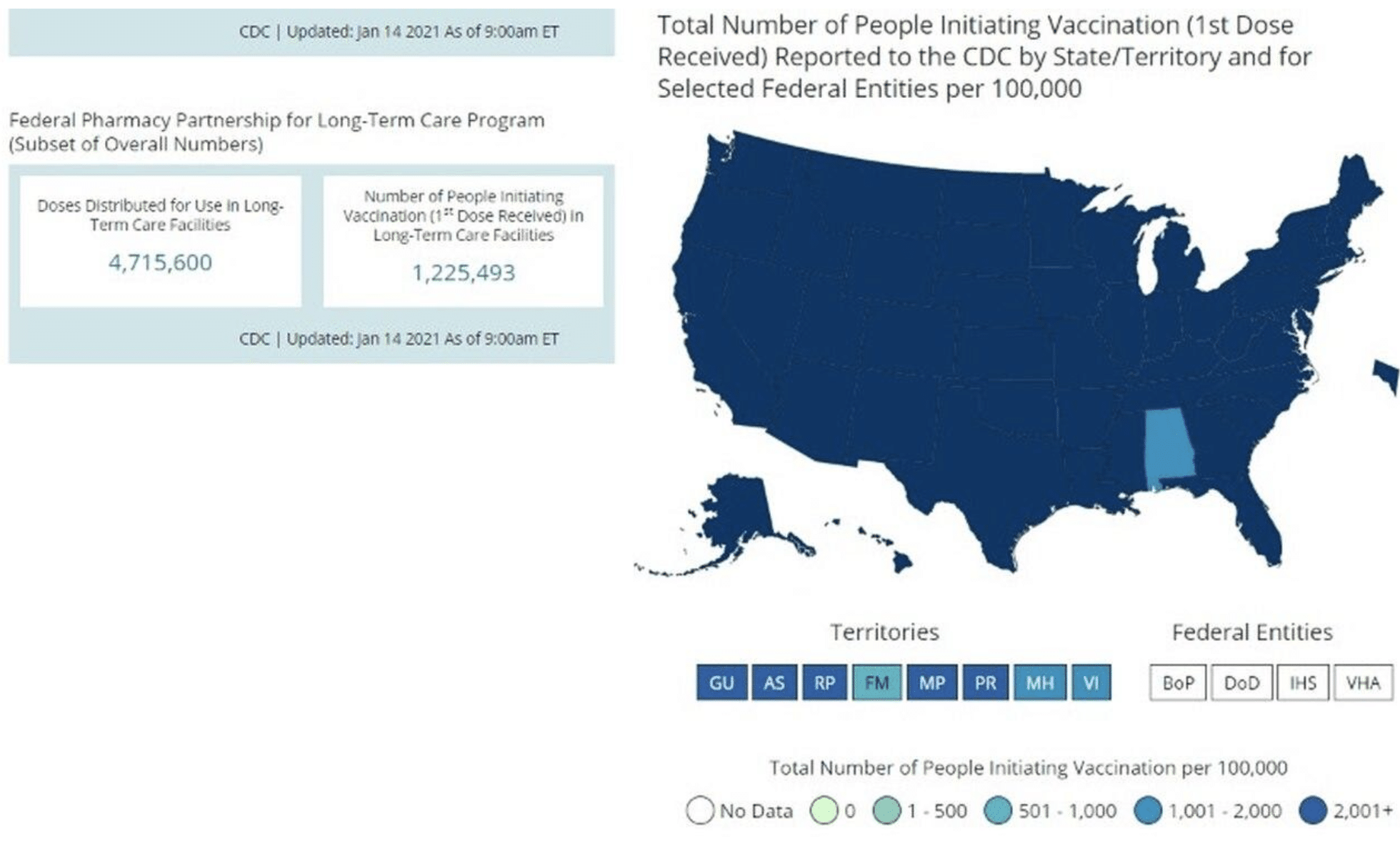
Alabama COVID vaccine information can found in this link.


By subscribing, you consent to receive emails from BlackDoctor.com. You may unsubscribe at any time. Privacy Policy & Terms of Service.