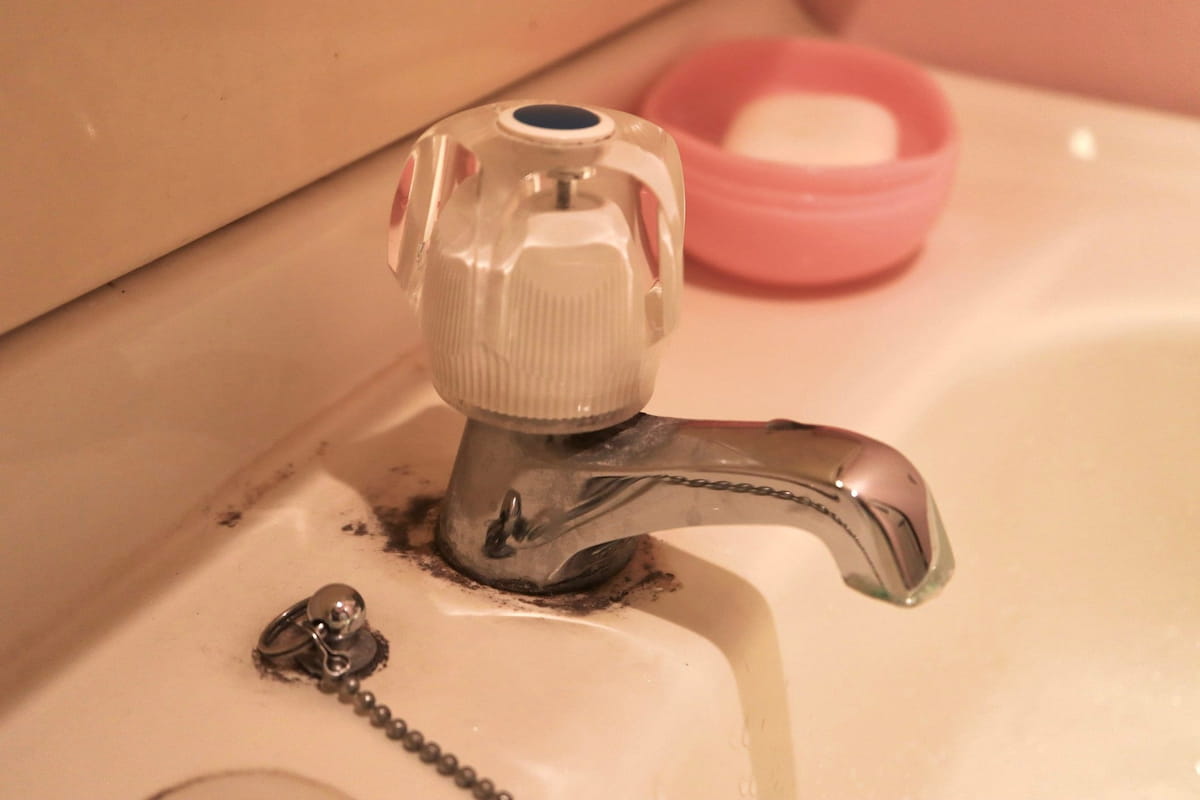
 Mold at the base of the faucet in the bathroom.
Most bathrooms are chock full of products to help you look, feel, and live better: things for your body, things for your face, things to clean with, etc.
Unfortunately, some items are just plain out bad for you and could be killing you slowly. Some of the ingredients that typically appear in a few of the products we use daily — such as shampoo, sunscreen and commercial household cleaners — should be avoided, and even thrown away according to doctors, health advocates, and scientists.
Parare, a synthetic preservative and antimicrobial agent commonly found in personal-care products with high water content: shampoo, conditioner, lotion, cleansers and body wash.
They also turn up in solid products like deodorant. They appear as methyl-, ethyl-, butyl- or propylparaben.
Studies have found that parabens mimic estrogen in the body and disrupt normal hormone function, and they have been found in breast-tumor biopsies.
Growing awareness about parabens has inspired a number of manufacturers to banish them in favor of safer preservatives, while some have simply accepted a shorter shelf life as the price of doing healthy business.
You can often find personal-care products labeled “paraben-free,” which will save you a little squinting in the product aisle.
Signers of the Compact for Safe Cosmetics have committed to avoiding their use; you can find the list of these companies at www.safecosmetics.org.
Phthalates are plasticizers that stabilize scent in perfume and color in cosmetics; they also keep nail polish from chipping.
You won’t find them listed on most labels, though they can be present in almost every conceivable personal-care item hidden in the ingredient “fragrance.” (Company formulas are legally protected as proprietary information.)
Multiple studies have linked phthalates to depression of normal thyroid function and birth defects, mostly affecting the genital development of young boys and sperm counts in adult men.
Two kinds of phthalates commonly found in cosmetics were banned in the EU with its recent cosmetic safety directive, forcing international companies to reformulate their products for the European market.
A number of nail polish manufacturers have removed the “toxic trio” — dibutyl phthalate, toluene (a solvent and neurotoxin) and formaldehyde — from their nail polish formulas.
Still, it’s smart to view nail polish and products with caution, especially if you’re pregnant. Water-based polishes are the most benign option.
SLS is a synthetic detergent and foaming agent connected to skin and eye irritation. It’s also linked to the byproduct 1-4 dioxane, a suspected carcinogenic contaminant produced by the ethoxylation process, used to make some ingredients less harsh. (Sodium lauryl sulfate is converted to sodium laureth sulfate, for example.)
Ethoxylation is one reason why so many “gentler” products — those with a natural slant or made especially for kids — have turned up surprisingly high levels of toxins.
According to researchers at the Organic Consumers Association, which conducted tests for 1-4 dioxane on hundreds of products from 16 major brands in 2008, only 23 products were found to be free of 1-4 dioxane contamination.
Many companies have quit using ethoxylated ingredients like sodium lauryl sulfate to avoid 1-4 dioxane contamination as well as allergic reactions, and the standard for the Whole Foods Premium Body Care Seal doesn’t allow it. Look for “-eth” at the end of other ingredient names to detect this process.
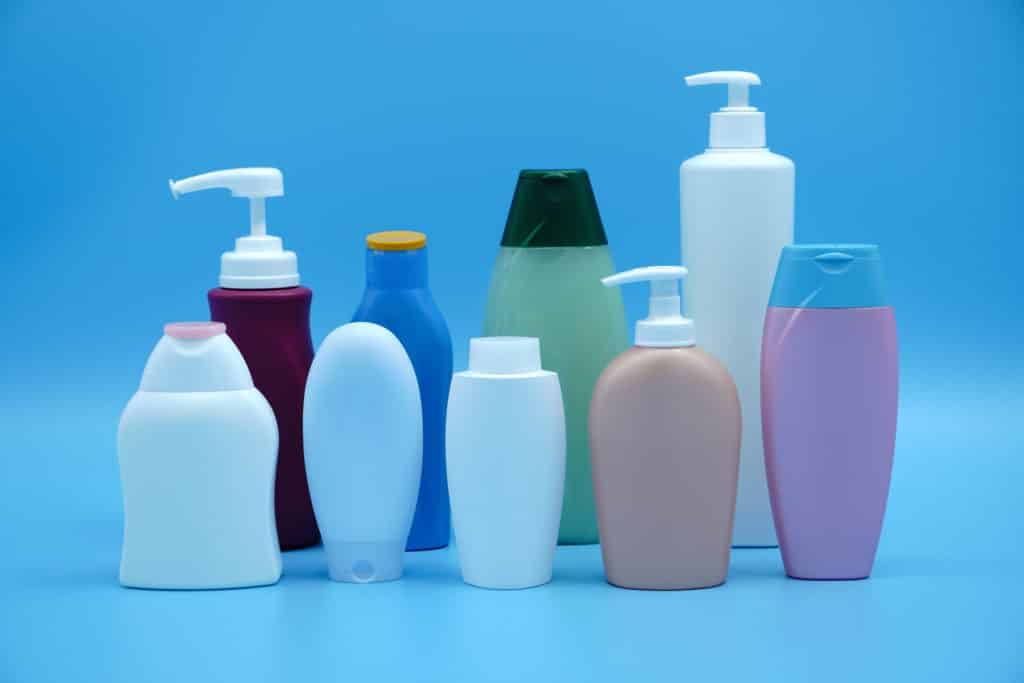
They can contain as many as 200 ingredients that manufacturers are not required to disclose.
A common allergen, “fragrance” on an ingredient label is a reliable indicator that the product contains phthalates, unless it’s clearly indicated that the fragrance contains no synthetics.
Higher-potency fragrances are the likeliest suspects for high concentrations of phthalates. Sophie Uliano, natural-beauty expert and author of Gorgeously Green: 8 Simple Steps to an Earth-Friendly Life (HarperCollins, 2008), points out that “fragrance-free” or “unscented” products aren’t always a dependable alternative, since manufacturers sometimes use masking fragrances in place of identifiable scents.
Look for products that explicitly say “no synthetic fragrances” or “natural essential oil fragrance only,” or try to buy from companies that have signed the Compact for Safe Cosmetics.
Diethanolamine (DEA) and Triethanolamine (TEA) are emulsifiers and foaming agents typically found in shampoo and body wash. They can produce an allergic reaction as well as, ironically enough, hair and skin dryness.
They belong to the category of “nitrosamines” that Uliano cautions against, which studies have shown can be carcinogenic.
Diazolidinyl and Imidazolidinyl Urea are frequently used synthetic preservatives that can cause contact dermatitis and are suspected formaldehyde releasers.
They appear in sunscreen, lotion, shampoo — the same places you’ll find parabens.
The number of personal-care ingredients with unknown or suspected health effects is quite long; you can find a comprehensive list at www.cosmeticsdatabase.com.
Your medicine cabinet may seem harmless enough, but it, too is in on the plot to take you out. We’ve all done the smell test before: where we look at the date of somethine expired and you smell it, take a look at it, and if it doesn’t smell foul or look bad, then you probably will still use it, right? Well, new data shows you really shouldn’t. Leftover prescription medicines are just one mix-up away from a call to poison control or a trip to the hospital. Replace your old medicine cabinet with a child-safe version that is well lit and dispose of those old prescriptions from the top shelf following your pharmacist’s recommendation.
If you use plastic shower liners, keep an eye on them and toss them once they may have dark, dirty spots and scummy. Even though you can wash them in the washing machine, you’re unlikely to be able to remove all of the soap scum and mold growth. A better idea is to switch to a fabric liner made of natural materials like hemp that you can easily wash when needed.
Visit the BlackDoctor.org Home Health center for more articles and tips.


By subscribing, you consent to receive emails from BlackDoctor.com. You may unsubscribe at any time. Privacy Policy & Terms of Service.