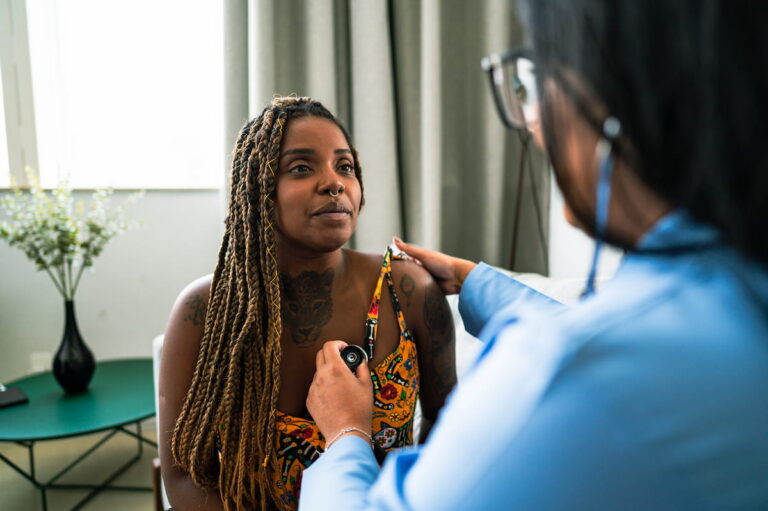
Clinical trials give access to new and potentially effective treatments for health conditions while also allowing patients to contribute to research that can impact the lives of others. Despite the benefits of participating in clinical trials, there’s a severe lack of representation from underrepresented or marginalized demographics—especially among racial and ethnic minorities.
Medable, Inc., a leader in clinical development technology, recently announced new data from the Tufts Center for the Study of Drug Development (CSDD)’s PACT Consortium that links decentralized trials (DCTs) to increased participation rates of people of underserved populations. The research reveals that implementing DCT approaches, in combination with increased regulatory oversight, can increase diversity in clinical research.
“Decentralized trials are not a different kind of trial, but they involve technology to make trials easier for people to participate in them,” Pamela Tenaerts, MD, MBA, Chief Scientific Officer at Medable, Inc., and a founding member of the PACT Consortium, tells BlackDoctor.org
According to Dr. Tenaerts, DCTs involve using technology like phone apps, video conferencing, and wearable technology, such as Apple Watches, to meet patients where they are rather than requiring them to visit a clinical site.
The data revealed that within 69 clinical trials, more participants (20.9%) identified as Asian in DCT-enabled trials compared to just 14.2% in traditional trials. In addition, the enrollment rate of participants who identified as American Indian or Alaska Native almost quadrupled in DCTs (1.9%) versus traditional clinical trials (0.5%). The participation of people who identified as female also showed a significant boost, rising from 49% to 55.7%.
However, there was little difference in Black or African American participation in DCT-enabled trials versus traditional trials. The data from Medable Inc. and PACT revealed that the demographic still represented just 7.3% of DCT enrollees.
Due to the small sample size, Dr. Tenaerts says that this participation rate could change over time, but it’s too early to analyze the numbers.
“Of the 69 trials, only 20 percent were completed, so the enrollment isn’t completely done,” she explains. “If we get more data, we might start seeing differences in therapeutic areas. Certain diseases might see an uptick of certain demographics whereas others may not as much, but we don’t know yet.”
While data is limited for now, Dr. Tenaerts believes that localized medical care helped Black patients participate.
“Decentralized trials are not all technology—it’s also being closer to the patients,” she explains. “In a decentralized trial, you can use your own doctor for standard care—such as labs or imaging—in your community. We found that if these elements were included, there was an uptick in African American participation.”
If the participation rates of Black patients don’t increase as more trials and data are gathered, Dr. Tenaerts says that they’ll look into what could be happening. “We need to figure out what will change [these participation rates] and talk to the communities. Maybe it’s community engagement that you need to do—making sure that you talk to the churches and barbers in the community. There’s also been a lot of bad history that we still have to get over, as the trust issue [with healthcare providers] is still a thing. You won’t know until you get a bigger sample of African Americans—but [the data] is showing changes in the right direction.”
Also, it’s important to note that DCTs are not a one-size-fits-all approach. More traditional clinical trials may be more appropriate for some demographics than others.
“We always have to think about my trial, the population I want to reach, and how I can do that best,” Dr. Tenaerts says. “For example, with asthma, we need to include the African American community because that’s where the highest prevalence is. It depends on what you’re studying and making sure that you include the people who are affected by the condition.”

By subscribing, you consent to receive emails from BlackDoctor.com. You may unsubscribe at any time. Privacy Policy & Terms of Service.