When you are in your 20s and 30s, you have your whole life ahead of you. During this time, most women are starting their careers and starting families. But what happens when you get an unexpected diagnosis that rocks your world?
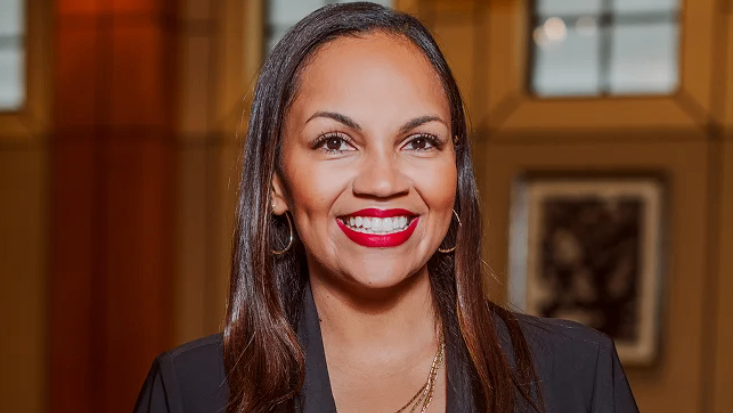
Entrepreneur Diamonique Valentine was 27 when she first shared her breast cancer diagnosis on Instagram in 2019.
Her diagnosis was stage 3 triple-negative breast cancer (TNBC), an aggressive form of breast cancer because of how quickly it grows, according to the American Cancer Society.
She decided to go to the doctor after finding a lump on her breast, but admits that she never thought having cancer could happen to her.
“That moment I was diagnosed it was like, ‘You have cancer. OK, you’re gonna die,'” Valentine shares.
“It just seemed unreal,” Valentine told CBS News. “It felt like a nightmare.”
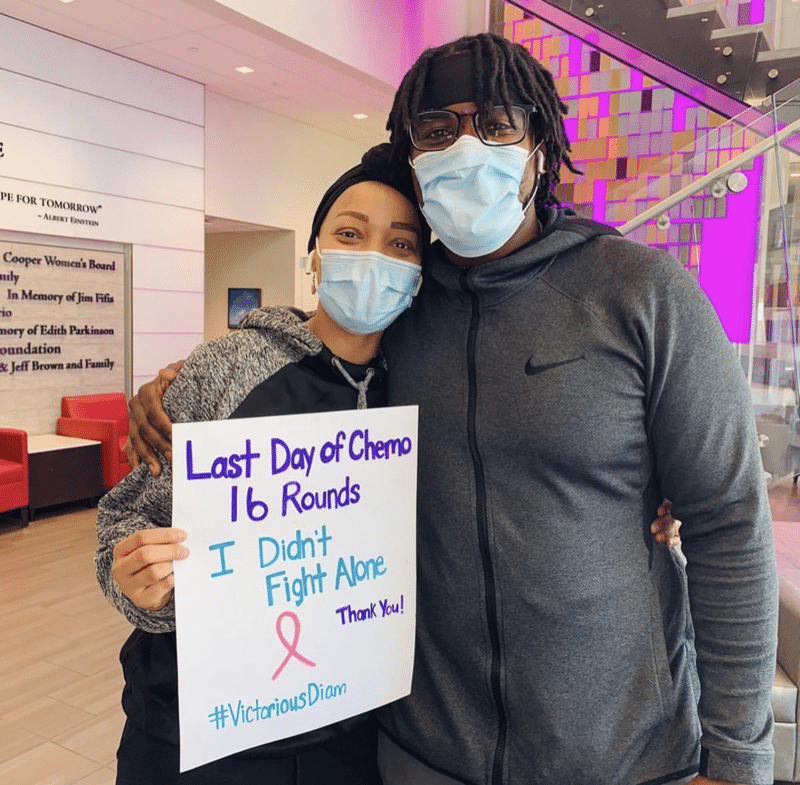
With the support of her husband, Marcus, Valentine underwent 16 rounds of chemotherapy and a double mastectomy.
“Being there to support her has been one of the most amazing, biggest blessings that we’ve had, because a lot of people don’t have that,” Marcus Valentine shared at the time.
RELATED: 3 Ways To Fight Triple-Negative Breast Cancer in the Kitchen
Black women under 40 are more likely to be diagnosed with breast cancer than white women, according to a study published in the Journal of Surgical Research.
When cancer is found in young women, it is typically more aggressive and more difficult to treat, according to Dr. Margaret Thompson, a doctor in breast services at Cleveland Clinic Florida.
“In younger age women, the biology of the tumor tends to present with more aggressive features, compared to postmenopausal women,” Thompson says.
Unfortunately, women under 40 don’t fall in the recommended age range of women who should receive a mammogram.
The American Cancer Society recommends that women aged 50 to 54 have annual mammography exams, and women over 55 should be screened every two years or once a year.
Even when women under 40 can receive a mammogram, the results may not always be accurate.
Breast cancer is more difficult to spot in younger women because their breast tissue tends to be dense. This makes it hard for tumors to be spotted even on mammograms, causing many women to be misdiagnosed, according to the Cleveland Clinic.
“I wish that I would have advocated a little bit more and was a little bit more diligent in finding someone who would screen me with no insurance,” Valentine adds.
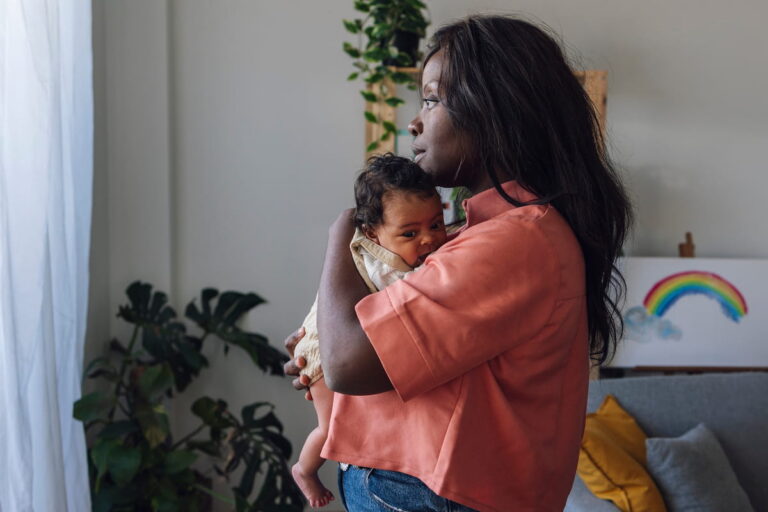
Fortunately, Valentine is now cancer-free and looking forward to the next years of her life, which include being a mom to her son Mali, who was born in May.
“He’s everything that me and my family needed. He is like the reward after the storm,” she says, adding that she knew she wanted to be a mother and she and her husband were hoping for the best. “Nothing makes me more grateful.”
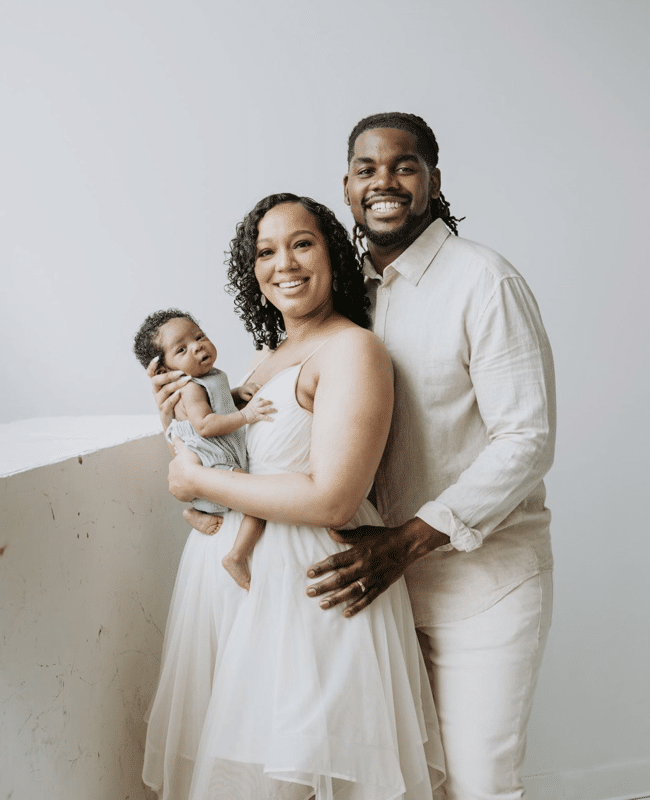
She’s also focused on raising awareness on the importance of self-exams, especially for young women who may not be aware of their risks.
RELATED: Hey Ladies, When’s The Last Time You Checked Yourself Out?
Examining your breasts should be done in 5 steps:
Here’s what you should look for:
If you see any of the following changes, you should see a doctor: dimpling, puckering, or bulging of the skin, a nipple that has changed position, or an inverted nipple (pushed inward instead of sticking out), redness, soreness, rash, or swelling.
For more information on performing breast self-exams, click here.

By subscribing, you consent to receive emails from BlackDoctor.com. You may unsubscribe at any time. Privacy Policy & Terms of Service.