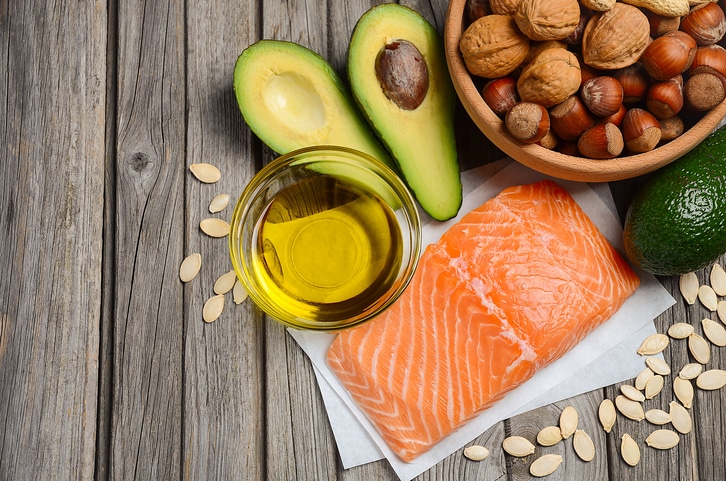
As crazy as it may sound, you may be missing one key ingredient from your diet: FAT! Fat is essential to every part of your body, including glowing skin, a thriving metabolism, and healthy cell function. Even some of the most popular diets like Paleo and the Mediterranean Diet encourage high fat meals for weight loss. But before you dive into that bag of potato chips, there are the few things you should know about eating the right kind of fat.
Eat More of These: Healthy Fats
Although you’ve learned for years that fat is unhealthy as it clogs arteries and leads to heart disease, this isn’t the case for all types of fat. There are two main types of fats that are good for you and can help keep the weight off!
The first type of healthy fats are monounsaturated fats. These fats liquify, rather than harden in your body making them easier to burn, and less likely to stick around and make you fat. These fats can reduce bad cholesterol levels and lower the risk of hear disease. You can get your fill of healthy fats from foods like olive oil, canola oil, avocados and nuts.
The second type of healthy fats are polyunsaturated fats. You’ve probably heard of these as Omega-3 and Omega-6 fatty acids. These can help to knock out some of the bad fat stored in your body, especially the fat that is stored in the belly. You can find these in fatty fish like salmon, mackerel and sardines. Flaxseeds, walnuts, canola oil and unhydrogenated soybean oil are also a great source of these healthy fats.
Eat Less of These: Trans Fats and Saturated Fats
There are some types of fat that do exactly what you expect: stick around in your body in the unwanted places and cause health problems. The worst of these “bad” fats are trans fats, which are usually found in processed and fried foods.
Trans fats are processed fats made to keep foods from spoiling, by remaining solid even at high temps. Likewise once you eat trans fat, it sticks around to clog arteries, raise cholesterol levels, and even contribute to insulin resistance. Steer clear of margarines, fried foods and over processed foods. If you see “hydrogenated” anything in the ingredient list, leave that product on the shelf.
Saturated fats are less scary, but should be eaten in moderation. These can also harden in your body and cause unwanted fat and harmful cholesterol levels. Saturated fat is found in animal products including milk and cheese and red meats. These foods do have some health benefits, however, so moderation is key.
How to Fatten Up Your Diet The Right Way
You can add a little healthy fat to every meal. Here’s a few ideas for your next meal:
Add flax seeds to your oatmeal or yogurt at breakfast.
Cook with canola or olive oil, or drizzle these oils on veggies.
Use avocado instead of mayo on sandwiches or top your salads with fresh avocado.
Swap out red meat for salmon or another fatty fish.
Snack on a handful of raw seeds or nuts like sunflower seeds and almonds.
If you’re looking to lose weight or simply maintain your healthy weight, replacing your “bad” fat with “good” fat can help. Keep in mind, however, that fat of any kind is calorie-dense, so you should still keep your fat intake relatively low. The American Heart Association recommends you keep fat intake around 20-35% of daily your calories. So if you’re eating 2,000 calories a day, that means 400-700 calories from fat each day.

Sharita Jennings is a health policy attorney and certified group fitness instructor and nutrition specialist. She leads fitness classes in Washington, DC and provides online coaching and tips on her site, GetFitLikeThat.com.


By subscribing, you consent to receive emails from BlackDoctor.com. You may unsubscribe at any time. Privacy Policy & Terms of Service.