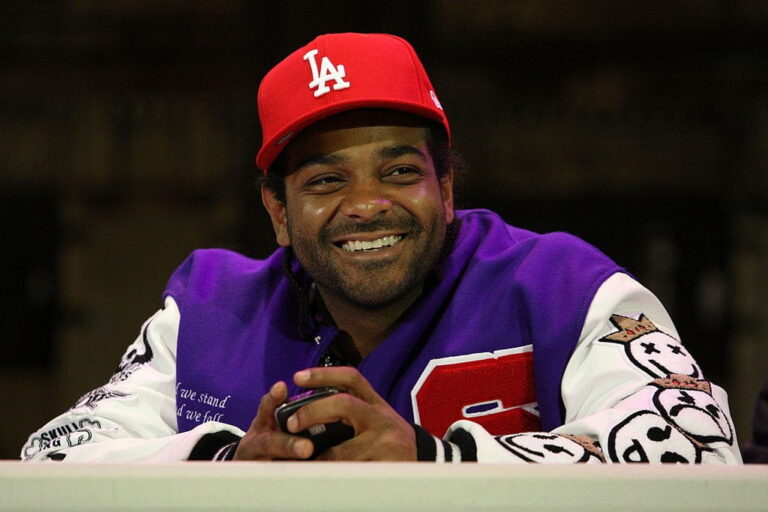
In 1995, rap artist Eazy-E, a major figure in the commercial development of “gangsta” rap and co-founder of the group N.W. A. with Dr. Dre, Ice Cube, and more announced that he had AIDS and was in dire condition. AIDS would be the disease the eventually took his life only a few weeks after making the announcement. While HIV/AIDS was still relatively taboo in the Black community at the time, instead of quietly going away, Eazy made the decision to courageously make the announcement to share with the world in hopes of helping others to know the truth.
MUST READ: How Ice Cube Went From Gangsta Rap To Family Man
Wright–a self-described ex-gang member and former drug dealer–did not say how he contracted the AIDS virus. But in his statement, he indicated that he had had a number of sexual partners. “Before Tomika I had other women. I have seven children by six different mothers. Maybe success was too good to me.”
But it was what he said after that, that really had an effect on generations to come.
“I’m not religious, but wrong or right, that’s me,” said Wright, 30 at the time. “I’m not saying this because I’m looking for a soft cushion wherever I’m heading. I just feel I’ve got thousands and thousands of young fans that have to learn about what’s real when it comes to AIDS.”
Wright went on to say he “would like to turn my own problem into something good that will reach out to all my homeboys and their kin because I want to save (them) before it’s too late.”
“I’ve learned in the last week that this thing is real and it doesn’t discriminate. It affects everyone.”
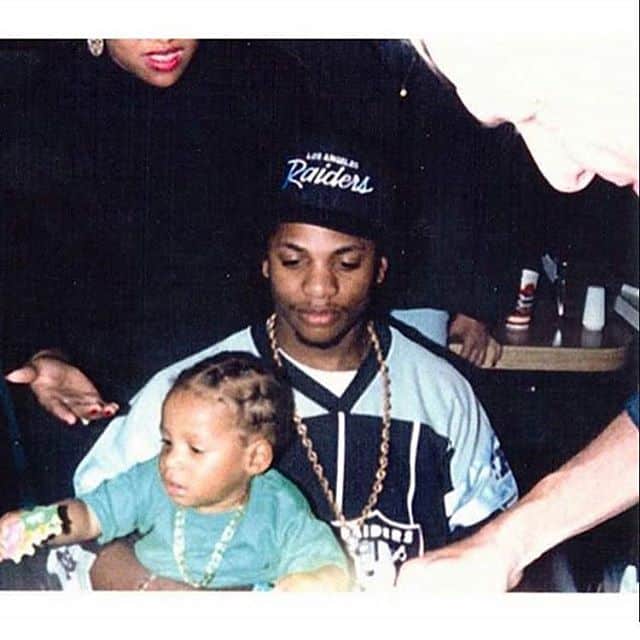
It was raw, real and courageous, much just like his music. His decision meant a lot for people at that time and really gave a face to how HIV/AIDS was attacking our community.
Eazy-E was one of the first major music performers to announce he has the disease. Health experts and AIDS activists in 1995 said his declaration forces the public face of AIDS into another community, just as the AIDS death of tennis star Arthur Ashe, the HIV diagnosis of Magic Johnson and the AIDS diagnosis of diving great Greg Louganis have touched the world of sports.
“It will cause many people or kids who may have just casually glossed over information about HIV to really look closer,” Bishop Carl Bean, executive director of the Minority AIDS Project, said of the singer’s condition.
Eazy-E did not want people to assume he was homosexual because that would be a shame to him and his family. Because, at the time Eazy-E developed AIDS, it was associated almost entirely with homosexuals. It was even called a “gay man’s disease.”
In addition to that, gangsta rap in general was not and remains not the most tolerant music genre to homosexuals. Hip-hop in general may be more tolerant than it used to be, but rap is still pretty controversial for its underlying homophobia.
For a long time, being called a homosexual was derogatory and enough to incite a fight. Now, those words used in a negative light or demeaning nature, will get you in trouble with gay rights groups and social media at large as we’ve see with some rappers recently.
Since 1995, many things have happened for the good:
So, Eazy’s dying wish was granted.
In 2019, 40% of all people living with HIV were Black, despite comprising 12% of the U.S. population. The disparity is clear in new cases as well—In 2020, African American men account for 70 percent of the new infections, so that is 1 in 16 black men and 1 in 32 black women will be diagnosed at some point in their lifetime.
The problem is even more acute in the South, where Black Americans accounted for over half of all new HIV diagnoses in 2020, despite accounting for only 19% of the Southern population.
Both his wife, Tomika Wood and the child have tested negative for HIV, the virus that causes AIDS.
Wright’s announcement stunned the rap world at a time when rap music was receiving intense negative publicity. But it ultimately took a back seat to using rap and hip-hop’s growing voice to share the world of health with others.
If you think you’ve been exposed to HIV, the most important thing is to act quickly—there are effective steps that can significantly reduce your risk of infection.
Ask a healthcare provider or go to an ER/urgent care and request Post-Exposure Prophylaxis (PEP).
Ask for an HIV test to establish your baseline status.
Modern tests can detect HIV earlier, but repeat testing ensures accuracy.
If your exposure risk may continue, ask about Pre-Exposure Prophylaxis (PrEP).
Until your status is confirmed:
Some people develop flu-like symptoms within 2–4 weeks:
But many people have no symptoms at all, so testing is critical.
If infection does occur, treatment with Antiretroviral Therapy (ART) allows people to:


By subscribing, you consent to receive emails from BlackDoctor.com. You may unsubscribe at any time. Privacy Policy & Terms of Service.