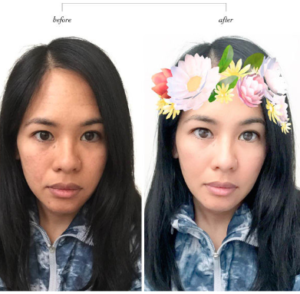
Despite Snapchat’s recent woes, it’s popularity among users is still solid, mainly because of their “beautifying filters” like fan favorites “flower crown,” butterfly wreath,” and “beauty” filter. These dynamic filters alter the user’s face, smoothing and whitening skin, changing eye shape, nose size, and jaw profile.
While these filters have been faring extremely well due to their almost universally flattering effects, especially among young women, they have also caused some concern among users who feel that the filters promote an unrealistic — and Eurocentric — standards of beauty.
“Here’s the really insidious problem with photo filters, they are programmed to Western beauty ideals,” wrote Nicole Williams in a viral Medium post. “They tell Polynesian and African American girls that their noses are too wide. They tell Asian women their eyes are too small. And it tells every woman, that their face should be skinnier.”
In an interview with USA Today, Williams said “These filters are designed to be beautiful, and they all fall in the same genre in a subtle and engaging way. Light eyes, skin tone, eye shape — these things can be subtle and have long-term effects and alter your view of yourself.” She also said that many people have Snapchat-filtered profile pictures on Facebook and Twitter and in the early days of Snapchat, she didn’t realize the photos had been altered, but that the people just looked great.
While experts have said that excessively taking and sharing selfies is indicative of traits like
narcissism and high self-esteem, low self-esteem also plays an integral role in constructing your digital identity on Facebook, Twitter, Instagram and Snapchat.
In an interview with USA Today, Dr. S. Shyam Sundar said, “I think in general, people with low self-esteem tend to be more concerned about their image on any media and they more carefully craft it in order to project their best identity.” Sundar, who serves as the co-director of the Media Effects Research Laboratory at Penn State also said, “But I think [selfies are] not driven by insecurities, but about keeping their self-identities alive and distinct.”
Studies have also said that despite popular perceptions connecting selfie culture to high self-esteem and positive body image, Snapchat’s “beauty” filters actually create an environment where the only images that many users deem “worthy” of posting are put through a distorting lens.
Given that the Snapchat face filters are intuitive and don’t allow the user to control how much their face is altered, the sense of customization is greatly diminished. While Snapchat may have some responsibility for developing filters that accommodate different images of beauty and give the user more control, the power of the filter, and self-love lies with the user themselves.
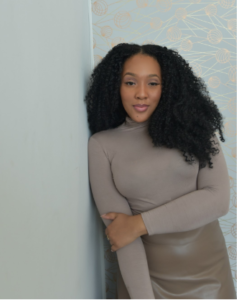
Jasmine Browley holds an MA in journalism from Columbia College Chicago, and has contributed to Ebony, Jet and MADE Magazine among others. So, clearly, she knows some stuff. Follow her digital journey @JasmineBrowley.


By subscribing, you consent to receive emails from BlackDoctor.com. You may unsubscribe at any time. Privacy Policy & Terms of Service.