
The United States is battling one of the deadliest public health crises in our history. Drug overdoses have now become the leading cause of accidental death for people under the age of 50. During a hearing in late October 2017, Donald Trump declared the opioid epidemic “a national health emergency.” The opioid addiction crisis has impacted all races, genders and ethnicities. It’s claiming more lives every day, an average of 144. The crack epidemic of the 1980’s is still not in remission and continues to resonate within communities of color.
On November 1, 2017, the President’s Commission on Combating Drug Addiction and the Opioid Crisis, lead by Gov. Doug Christie, submitted its final report. BlackDoctor.org spoke with Calondra Tibbs, MPH, Senior Advisor of Public Health Programs for the National Association of County and City Health Officials (NACCHO) about her thoughts on the opioid epidemic within the Black community, and how we might create community action efforts that halt the explosive growth of opioid misuse/abuse and reduce opioid overdoses across our nation.
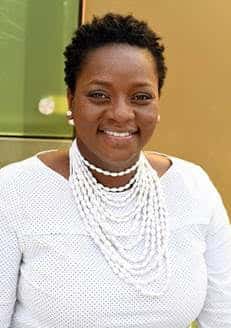
BlackDoctor.org: Ms. Tibbs, The White House has declared our opioid crisis a national emergency. Can you share with us what is your role in the opioid epidemic?
Calondra Tibbs: I’m currently a Senior Advisor at NACCHO but my service has span across a variety of public health issues. We are funded by the Centers for Disease Control to help local health departments to provide training and resources to their communities. Growing up as a young child, I wanted to be a doctor or lawyer. Once I went to college at FAMU and took a course in Personal and Family Health, I quickly realized that my heart’s desire was to not only get to the root of issues affecting my community but also work within the communities that I served and partner with families in my efforts. I began my career in environmental health as an epidemiologist and learned that some communities of color also had low incomes and less power resulting in less of a voice when it came to advocating for local resources. I was responsible for looking at the health data for those communities and translating that data into answers when I spoke with families. I analyzed neonatal abstinence syndrome (NAS) and drug use. My goal was to help pregnant women by looking at the implications of drug use during pregnancy. I noticed that there were many issues negatively impacting maternal child health. We didn’t know much about the impact of opioids on the maternal/child health but we knew that we needed to help which is why NACCHO created regionally specific resources so that local health departments can address the issues that are happening in their communities.
BlackDoctor.org: What do you believe are some of the issues related to Black Americans and our ability to obtain quality medical care for opioid dependence treatment issues?
Calondra Tibbs: History and access. As we know, addiction is a problem for everybody. It’s a public health crisis and if we want to look at how opioid addiction has impacted Black people in particular we must look at the history of how drugs were treated within our communities. During the 1970’s-1980’s, the approach to drugs was to criminalize addiction. It was labeled “The War on Drugs.” There was evidence that drug use was heaviest, mostly in communities of color with low incomes. When we think about equity, we must look at history. Negative approaches and language surrounding the issue of drug addiction created stigma around treatment and recovery efforts. It was simply not considered a disease. Now, drug use and the culture of drugs is evolving. Areas where we had not traditionally been aware of or saw extensive drug use (rural, suburban, White americans) is growing. Another reason why quality care is a concern is access to treatment. For example, pregnant women who are also addicted fall within a very high-risk medical category. In the past, we have not had a lot of treatment options available. Pregnant women were also very costly to treat and funding was not available the way that we needed it to be. We have seen an increase in opioid use and addiction but we had not seen an increase in opioid treatment funding and resources. Now, we have the 21st Century Cures Act to accelerate the discovery, development and delivery of cures which was signed into law in 2016. This will offer funding and increase access. Many states are taking advantage of this benefit.
BlackDoctor.org: Can you share with us some resources that are available to support recovery in the Black community?
Calondra Tibbs: In addition to the Cures Act, faith-based approaches are very helpful to opioid addiction. These approaches focus on healing the person both physically and spiritually. We (NACCHO) are also focusing on the data and the needs of the community to drive the development of resources. We are paying close attention to evidence-based programming that will meet the individuals and communities. We must think about more specific resources by looking at why people use drugs in the first place, then develop resources around those issues. Whether it is an issue of jobs, housing, systems, economy, etc., we must consider what may be driving health inequities. How do we address why some may have access to resources where others may not? We must address the root issues then design programs around the issues. Policies, systemic issues, [and] racism can impact decision making and those who are battling these problems daily might be more susceptible to drug use.
BlackDoctor.org: What can we do as concerned community members to manage and overcome Opioid Addiction in our communities?
Calondra Tibbs: The public health approach requires that we identify the needs in our individual communities and work together towards solutions. So, what we can do as community members is:
The opioid crisis is not one person’s responsibility, it’s everybody’s! If we work together towards solutions the result can be less time off work for people who are dependent on opioids, fewer people in [the] hospital, less costly to our healthcare system over time, and more businesses will want to come to our communities when drugs are not an issue. We must to a better job of talking to each other and working together.

Jamelia R. Hand MHS CADC MISA I is a Certified Addictions Counselor, Co-Occurring Disorders Specialist and Opioid Addiction Consultant. She believes that we need as many Substance Use Disorders Treatment options as we have people who are suffering, including the integration of Medication Assisted Treatment and Behavioral Health Therapy. She is a passionate educator, advocate for mental health parity, substance use disorder treatment and is a national speaker on opioid addiction issues. She is available for consulting and contract engagements with clients in SUD/mental healthcare, medical and public health systems. For more information, visit vantageclinicalconsulting.com.


By subscribing, you consent to receive emails from BlackDoctor.com. You may unsubscribe at any time. Privacy Policy & Terms of Service.