This article is sponsored by Pfizer
For cancer survivors like Kanesha Broadwater, it’s important to continue receiving necessary cancer care—even during a global pandemic.

Having worked as an oncology nurse for nearly two decades, Kanesha Broadwater, 44, recognized signs pointing to breast cancer when she noticed a rash on her breast in 2017. After a mammogram and a follow-up biopsy, her fears became reality. “It was Memorial Day weekend when I got the call that it was in fact breast cancer – stage three infiltrating carcinoma,” Kanesha recalled.
Supported by her oncology colleagues, Kanesha began treatment immediately, receiving six months of chemotherapy, a mastectomy, and radiation. A variety of treatments meant a myriad of medical appointments, but Kanesha made it her mission to stay on top of it. “One thing that got me through this was completing the to-do list. Working towards each next step gave me a sense of control,” Kanesha said. “My physician tells patients, ‘You are now the project manager of your care.’ So, I got busy checking off those boxes and putting one foot in front of the other.”
When she finished her last round of treatment, Kanesha was determined to stay organized. She made sure to keep up with her screenings and routine cancer care, including a follow-up mammogram – all while COVID-19 cases were rising in Chicago, where she lives.
“I knew if there was a way we could treat our patients during the pandemic, then I needed to find a way to continue my own care,” Kanesha said. “I couldn’t care for others if I wasn’t caring for myself.”
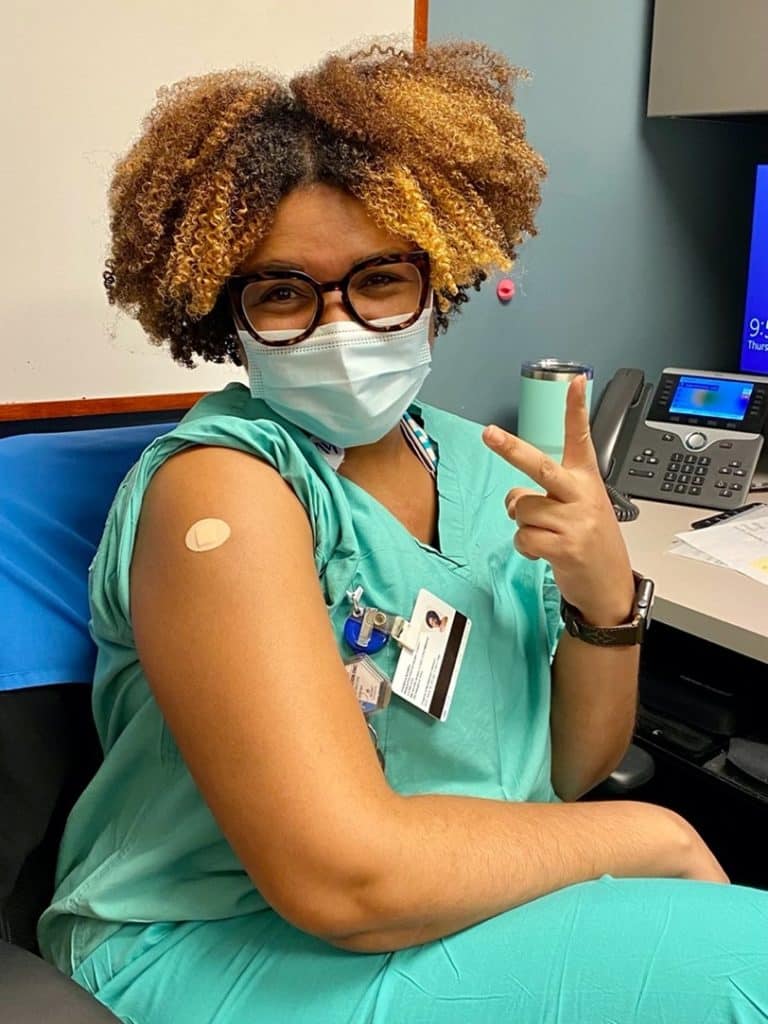 This understanding is also why Kanesha chose to work through the pandemic. She felt safe to return to work and confident in her team’s ability to care for cancer patients—having been on the patient side herself. “We did a lot of planning to make sure we could see patients safely,” she said. “I knew I was leaving the house for a good reason, to make sure women got their cancer care because not getting it would directly affect their life and could impact their treatment outcome.”
Kanesha’s efforts in keeping up with her follow-up care are justified – even after treatment is complete, there is still a risk of breast cancer recurrence. According to the National Cancer Institute’s Surveillance, Epidemiology and End Results (SEER) Program, the 5-year survival rates for localized and regional breast cancer are 99% and 86%, respectively, but for distant breast cancer it declines sharply to 27%.
However, COVID-19 made it more difficult for many people diagnosed with cancer to receive care. During the first wave in 2020, it’s estimated that 285,000 breast exams were missed, a 63% decrease in exams compared to the number of screenings expected based on historical data. Experts have warned that delaying these opportunities for intervention and follow-up could result in more late-stage diagnoses and, possibly, avoidable deaths.
It’s especially important for Black men and women who have survived cancer to stay consistent in their care. Kanesha’s own experience during the pandemic gave her a newfound path to help others understand the importance of early and follow-up cancer screenings.
“A good chunk of people I speak to are people of color and I really feel drawn to share with those patients,” Kanesha said. “If I find opportunities where I feel like it might be helpful for someone, I can share info to hopefully make them feel more comfortable with their treatment and their follow-up care.”

That’s why Kanesha is telling her story as part of Pfizer’s Get It Done initiative, which empowers cancer survivors to talk to their doctor about their next cancer screening or follow-up appointment. Get It Done provides people who have experienced a diagnosis with resources and tools to help guide those conversations and prepare for appointments, either in-person or via telehealth, at GetCancerScreened.com.
“I can tell when a patient is struggling to take the next step and that is when I tell them about my own experience, to show them that they have the strength to do this,” Kanesha said. “Because I did, and I am here on the other side.”
Kanesha volunteered to tell her story as part of the Get It Done initiative. National Black Family Cancer Awareness Week is June 17th – 23rd – make time to talk to your family about cancer screenings and follow-up appointments. Visit GetCancerScreened.com to learn more about Get It Done. Cancer Screening. Get It Done.

By subscribing, you consent to receive emails from BlackDoctor.com. You may unsubscribe at any time. Privacy Policy & Terms of Service.