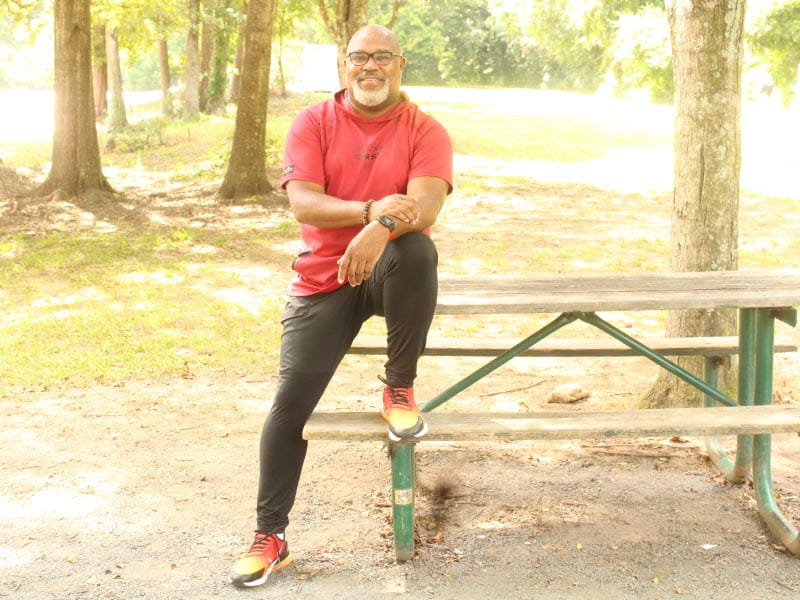
Heart transplant recipient Arthur Vaughn. (Photo courtesy of Arthur Vaughn)
Several days after running a 10K event in Atlanta in 2019, Arthur Vaughn found himself breathless simply walking across the room.
Vaughn’s primary care physician recommended he see a cardiologist. The exam included a stress test. After three minutes on the treadmill, Vaughn vomited. The doctor told him to ask his then-wife to join them.
When she arrived, the doctor broke the news: Vaughn was in such severe heart failure that he would need a transplant.
Vaughn fell to the ground, crying. “I’m not ready to die!” said the then-50-year-old.
Vaughn was admitted to a local hospital. He continued to get weaker, drifting in and out of consciousness. Later that week, he was airlifted to another facility better able to care for cases like his.
The inflammation in his heart was so severe that it interfered with the electrical pathways that maintain a normal beat. “To get him out of those fatal heart rhythms, he had to be shocked (with a defibrillator) many times – more than any person should have to endure,” says Dr. Divya Gupta, who treated Vaughn. She’s the medical director for advanced heart failure and transplant at Emory Healthcare.
A biopsy of Vaughn’s heart revealed he had giant cell myocarditis, a condition in which inflammatory cells clump together and attack the heart.
“This leads to a very precipitous decline in heart function,” Gupta shares, noting it’s a rare condition with only a 10% to 20% survival rate. “There really aren’t great options other than heart transplant for survival.”
To help his heart pump blood, doctors implanted a temporary left ventricular assist device, a machine that essentially does the work that should be done by a healthy heart. It’s often used as a “bridge to transplant,” meaning it keeps the damaged heart going until the patient can get a new heart.
RELATED: Waiting For Takeoff, Her Heart Stopped. Flight Attendants Came to the Rescue.
Meanwhile, his then-wife completed all the forms to get him on the transplant waiting list. The process also included demonstrating that he had a strong support system.
His family and friends sent so much food to the hospital that there was enough left over to feed other patients and their families. At Vaughn’s home, a close friend who owns a carpet cleaning business cleaned every room for no charge. Another friend changed out weakened wooden spindles on the stairway with wrought iron to ensure it was safe.
After nine difficult days in the hospital while medical teams worked to stabilize him, Vaughn went on the transplant waiting list. Four days later, he had a match.
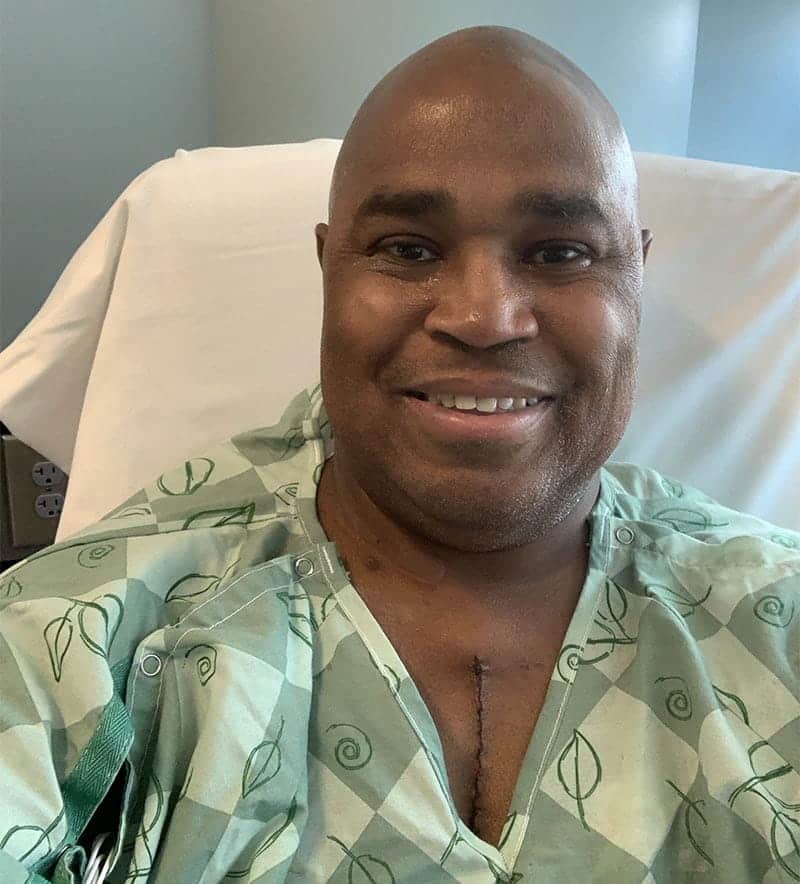
Arthur Vaughn recovering in the hospital after his heart transplant. (Photo courtesy of Arthur Vaughn)
“It was a moment of joy,” Vaughn recalls. “I was still going to be here.”
As Vaughn recovered, pain was a constant companion. His leg muscles had atrophied from being immobile for so long. The experience also took a mental toll.
“All the emotions I didn’t get to deal with during those nine days of being in and out of awareness (before going on the transplant waiting list) all came rushing over me like a tidal wave,” he shares.
He also was awed by the way his loved ones rallied around him during that difficult time. “It wasn’t easy for my family, but they stepped in and gave all they had to ensure I would have a chance at survival,” he adds. “My support system was amazing, and I will forever be thankful.”
Talking to a therapist helped Vaughn work through his emotions. He also saw a psychiatrist, who prescribed antidepressants. He’d become so emotionally devastated that he’d considered taking his own life.
RELATED: 3 Easy Swaps for a Healthier Heart
Thanks to cardiac rehab, he became strong enough to walk in his local American Heart Association Heart Walk. Not long afterward, surrounded by a group of friends, he completed a 5K, walking instead of running.
The 5K seemed like proof that Vaughn’s recovery was going great. However, his body soon began to reject his new heart. He felt the same lack of energy and breathlessness he had felt before the transplant.
“There were days I didn’t even want to go to sleep, because I was afraid my heart would stop working,” he says.
Gupta prescribed a different immunosuppressant. The new medication stopped Vaughn’s body from attacking his new heart. Such medications also help prevent giant cell myocarditis from damaging the organ.
After the transplant, Vaughn left his position as an academic administrator and penned a book about his experience. Eager to help others, he volunteers for a transplant foundation, talking with people who are awaiting transplant.
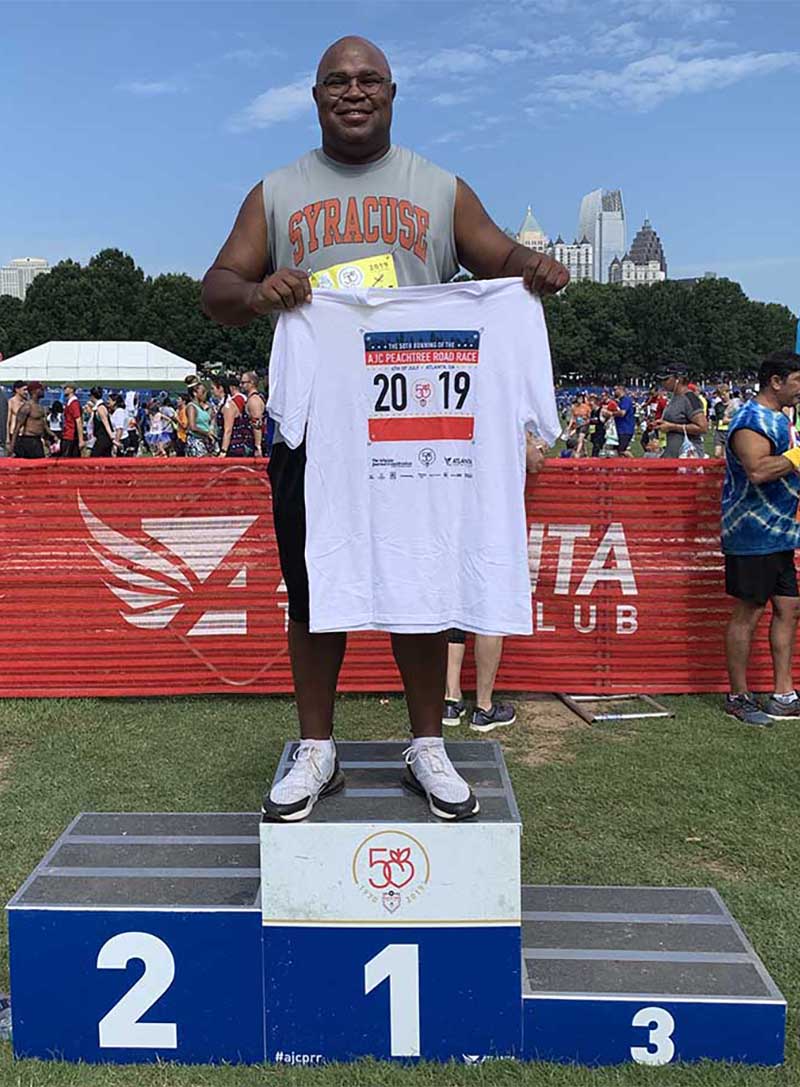
Arthur Vaughn at the 10K he ran in 2019 just days before learning he would need a heart transplant. (Photo courtesy of Arthur Vaughn)
In addition, he started a health and wellness group for Black men, booking speakers to talk about issues such as diabetes, blood pressure and long COVID-19. “I always felt like God must have a plan for me,” he shares. “I’m living out what I think part of that mission is.”
Three years after his transplant, Vaughn continues to walk and jog regularly, but he’s still not where he wants to be. “It’ll be a new normal,” he said.
While he has good days and bad days, Vaughn always focuses on his blessings. He’s especially grateful he’ll be able to see his 27-, 22- and 17-year-old daughters make their mark in the world, earning college degrees, living their professional dreams, perhaps marrying and having children. “In the distant future,” he chuckled. “I’m in no hurry.”
People with myocarditis don’t always have symptoms. Others have mild or severe signs, such as:
Some cases of myocarditis can feel like a heart attack. You should seek emergency medical help immediately if you experience unexplained chest pain or shortness of breath.
By American Heart Association News


By subscribing, you consent to receive emails from BlackDoctor.com. You may unsubscribe at any time. Privacy Policy & Terms of Service.